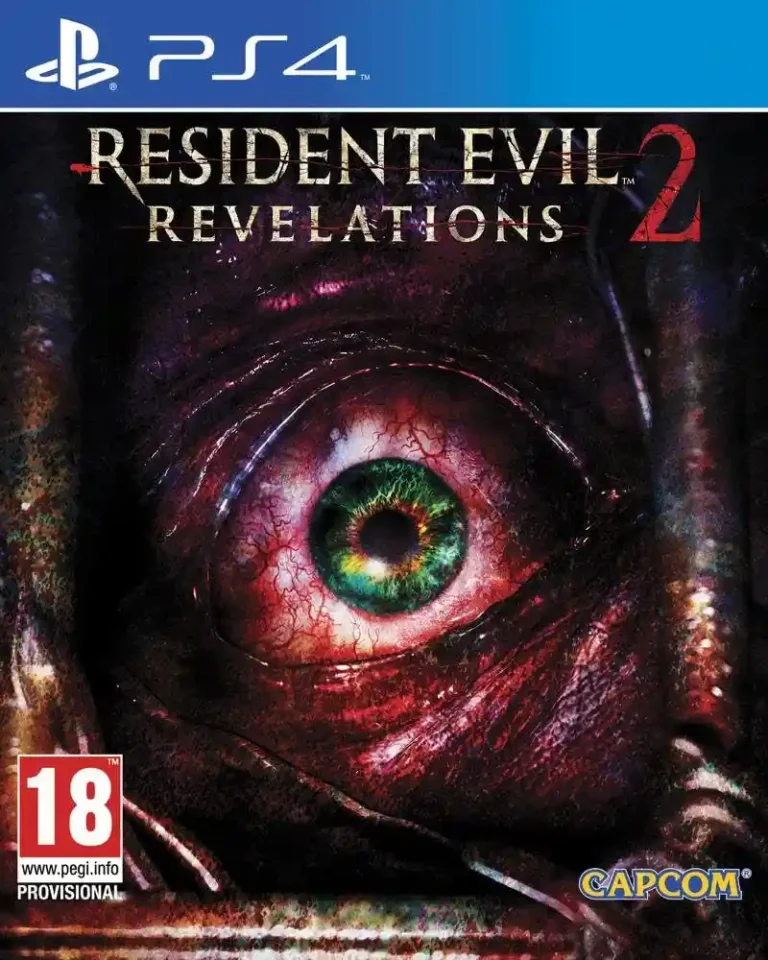
Resident Evil: Revelations 2
 75
★ /10
75
★ /10
 Nintendo Switch
 PC
PC PS 3
PS 3 PS Vita
 PS4
PS4 Xbox 360
 Xbox One
 Capcom
Where to buy



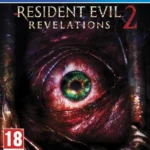
Resident Evil: Revelations 2 is a 2015 episodic survival horror game developed and published by Capcom, released weekly across four episodes from February 25 to March 18, 2015. Set in 2011 — between Resident Evil 5 and Resident Evil 6 — it brought back Claire Redfield for the first time since Code: Veronica (2000) and gave Barry Burton his first playable role in a mainline-adjacent entry. It holds a Metacritic score of 75 on PS4, its highest-rated platform, with reviewers consistently calling it a mixed-to-positive step back toward the series’ horror roots.
A r/residentevil thread simply titled “what’s the general consensus” on this game draws over 5,000 monthly organic search visitors — and that title says something true about how the game is discussed: opinion on Revelations 2 is genuinely split. Some players call its Raid Mode the most addictive the series has produced; others, playing the exact same mode, call it a step down from the first game’s. Both camps agree the campaign itself is the stronger, more emotionally grounded of the two Revelations stories.
Technical Specifications
| Attribute | Details |
|---|---|
| Developer | Capcom |
| Publisher | Capcom |
| Director | Yasuhiro Anpo (directorial debut; later directed the 2023 Resident Evil 4 Remake) |
| Producers | Michiteru Okabe · Masachika Kawata |
| Designer | Kazunori Kadoi |
| Writer | Dai Satō |
| Cutscene Director | Yūdai Yamaguchi |
| Original Release | Weekly episodes, February 25 – March 18, 2015 (PC, PS3, PS4, Xbox 360, Xbox One) |
| Also released on | PlayStation Vita (Aug 2015, ported by Frima Studio) · Nintendo Switch (Nov 2017, bundled with the original Revelations) |
| Metacritic | 75 (PS4) · mid-70s (PC / Xbox One, varies slightly by review round) · 65 (PS Vita, weakest port) |
| Genre | Episodic survival horror |
| Mode(s) | Single-player campaign (4 episodes + bonus epilogue) · Raid Mode (solo or co-op, split-screen/online) |
A Side Series Finding Its Own Identity
Capcom was explicit about what it wanted Revelations 2 to be. Producer Michiteru Okabe told press at Tokyo Game Show 2014 that the numbered mainline games would keep pushing toward wide-audience action, while Revelations would exist as its own fan-driven series, built to give long-time players the older, slower horror experience the mainline had moved away from. The first game’s director, Nakanishi, handed the follow-up to Yasuhiro Anpo in his directorial debut — Anpo would go on to direct the 2023 Resident Evil 4 Remake, making Revelations 2 an early credit for someone who’d later reshape one of the series’ most important games. Writer Dai Satō returned from the first game, and horror-comedy director Yūdai Yamaguchi was brought in specifically to handle cutscenes.
Sein Island in the Baltic
The story opens at a party held by TerraSave, the anti-bioterrorism NGO Claire now works for, which is stormed by armed mercenaries. Claire and several coworkers — including Barry Burton’s teenage daughter Moira — wake up on Sein Island, a remote former penal colony in the Baltic Sea, now converted into a torture-and-experimentation site. An unseen woman calling herself the Overseer watches the survivors through cameras and fear-tracking wristbands, turning the island’s other prisoners into a new enemy type, the Afflicted. Six months later, Barry — following his daughter’s distress signal — arrives at the same island alongside Natalia Korda, a young orphan whose parents died in the Terragrigia Panic from the first Revelations, and whose trauma has left her permanently fearless.
Claire Redfield and Moira Burton
Claire hadn’t led a Resident Evil game since 2000, and Satō — by his own account a longtime fan of the character — wrote her as blunt and combat-capable, contrasted deliberately against Moira’s immaturity and fear of firearms. The recasting drew attention on its own: longtime Claire voice actress Alyson Court did not return, with Capcom explaining her voice now read as too young next to an older Claire and risked being confused with Moira’s. Moira herself became one of the game’s more divisive but ultimately well-liked additions — a character defined less by combat competence than by her arc toward overcoming fear, which the story ties directly to whether players see its good or bad ending.
Barry Burton and Natalia Korda
Barry’s section leans harder into found-family drama than any previous entry in the series. Over the course of the campaign he tells Natalia about the accident that fractured his relationship with Moira — his younger daughter Polly was shot and injured while playing with one of his guns, and Barry, unable to face his own responsibility, blamed Moira instead, a wound the game spends its runtime slowly repairing. By the ending, Barry commits to adopting Natalia into the family regardless of which path the story took, giving the Burton half of the game one of the more sincere emotional arcs in the franchise’s history.
Kafka, Fear, and the Overseer (story spoilers)
Where the first Revelations quoted Dante’s Divine Comedy between chapters, Satō built Revelations 2 around Franz Kafka — its four episodes are titled Penal Colony, Contemplation, Judgment, and Metamorphosis, each a direct reference to a Kafka work. The theme fits the plot: the Overseer is revealed to be Alex Wesker, Albert Wesker’s estranged sister, running Sein Island as a fear-based experiment using a virus called T-Phobos in pursuit of what she frames as a cure for death itself. TerraSave’s own leader, Neil Fisher, turns out to be her inside man — a former FBC agent who sold his own coworkers to Alex in exchange for a sample of the Uroboros virus (last seen in Resident Evil 5), only for Alex to inject him with it herself once he’s no longer useful. Depending on choices late in the story, the game closes on a “good” ending where Moira overcomes her fear of guns to help save Natalia and Barry, or a considerably darker one where Moira dies and Natalia is left carrying a fragment of Alex Wesker’s consciousness — an unresolved thread the series has never picked back up.
Asymmetric Co-op: One Fights, One Supports
The game’s core mechanical idea is that neither pair of protagonists carries a full toolkit alone. Claire has guns; Moira has only a flashlight and a crowbar, but her light can stun enemies and reveal hidden items in the dark. Barry has a proper arsenal; Natalia can’t fight at all, but her ability to sense monsters and hidden objects through walls lets Barry avoid ambushes and find supplies — a direct descendant of the first game’s Genesis scanner, redesigned as a permanent character ability rather than a handheld tool. Played solo, the game hands control back and forth between the pair automatically at the right moments; played in co-op (including local split-screen), one person always holds the more vulnerable, support-oriented role.
Raid Mode, Expanded
Raid Mode returns dramatically larger than the original: roughly 200 missions and 15 unlockable characters pulled from across the series, including guest appearances by Hunk and Albert Wesker as playable Raid characters, plus enemies and scenarios lifted from Resident Evil 5, 6, and the first Revelations. Players now buy and customize skills and weapon parts between runs, chase treasure chests alongside the usual loot drops, and can play the whole mode solo, online, or via local split-screen. It’s the single element of the game community opinion agrees on least evenly — for some players it’s the reason to own the game at all; for others, changes to difficulty and pacing make it feel like a step down from the first Revelations‘ version.
Episodic Release and the Complete Season
Revelations 2 was Capcom’s first serious attempt at a Western-style weekly episodic release: four episodes over four weeks, sold individually or as a season pass, with a bundled retail disc following once the season concluded. The first episode, Penal Colony, was made free to download on PS4, Xbox 360, and Xbox One in November 2015 — an unusually generous move that let new players sample the game’s structure before committing.
From Weekly Episodes to Switch
A PlayStation Vita port, handled externally by Frima Studio, arrived in August 2015 and holds the game’s weakest Metacritic score (65) — the handheld hardware visibly strained under a game built for consoles first. In November 2017, both Revelations games launched together on Nintendo Switch, this time requiring Revelations 2 to be downloaded separately rather than fitting on the cartridge alongside the first game; reviewers who compared the two generally called the Switch version of Revelations 2 the strongest available, despite the game’s inherently modest production values.
Reception
Critical response landed mixed to positive, with most reviewers agreeing on the same shape: strong setting, story, and characters, undercut by budget-limited graphics and some technical rough edges. IGN’s Lucy O’Brien said the game lacked the scares the series is known for but stayed hooked by the plot through to its finale; Polygon’s Phil Kollar praised the strength of a cast that was three-quarters female and singled out Moira as a standout, while criticizing generic level design; GamesRadar+ gave it 4/5 and praised the two teams’ complementary dynamic, though found Claire and Moira’s ending unsatisfying; Game Informer’s Kimberley Wallace enjoyed the twists and character writing but flagged Barry’s campaign for reused, backtracking-heavy environments. Multiple outlets, including GameSpot and IGN, singled out Episode 3, Judgment, as the strongest chapter, crediting its stronger puzzle design and plot momentum.
Sales and Legacy
Revelations 2 became a million-seller quickly after launch according to Capcom, reached 2.6 million units by March 2020, and had climbed to roughly 4 million units sold as of the end of 2025 — likely surpassing the original Revelations‘ lifetime total despite launching as a lower-budget episodic experiment rather than a flagship handheld release. Its reputation today sits a notch above its predecessor’s: where the first game is often described as a good-but-inessential detour, Revelations 2‘s character writing — Barry and Natalia in particular — is more consistently cited as some of the more emotionally sincere material the series has produced, even by people who otherwise think the visuals haven’t aged well.
Resident Evil news
More news
Capcom Plans to Evolve RE Engine Into an AI-Generation Engine

Roy Lee Reportedly Developing a New Silent Hill Movie
Valve Deliberately Leaked Left 4 Dead 2 Trailer to Dodge ESRB Rules

Steam Gross Revenue Tops $15 Billion in First Eight Months of 2026