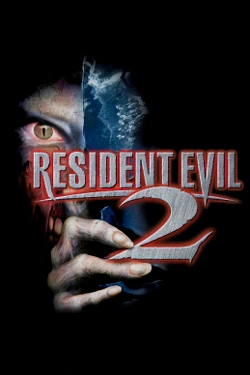
Resident Evil 2
 89
★ /10
89
★ /10
 Dreamcast,
  Ninitendo GameCube,
  Nintendo 64,
  PC,
PC,  PS 1
PS 1
 Capcom



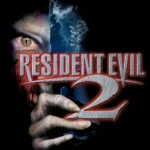
Resident Evil 2 is a 1998 survival horror game developed and published by Capcom. Released for PlayStation in Japan and North America on January 21, 1998, it was directed by Hideki Kamiya — his first directing credit — and produced by Shinji Mikami. It introduced Leon S. Kennedy and Claire Redfield, the dual protagonist structure, the Raccoon City Police Department as a setting, and the Zapping System that made each playthrough respond to the choices made in the other.
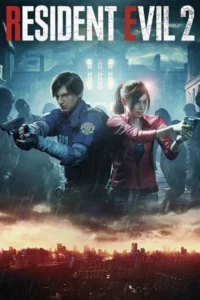
A note before continuing: when you search “Resident Evil 2” in 2026, the dominant Steam result (app 883710, 11,318 monthly organic visitors) is the 2019 Remake — a third-person over-the-shoulder action horror game that received a Metacritic score of 91–96 across platforms. This card is about the 1998 original specifically.
Technical Specifications
| Attribute | Details |
|---|---|
| Developer | Capcom Production Studio 1 |
| Publisher | Capcom |
| Director | Hideki Kamiya |
| Producer | Shinji Mikami |
| Original Platform | PlayStation |
| Original Release | January 21, 1998 (Japan + NA) |
| Also released on | PC (1998) · N64 (1999) · Dreamcast (1999) · GameCube (2003) |
| Current (PC) | GOG (Jun 26, 2024, DRM-free) · Steam (Apr 1, 2026, Enigma DRM) |
| Genre | Survival horror, Action-adventure |
Raccoon City, 1998: Two People, One Night
The setting is Raccoon City — the Midwestern city where the T-Virus outbreak from the Spencer Mansion research site has reached the civilian population. The game takes place the same month as Resident Evil (1998 is also when RE1 is set), two months into the pandemic that the original game’s survivors stopped at a local level but could not prevent from reaching the city.
The Raccoon City Police Department is the primary location — a building of unusual architectural distinction because it was formerly an art museum, its deco ornamentation and high-ceilinged gallery spaces repurposed for law enforcement while retaining every flourish of the original construction. The combination of grand pre-war architecture and the specific horror of a police station overrun by what the police were supposed to contain is Resident Evil 2‘s defining visual register. The RPD remains one of the medium’s most memorable individual locations.
Leon Kennedy and Claire Redfield
Two playable protagonists arrive in Raccoon City simultaneously and initially together before the game separates them:
Leon S. Kennedy is a rookie officer of the Raccoon City Police Department, arriving for his first day of work to find the city in collapse. His timeline involves navigating the RPD’s main building, the sewers below, and the Umbrella laboratory underground. He encounters Ada Wong — a woman who claims to be searching for her missing boyfriend but whose objectives and identity are more complicated than she initially presents.
Claire Redfield is the younger sister of Chris Redfield (the male protagonist of Resident Evil 1996). She has come to Raccoon City looking for Chris after hearing about the city’s situation. She encounters and protects Sherry Birkin — a child whose father, Umbrella virologist William Birkin, has become the game’s primary biological antagonist.
The two characters operate in parallel through partially shared spaces, with different items, different companions, and different portions of the narrative. Neither playthrough is complete without the other.
The Zapping System
The Resident Evil 2 Zapping System is the game’s most structurally ambitious feature: the two characters’ playthroughs are linked such that each affects the other.
Each complete run of the game consists of an A scenario (the character’s primary playthrough) and a B scenario (the same character, or the alternate character, played through events modified by what the A scenario player did). Items the A scenario player picked up are absent in the B scenario. Doors the A player opened remain open. Ammo left uncollected remains available. Events in the B scenario reference outcomes from the A.
A full understanding of the game’s narrative requires at minimum two playthroughs (Leon A + Claire B, or Claire A + Leon B). A complete playthrough of all content requires four. The system creates a puzzle about sequencing — what to collect, what to leave, what to prioritise — layered over the standard survival horror mechanical puzzle of resource management.
New Threats: Lickers, Birkin, Mr. X
Resident Evil 2 expanded the franchise’s monster roster substantially:
Lickers are hairless, wall-crawling creatures with elongated tongues and exposed cerebral cortexes — blind, but with acute hearing that makes running near them lethal. They are introduced in a corridor that first-time players will almost certainly sprint through without realising why this is worse than they expect. The game uses their sensory limitation as a puzzle element: slow movement near Lickers, or run elsewhere.
William Birkin is the G-Virus — an experimental mutagenic agent created by Birkin himself, injected when Umbrella operatives attempted to seize his research. He appears in five progressively more mutated forms across the game, each encounter further from the human figure he was at the start. The G-Virus’s distinguishing biological property is uncontrolled tumorous growth: Birkin’s mutations are asymmetric accretions of mass rather than directed transformation, communicating in creature design what the virus does as a pathogen.
Mr. X (Tyrant Model T-103) is the forerunner of the Resident Evil franchise’s “pursuer” enemy archetype that the 2019 Remake would expand into its central tension. In the 1998 original, Mr. X appears in specific scripted sections rather than patrolling dynamically, but his impact — a large, overcoated figure of inhuman physicality who cannot be permanently defeated and periodically appears where the player is — established the vocabulary that the Nemesis (Resident Evil 3: Nemesis), Mr. X in the 2019 remake, and Lady Dimitrescu in Resident Evil Village all draw from.
Ada Wong
Ada Wong is introduced as a civilian survivor whose lover Ben Bertolucci has information about the outbreak. Her dialogue, her behaviour, and the pieces of information she provides do not fully cohere with her stated motivations in ways that accumulate rather than resolve. The 4th Survivor extra scenario, playable after completing both A scenarios, presents events from her perspective and establishes what she was actually doing in Raccoon City — a sequence that is mechanically demanding and narratively essential.
Ada Wong appears in Resident Evil 4 (2005), Resident Evil 6 (2012), and the 2019 remake, in each case pursuing objectives that are still not fully explained. Her character’s opacity across twenty-five years of franchise material is the point rather than an oversight.
Hideki Kamiya
The game’s director was Hideki Kamiya, 24 years old at the time of the game’s release, making his directorial debut. He went on to direct Devil May Cry (2001) — a game that emerged partly from an abandoned Resident Evil 4 prototype that became too stylised for the franchise — followed by Viewtiful Joe (2003), Ōkami (2006), and Bayonetta (2009–2022). Resident Evil 2 remains the foundation of a directing career that consistently prioritised stylistic boldness and mechanical distinctiveness over conventional franchise continuation.
The Version That Almost Wasn’t
The Resident Evil 2 that shipped in January 1998 was not the first version Capcom built. A substantially complete earlier version — codenamed “RE1.5” internally — was developed and then scrapped on the judgement of Shinji Mikami, who saw it at an advanced production stage and concluded it was not good enough. The team rebuilt the game from scratch in roughly a year, producing what became one of the most commercially successful PlayStation games of its year.
The discarded version has been partially reconstructed by fans from recovered code and assets. RE1.5 features a different RPD layout, different characters (including a reporter named Elza Walker in place of Claire Redfield), and a structurally different approach to the same setting. The reconstruction project documented what the game might have been; what the game became is the reconstruction’s argument for why Mikami’s call was correct.
Where to Play the 1998 Original
The original Resident Evil 2 (1998) is available DRM-free on GOG (released June 26, 2024, as part of the same enhanced re-release series as Resident Evil 1996) and on Steam (released April 1, 2026, with Capcom’s Enigma DRM). The DRM controversy mirrors the Resident Evil (1996) situation: the GOG and Steam versions are otherwise identical, with improved PC compatibility, all localisations, and updated display settings. Players specifically wanting the DRM-free option should purchase from GOG.
Physical versions on original PlayStation, N64, Dreamcast, and GameCube are available through eBay and retro gaming retailers.
The 1998 game is not available on current PlayStation Store or Xbox storefronts as the original version; those platforms carry the 2019 Remake (app 883710, Metacritic 91–96), which is a different game sharing the same story and characters, rebuilt entirely with an over-the-shoulder camera, dynamic Mr. X behaviour, and a survival horror design philosophy descended from the original but not interchangeable with it. A separate card covers the 2019 Remake.
Reception and Legacy
Resident Evil 2 is widely considered the high point of the original fixed-camera PlayStation Resident Evil series. It sold approximately 4.96 million copies on PlayStation alone and became the second best-selling PlayStation game of 1998. Contemporary reviews were extremely positive — aggregation is unavailable given the era, but GameSpot’s 9.4/10 and IGN’s 10/10 represent the consensus.
The introduction of Leon S. Kennedy — an everymancharacter whose first-day-on-the-job context provided a natural newcomer surrogate — and the dual-protagonist Zapping System distinguished it from its predecessor structurally. The RPD as a setting, the T-103 as a template for pursuit enemies, Ada Wong as a recurring ambiguous actor in the franchise, and William Birkin’s visual design as a model for the biological horror the series has returned to repeatedly: all of these emerged from a game that began as something else entirely and was rebuilt from scratch in a year.
DLC & Expansions 1
Resident Evil news
More news
Capcom Plans to Evolve RE Engine Into an AI-Generation Engine
Roy Lee Reportedly Developing a New Silent Hill Movie
Valve Deliberately Leaked Left 4 Dead 2 Trailer to Dodge ESRB Rules

Steam Gross Revenue Tops $15 Billion in First Eight Months of 2026