Resident Evil 3: Nemesis
 91
★ /10
91
★ /10
 Dreamcast,
  Ninitendo GameCube,
  PC,
PC,  PS 1
PS 1
 Capcom



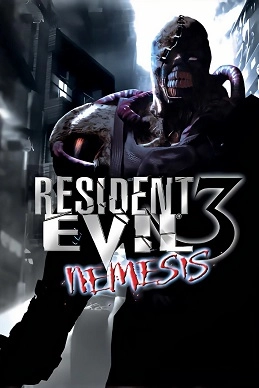
Resident Evil 3: Nemesis is a 1999 survival horror game developed and published by Capcom. Released for PlayStation in Japan on September 22, 1999, and in North America on November 11, 1999, it follows Jill Valentine — one of the two playable protagonists of the original Resident Evil — attempting to escape Raccoon City as the T-Virus outbreak consumes it. It introduced the franchise’s most iconic recurring antagonist, added an emergency dodge mechanic, included branching narrative choices, and shipped with a complete standalone arcade mode.
Its Fandom character page for Nemesis-T Type draws 11,696 monthly organic visitors — the highest traffic result in this game’s entire search landscape, higher than the Wikipedia article, higher than the Steam page. The character dominates the game’s presence in search.
Technical Specifications
| Attribute | Details |
|---|---|
| Developer | Capcom Production Studio 1 |
| Publisher | Capcom |
| Director | Kazuhiro Aoyama |
| Producer | Shinji Mikami |
| Original Platform | PlayStation |
| Original Release | Sep 22, 1999 (Japan) · Nov 11, 1999 (NA) |
| Also released on | PC (1999) · Dreamcast (2000) · GameCube (2003) |
| Current | Steam (app 4249120, Apr 1, 2026) · GOG (2024, DRM-free) · PlayStation Classics (PS Plus) |
| Genre | Survival horror, Action-adventure |
Raccoon City at Its End
Resident Evil 3: Nemesis brackets Resident Evil 2 chronologically: the events begin approximately 24 hours before Leon Kennedy and Claire Redfield arrive in Raccoon City, and conclude two days after their escape. Jill Valentine is still in the city when Leon and Claire pass through it. She is trying to get out before the government resolves the situation the way governments resolve situations they cannot contain: with sufficient explosive yield.
Where Resident Evil 2 was set primarily in the architecturally distinctive Raccoon City Police Department, RE3: Nemesis uses the city itself — streets, rooftops, a clock tower district, a hospital complex, a park, a cemetery, and the downtown commercial area — to establish Raccoon City as a place rather than a single building. The expanded geography gives the player a sense of scale. The T-Virus is not a contained laboratory incident; it is in the water, the air, and every person who was alive last week.
Nemesis-T Type
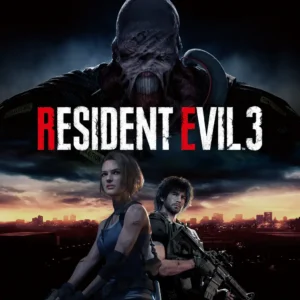
The Nemesis-T Type is an advanced Tyrant variant enhanced with the NE-α parasite, which grants it intelligence, adaptability, and the ability to use weapons. Umbrella Corporation deployed it with a single operational objective: kill all surviving members of S.T.A.R.S., the special forces unit that investigated Spencer Mansion and survived.
Jill Valentine is a S.T.A.R.S. member. Nemesis knows this. It knows her name.
The character’s mechanical implementation in the 1999 original is significantly different from any other enemy in the franchise’s classic era. Nemesis carries a rocket launcher in its first form and can deploy tentacle-based attacks in later forms. It does not appear in fixed scripted positions — it pursues across multiple zones, arriving without announcement, sometimes mid-engagement with other enemies. It can be temporarily defeated in each encounter, and doing so is rewarded with item drops rather than requiring it. It cannot be permanently killed until the game’s conclusion. Each encounter ends with retreat, temporary incapacitation, or death.
Nemesis evolves through multiple forms as the game progresses, each transformation tracking the NE-α parasite’s progressive integration with the host organism. The final confrontation involves a form substantially different from the suited hunter of the opening hours.
Jill Valentine Returns
Resident Evil 3: Nemesis is the only mainline game in the original trilogy where Jill Valentine is the sole protagonist (she is one of two in the first Resident Evil). Her characterisation at this point — approximately three months after Spencer Mansion — reflects someone who knows exactly what Umbrella is, has been unable to make anyone believe her, and is now watching everything she warned about happen in real time. Her experience from Resident Evil is directly referenced: she knows how BOWs behave, she knows Umbrella’s methods, and she understands what Nemesis is more completely than any other surviving character.
Her combat options include the new Emergency Dodge — pressing the action button at the correct moment during an incoming attack triggers an evasive roll that avoids damage. It functions as a parry equivalent without requiring the directional precision of a modern soulslike, adding a reactive layer to the otherwise defensive-oriented survival horror formula.
Live Selection and Branching Narrative
Throughout the game, time-limited Live Selection prompts interrupt the action: “Fight” or “Run”? “Mix the chemicals” or “Search the room first”? The choices affect which sequence plays out immediately and occasionally what materials are available later. Some paths are brief; others extend a section significantly. The branching is not deep by visual novel standards, but it is more than the series had previously offered, and it meaningfully increases replayability beyond the standard item-management replay logic.
RE3: Nemesis includes multiple endings varying by performance: items obtained, time spent, and choices made affect what Jill achieves in the game’s final sequences. The full picture of the game’s story requires more than one playthrough.
Gunpowder and Ammunition Crafting
The game introduced a gunpowder combination system: different grades of gunpowder found throughout the environment can be combined to produce different types of ammunition. Standard ammunition, high-damage rounds, and specialised types emerge from different combinations. The system gives players control over ammunition type priorities — a resource-management decision on top of the standard survival horror resource-management logic.
Mercenaries: Operation Mad Jackal
Mercenaries: Operation Mad Jackal is a complete standalone mode unlocked after finishing the game. Three playable characters — Carlos Oliveira, Mikhail Viktor, and Nicholai Ginovaef — complete timed runs through sections of Raccoon City. Each character has a different starting weapon and statistical profile. Time is extended by defeating enemies and collecting bonuses. Performance determines rank and unlocks additional content.
Mercenaries is considered one of the best extra modes in the franchise’s classic era. Its absence from the 2020 Remake (see below) is the most commonly cited specific disappointment in community comparisons between the two versions. The mode established the template for the franchise’s subsequent arcade-style extra content.
Carlos Oliveira and the UBCS
Carlos Oliveira is an Umbrella Biohazard Countermeasure Service (UBCS) mercenary deployed to Raccoon City as ostensible containment support. His relationship with Jill evolves from encountered-by-chance to active alliance as the reality of their situation becomes clear: Umbrella did not deploy the UBCS to save people; it deployed them to gather performance data on BOWs under combat conditions.
Carlos is briefly playable in a hospital section unique to his timeline and brings a meaningfully different weapon loadout to those sequences. His arc — a mercenary whose employment terms did not include the truth about his employer — is the game’s secondary emotional throughline.
Nicholai Ginovaef, the UBCS commander, is the game’s human antagonist: a cold professional selling performance data on the BOWs to outside buyers, killing his own colleagues when they become inconvenient, and operating his private objectives inside the cover of the official mission. He functions as a counterpoint to Nemesis — where Nemesis is relentless pursuit, Nicholai is calculation and betrayal.
The Timeline Connection to RE2
The overlap between Resident Evil 2 and Resident Evil 3 is structural. Jill’s escape from Raccoon City occupies a timeline that begins before Leon and Claire arrive and continues after they leave. The city’s street-level geography appears in both games. The events are simultaneous rather than sequential.
The relationship between the two games was presented as “two sides of the same coin” by Capcom at the time — a full picture of one night in Raccoon City available only through playing both. Playing them in release order (RE2 first, RE3 second) provides one reading; playing them in chronological order (RE3 first, then RE2, then the remainder of RE3) provides another.
The 2020 Remake and Why the Original Is Defended
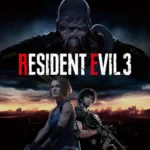
The 2020 Resident Evil 3 Remake (Metacritic 80, PS4) adapted the original’s story into the over-the-shoulder perspective of the RE2 Remake (2019). It received positive but substantially less enthusiastic reviews than the RE2 Remake, primarily because of what it removed: the Clock Tower area, several Raccoon City sections, most Live Selection moments, the Mercenaries mode, and a portion of Nemesis’s dynamic pursuit behaviour.
The original RE3: Nemesis is now regularly defended in community discussions specifically against the 2020 version — the r/residentevil thread “Original RE3: Nemesis is a masterclass in survival horror” appears in this game’s search Discussions and reflects a consistent position: the original is more content-rich, more replayable, and features a more mechanically realised version of its own antagonist. This is the context of the Short Video entry “Despite my dislike for the remake, Remake Nemesis…” visible in the SERP.
Where to Play
The original 1999 PC version is available DRM-free on GOG and on Steam (app 4249120, “Resident Evil 3 Nemesis 1999”) as part of the April 1, 2026 Enigma DRM re-release series. Both versions include the same compatibility improvements and display options as the RE1 and RE2 releases in the same series; the GOG version lacks Enigma DRM and is the recommended version for Steam Deck players and those who prefer DRM-free software.
The original is also available through PlayStation Classics on PlayStation Plus Premium (product code CLASSICRE3000001), which provides the PS1 version with upscaling and save state functionality on PS4 and PS5.
Physical PS1, Dreamcast, and GameCube copies are available through GameStop retro, eBay, and physical retro retailers. A complete run at Archive.org provides the PS1 ROM for preservation research.
Reception
Resident Evil 3: Nemesis received uniformly positive contemporary reviews. GameSpot gave it 9.0/10. IGN gave it 9.0/10. It sold approximately 3.5 million copies across platforms, making it commercially successful relative to the franchise’s trajectory at that point. Metacritic aggregation is unavailable given the 1999 release date; the contemporary consensus was that it was a strong follow-up that introduced meaningful new mechanics while sustaining the series’ core atmosphere.
Its subsequent reputation has improved relative to its immediate successor, Code: Veronica (2000), and especially relative to the 2020 remake it inspired. The community’s active defence of the original — “a masterclass in survival horror” — is a characterisation that the 1999 game earns through its mechanical generosity (the Mercenaries mode, the item crafting, the dodge, the Live Selections) and its specific realisation of Nemesis as an adversary whose intelligence and persistence the 2020 version did not fully replicate.
DLC & Expansions 1
Resident Evil news
More news
Capcom Plans to Evolve RE Engine Into an AI-Generation Engine

Roy Lee Reportedly Developing a New Silent Hill Movie
Valve Deliberately Leaked Left 4 Dead 2 Trailer to Dodge ESRB Rules

Steam Gross Revenue Tops $15 Billion in First Eight Months of 2026