Resident Evil – Code: Veronica
 94
★ /10
94
★ /10
 Dreamcast
 Ninitendo GameCube
 PS 2
PS 2 PS 3
PS 3 PS4
PS4 Xbox 360
 Capcom
Where to buy

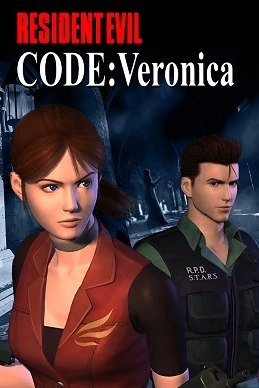
Resident Evil – Code: Veronica is a 2000 survival horror game developed and published by Capcom. Originally released for Dreamcast in Japan on February 3, 2000, and in North America on March 22, 2000, it follows Claire Redfield — one of the two protagonists of Resident Evil 2 — searching for her brother Chris in the aftermath of Raccoon City’s destruction. An enhanced Code: Veronica X version was released for PlayStation 2 in 2001.
On June 5, 2026 — at the very opening of Summer Game Fest 2026 — Capcom officially revealed Resident Evil Veronica, a full remake of Code: Veronica, targeting a 2027 release on PS5, Xbox Series X/S, Nintendo Switch 2, and PC. The remake is developed by the same team behind the Resident Evil 2 remake (2019) and the Resident Evil 4 remake (2023), including producer Yoshiaki Hirabayashi, and will be a third-person game built on RE Engine.
Technical Specifications
| Code: Veronica (2000) | Resident Evil Veronica (2027) | |
|---|---|---|
| Developer | Capcom Production Studio 1 | Capcom Division 1 |
| Producer | Shinji Mikami | Yoshiaki Hirabayashi |
| Platform | Dreamcast · PS2 (X version, 2001) · PS4/Xbox (digital) | PS5 · Xbox Series X/S · Switch 2 · PC |
| Release | Feb 3, 2000 (Japan) · Mar 22, 2000 (NA) | 2027 (no specific date) |
| Engine | Custom Capcom | RE Engine |
| Perspective | Fixed camera, tank controls | Third-person (confirmed) |
The original game is available digitally on PS4 and Xbox. It is not available on PC or Steam; the GOG dreamlist includes it as a requested but unavailable title.
Rockfort Island: The Setting
After being captured during a raid on an Umbrella facility in Paris, Claire is shipped off to the remote Rockfort Island prison, where a fresh T-virus outbreak forces her into an uneasy alliance with fellow inmate Steve Burnside. The journey eventually leads to an isolated Antarctic base and a confrontation with the unhinged Ashford siblings, Alfred and Alexia.
The two-location structure — island then Antarctica — gives the game a more geographically varied setting than the single-building focus of RE1–3. Rockfort Island is the more atmospheric and more praised half: a remote facility isolated by design, with the specific tension of a place that exists to be forgotten about. The Antarctic Research Facility is the second act, and where many players find the game’s difficulty spike most pronounced.
The events take place approximately three months after Resident Evil 2 and the destruction of Raccoon City, making this the continuation of Claire’s story and the reunion of Claire and Chris most players had been waiting for since RE2.
The Ashford Family and T-Veronica
The game’s antagonists are not Umbrella operatives in the usual sense — they are the Ashford family, who founded the Umbrella Corporation alongside Oswell Spencer and whose scientific lineage produced the company’s most significant early achievements.
Alfred Ashford administers Rockfort Island with a fanatical devotion to his twin sister Alexia, who died — or appeared to have died — fifteen years before the events of the game. His obsession shapes the island’s operations, its security, and the specific quality of horror that permeates its facilities. His characterisation takes a direction in the game’s second act that the remake’s E-ratings make difficult to discuss without specifics.
Alexia Ashford developed the T-Veronica virus — the pathogen named after herself — as the culmination of the Ashford family’s research into genetic manipulation. Believing the virus could be controlled through a slow integration process rather than rapid infection, she injected herself with it and entered cryostasis to allow fifteen years of gradual fusion. When she awakens, the result of that fusion is the game’s final antagonist and final boss sequence. She is the “Code Veronica” of the title — a genetic archive of the Ashford family’s power, finally realised.
Steve Burnside
Steve Burnside is a fellow prisoner on Rockfort Island and Claire’s primary companion across the first half of the game. He is seventeen years old, aggressive, and compensating visibly for an undefined history of abandonment and resentment. His characterisation is the most consistently divisive element in retrospective discussion of the game: players who find his arc genuinely affecting cite the emotional weight of his relationship with Claire; players who do not find him insufferable and his presence a friction with the game’s horror atmosphere.
The remake’s producer Yoshiaki Hirabayashi was asked directly whether Steve would appear in the remake. He was coy in confirming whether Steve Burnside would make an appearance, though the character’s signature guns can be seen in the announcement trailer.
Wesker’s Return
Albert Wesker appeared to die in the original Resident Evil (1996) — injected by the Tyrant at the game’s climax. Code: Veronica provides the explanation. Wesker injected himself with a specific viral strain before the Tyrant attacked, and the combination of the Tyrant’s blow and the virus produced something that transcended death. The Wesker of Code: Veronica is superhuman: faster than human perception, physically capable of things that should be impossible, and now working for a rival bioweapons organisation rather than Umbrella.
His confrontation with Chris Redfield in the game’s second half is the franchise’s first truly superhuman villain encounter, and establishes the version of Wesker who would carry through Resident Evil 5 (2009), where his arc concludes. Code: Veronica is where the character’s later identity — the enhanced creature pursuing global bioterrorism — begins.
The First Real-Time 3D Resident Evil
Code: Veronica was the first mainline Resident Evil game to render its environments in real-time 3D rather than using pre-rendered static backgrounds. The original trilogy’s visual approach — pre-rendered artwork of extraordinary quality, fixed cameras, character models placed over static backgrounds — was replaced with environments the Dreamcast rendered in real-time, giving the game dynamic lighting and camera movement that the earlier games could not achieve.
The fixed camera angles were preserved, as were the tank controls and the fundamental survival horror mechanics. The visual approach was different; the design philosophy was continuous.
The Dreamcast was the hardware that made this possible at the quality level Capcom targeted. The game was a showcase for the console’s capabilities and is one of the arguments made for the Dreamcast’s technical ambition relative to its commercial situation.
Difficulty
Code: Veronica is consistently cited as the hardest classic-era Resident Evil game. Resource management is more unforgiving than in RE1–3; puzzles are more demanding; the Antarctica section contains difficulty spikes that the island section does not fully prepare players for. The game’s length — longer than any previous entry — means that resource mistakes made in the first half compound into the second.
The r/patientgamers thread for this game (“Resident Evil Code Veronica X (2000): Is this…”) with 1,998 monthly visitors reflects the pattern of players approaching the game with specific questions about what they’re getting into. The “is this…” framing suggests the game’s reputation precedes it in ways that prompt expectation-setting.
Code: Veronica X (2001)
The PlayStation 2 Code: Veronica X version, released August 2001, is the current standard version of the original game. It added:
- A revised opening cinematic
- Additional cutscenes including an extended Wesker confrontation with Claire
- A Battle Mode with separate playable scenarios for specific characters
The X version is what is available on PS4 and Xbox digital storefronts. The original Dreamcast version is available through physical media and the Dreamcast’s software ecosystem.
Resident Evil Veronica: The 2027 Remake
The Resident Evil Veronica remake is being developed by the same team as the RE2 and RE4 remakes, and Hirabayashi repeatedly noted that Capcom considers Code: Veronica just as important to the franchise as any numbered Resident Evil game. The reason for dropping “Code” from the title was explained by Hirabayashi: the simplified rebranding matched the Resident Evil franchise’s current titling patterns, following Resident Evil 7, Resident Evil Village, and this year’s Resident Evil Requiem.
The announcement trailer primarily featured a first-person perspective from Claire’s point of view, though the game itself will be third-person. Hirabayashi noted that there would be a greater emphasis on examining the people who inhabited Rockfort Island before the outbreak. No gameplay footage has been shown.
Resident Evil Veronica fills the notable gap in Capcom’s modern remake series. While Resident Evil 2, Resident Evil 3, and Resident Evil 4 all received remakes, Code: Veronica remained absent despite its importance to the franchise’s storyline — its role in the Wesker arc, the Ashford family lore, and the Claire/Chris reunion made it the most requested remaining candidate.
Reception
The original Resident Evil – Code: Veronica received strong reviews on Dreamcast in 2000, with most outlets scoring it 9/10 or equivalent. The game was seen as a visually and technically impressive continuation of the franchise on new hardware. The PS2 X version and subsequent HD re-releases received more qualified assessments, as the game’s classic survival horror design compared against the post-RE4 action era produced a less universally positive reception.
Its standing in retrospective franchise discussion is high: the Wesker storyline, the T-Veronica as a narrative concept, and the Ashford family as antagonists are all elements the community regards as essential to understanding the franchise’s first decade. The gap in the remake series — RE2 (2019), RE3 (2020), RE4 (2023), no Code: Veronica — was the most frequently discussed absence in community coverage of the remake programme. Resident Evil Veronica, confirmed at Summer Game Fest 2026, was described as the announcement that grabbed the most eyeballs across the entire event.
Trailer
View on Videos
SUMMER GAME FEST 2026
Resident Evil news
More news
Capcom Plans to Evolve RE Engine Into an AI-Generation Engine

Roy Lee Reportedly Developing a New Silent Hill Movie

Valve Deliberately Leaked Left 4 Dead 2 Trailer to Dodge ESRB Rules

Steam Gross Revenue Tops $15 Billion in First Eight Months of 2026