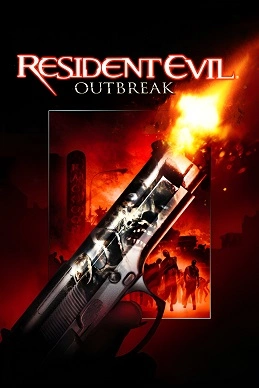
Resident Evil Outbreak
 71
★ /10
71
★ /10
 PS 2
PS 2 Capcom
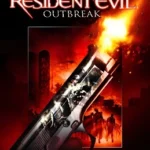
Resident Evil Outbreak is a 2003 survival horror game developed and published by Capcom for PlayStation 2. Released in Japan on December 11, 2003, in North America on March 30, 2004, and in PAL regions on September 17, 2004, it is the first Resident Evil game built around cooperative and online multiplayer, placing the player as one of eight civilian survivors trapped in Raccoon City during the same T-Virus outbreak depicted in Resident Evil 2 and Resident Evil 3: Nemesis.
It received a Metacritic score of 71. The r/ResidentEvilCapcom thread “Did anyone here play Resident Evil Outbreak” sits in its Knowledge Panel with 864 monthly organic visitors — a question whose implied answer is “not many, and not for very long,” since Capcom shut the game’s online servers down permanently on March 31, 2007, less than three years after the North American release.
Technical Specifications
| Attribute | Details |
|---|---|
| Developer | Capcom Production Studio 1 |
| Publisher | Capcom |
| Platform | PlayStation 2 |
| Release | Dec 11, 2003 (Japan) · Mar 30, 2004 (NA) · Sep 17, 2004 (EU, no online) |
| Metacritic | 71 (PS2) |
| Genre | Survival horror, Co-op |
| Online Status | Official servers shut down March 31, 2007 |
| Sales | 1.45 million copies (by August 2006) |
| Sequel | Resident Evil Outbreak: File #2 (2004/2005) |
Ordinary People, Extraordinary Circumstances
Every mainline Resident Evil game before this one starred a trained operative: a S.T.A.R.S. officer, a rookie cop, a government agent. Outbreak‘s premise is different — its eight playable characters are civilians with no combat training and no professional stake in the outbreak, caught in Raccoon City when the T-Virus escapes containment:
A waitress, a reporter, a medical intern, a coroner’s assistant, a schoolteacher, an elderly shopkeeper, a mechanic, and a police officer’s granddaughter — the roster (including Kevin Ryman, Cindy Lennox, Mark Wilkins, Alyssa Ashcroft, Jim Chapman, David King, Yoko Suzuki, and George Hamilton) represents ordinary Raccoon City residents rather than franchise-established heroes. Each has a unique ability reflecting their profession: George Hamilton, a physician, heals more effectively; Yoko Suzuki, a librarian, unlocks certain doors faster; Cindy Lennox starts scenarios with more healing items.
This is the game’s most distinctive creative choice: survival horror from the perspective of the people the trained protagonists of the mainline series are usually trying to rescue.
Cooperative Structure: Up to Four Players
Outbreak was, in Eurogamer’s phrasing at the time, “designed from the ground up to be a co-operative multiplayer game for four players.” Up to four players can team up online (US and Japanese versions only — PAL versions shipped without online functionality) to play through five interconnected scenarios, each set in a different Raccoon City location and playable independently.
Single-player mode is supported, with the player’s chosen character accompanied by two AI-controlled companions rather than facing scenarios alone. The AI companions were a persistent point of criticism: 1UP.com’s contemporary review specifically cited them as “chock-full of repetitive and annoying sound bytes,” and multiple retrospective reviews note that unpredictable partner AI could actively work against careful play — companions wandering into danger, blocking doorways, or failing to assist during item-sharing prompts that require them to stand in a precise position.
No Voice Chat: The Ad-Lib System
Outbreak‘s most consequential design decision — and its most consistently criticised — was Capcom’s choice not to include voice chat for online play. In its place: an ad-lib system, a limited menu of pre-set phrases and callouts players could trigger to communicate (“Help!”, “Over here!”, “Thank you”) without a live microphone connection.
For a four-player cooperative survival horror game, the absence of real-time voice communication was a structural handicap that reviewers flagged immediately and that the community never stopped citing as the single biggest missed opportunity in the game’s design. Coordinating around Raccoon City’s dangers — sharing limited items, warning of approaching threats, planning escape routes — is significantly harder through a phrase wheel than through a headset, and the ad-lib system is the specific element most frequently blamed for keeping Outbreak from realising the potential of its own premise.
The Real-Time Menu
Unlike every previous Resident Evil game, Outbreak‘s inventory, item-trading, and file-reading menus do not pause the game. Opening the “START” menu to check a document or trade an item with a partner leaves the player character vulnerable in real time — a zombie can attack while the menu is open.
This was a deliberate design choice intended to heighten tension in multiplayer (where pausing for one player would otherwise freeze the game for everyone), but it produced a specific side effect Eurogamer’s review noted directly: because reading story documents carries real risk, players are incentivised to skip or rush through them, which “feels light in the story department” — undermining the environmental storytelling that had been a hallmark of the franchise since 1996.
The Five Scenarios
Outbreak shipped with five scenarios, unlocked sequentially on first playthrough: a linear post-outbreak city sequence; a laboratory infiltration; “The Hive,” set in a leech-infested hospital and featuring Leechman — a recurring pursuer enemy whose entire upper body is covered in writhing leeches, widely cited by players as one of the most frustrating and effective enemy designs in the franchise’s history; a burning hotel sequence; and a fifth scenario connecting the pieces together. Extra scenarios and modes were unlockable through play, though some required additional purchase to access fully.
Visual Quality
Contemporary and retrospective reviews consistently single out Outbreak‘s graphics as exceptional for its platform and era. Unlike the pre-rendered backgrounds of Resident Evil 1–3, Outbreak uses fully real-time 3D environments — a shift the franchise had only recently made with Code: Veronica (2000) — and reviewers noted the environmental detail and lighting exceeded even Resident Evil 3‘s presentation. One retrospective review described specific areas as approaching Silent Hill 3 (2003) levels of environmental fidelity, unusually high praise for a PS2 game running full 3D scenes without pre-rendering.
Reception
Resident Evil Outbreak received a Metacritic score of 71 and mixed reviews overall. Critics praised the graphics, the ambitious multiplayer concept, and the novel civilian-survivor premise; criticism centred on the absence of voice chat, inconsistent AI partners, lengthy PS2-era loading times between rooms (a holdover from the original PS1 games’ technical limitations that felt increasingly dated by 2003), and a limited scenario count relative to the asking price.
Community retrospective assessment has been notably more forgiving than the contemporary critical reception, particularly after the game’s servers went offline and its multiplayer ambitions became a historical footnote rather than a live product. User reviews on Metacritic include assessments like “one of the best multiplayer survival horror games… ahead of its time” and specific calls for Capcom to port the Outbreak games to modern platforms so their cooperative design could finally be experienced the way it was intended — a request Capcom has never acted on.
File #2 and the End of Online Play
Resident Evil Outbreak: File #2 (Japan: September 9, 2004; North America: April 26, 2005) is the sequel and final entry in the sub-series, featuring the same eight characters across five new scenarios, with improved controls (strafing while shooting was added) and reduced load times. It received a Metacritic score of 58 — lower than the original — and sold approximately 91,000 copies in Japan by its second week, below Capcom’s expectations at a time when the company was experiencing broader financial difficulty.
Capcom shut down the official online servers for both Outbreak and File #2 on March 31, 2007. On January 1, 2014, fan-run alternate servers restored online play for File #2, adding features like ban lists and leaderboards that were not present in the original service — an unofficial preservation effort that remains the only way to experience either game’s multiplayer as originally designed.
Availability
Neither Outbreak nor File #2 has ever been re-released digitally or ported to any platform beyond the original PlayStation 2. Physical copies are available through Amazon, eBay, GameStop retro, and specialty retro retailers. Both games can be played offline (single-player with AI partners) on original or backward-compatible PS2 hardware without any online functionality required; multiplayer requires either period-appropriate PS2 network hardware and the shuttered official infrastructure (no longer functional) or the fan-run File #2 server community.
Resident Evil news
More news
Capcom Plans to Evolve RE Engine Into an AI-Generation Engine

Roy Lee Reportedly Developing a New Silent Hill Movie
Valve Deliberately Leaked Left 4 Dead 2 Trailer to Dodge ESRB Rules

Steam Gross Revenue Tops $15 Billion in First Eight Months of 2026