 91
91  Ninitendo GameCube
 Capcom
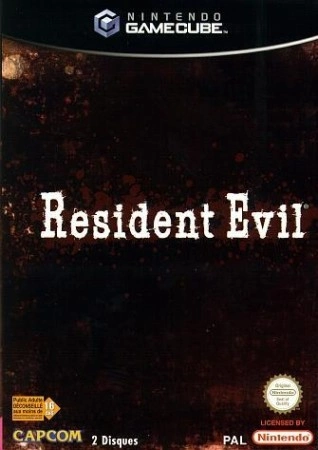
Resident Evil (2002) is a survival horror game developed and published by Capcom for Nintendo GameCube. Released in Japan on March 22, 2002, and in North America on April 30, 2002, it is a complete ground-up remake of Resident Evil (1996) directed by Shinji Mikami — the same director who made the original — built on GameCube hardware as a Nintendo exclusive.
It holds a Metacritic score of 91 and is widely considered the definitive version of the Spencer Mansion story. The community commonly refers to it as the “REmake” — a shorthand that has since been adopted broadly, but that originated specifically with this release and its particular achievement.
Technical Specifications
| Attribute | Details |
|---|---|
| Developer | Capcom Production Studio 1 |
| Publisher | Capcom |
| Director | Shinji Mikami |
| Platform | Nintendo GameCube (exclusive) |
| Release Date | March 22, 2002 (Japan) · April 30, 2002 (NA) |
| Metacritic | 91 (GameCube) |
| Genre | Survival horror |
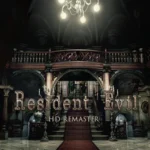
| Current version | Resident Evil HD Remaster (2015, PS3/PS4/Xbox/PC — covered separately) |
Shinji Mikami Remakes His Own Game
The 2002 Resident Evil was Shinji Mikami’s decision to return to the game he had directed six years earlier and rebuild it entirely. Not patch it, not remaster it — rebuild it from the ground up with current technology while reconsidering every design decision that the PlayStation’s limitations had imposed.
The original game used pre-rendered backgrounds because the PlayStation could not render real-time 3D environments at the visual quality Mikami wanted. The remake uses real-time 3D environments while preserving the fixed camera perspective that gave the original its cinematic tension. The camera angles were rebuilt shot by shot to achieve the same compositions with environments that could now be lit dynamically.
Every character model, every enemy, every room, every cutscene was rebuilt. The voice acting was re-recorded. The music was recomposed. What was retained was the layout of the Spencer Mansion, the fundamental item and puzzle logic, and the two-protagonist structure that made the 1996 game replayable.
The result — Mikami’s reassessment of his own work under better conditions — is the version of Resident Evil that most players who have studied the franchise’s history consider closest to the intended experience.
The GameCube Exclusivity Context
The 2002 Resident Evil was part of Capcom’s agreement to produce exclusive titles for Nintendo GameCube — a platform struggling commercially against PlayStation 2 and, increasingly, the original Xbox. The deal, which also included Resident Evil 4 (originally announced as a GameCube exclusive before its eventual release on PS2), Viewtiful Joe, and Killer 7, was designed to give the GameCube a roster of serious third-party exclusives that would distinguish it from its competition.
The remake was a GameCube exclusive for six years. The Wii received a Japan-only release in 2008. Western players who wanted to play the 2002 version on a non-GameCube platform had to wait until the HD Remaster in 2015. This exclusivity created a specific scarcity that gave the remake a reputation among players who had GameCubes as one of the best reasons to own the hardware, and among players who didn’t as an unplayed classic.
What Was Rebuilt
Every aspect of the 1996 original was reconsidered, not just technically updated:
The Spencer Mansion’s architecture was expanded. New rooms, new corridors, and a larger accessible outdoor area gave the building more volume than the original’s memory constraints permitted. The spatial relationships between areas were preserved; the areas themselves are denser.
Enemy design was updated across every creature type. The zombies in particular — now rendered in real-time with motion capture performances and dynamic cloth simulation — move and respond differently from the original’s sprite-based depictions.
The opening sequence was completely rebuilt. The original’s pre-rendered FMV introduction — still memorable, still campy — is replaced with real-time cinematics that communicate the same events with dramatically improved production quality and without the tonal dissonance of the original’s English voice acting.
Jill and Chris are redesigned. Their 2002 character models reflect an updated aesthetic that sits between the angular PlayStation-era designs and the more realistic proportions of the later 3D era. Critically, the dual protagonist structure was retained: Jill’s wider inventory and lockpick make her the more accessible option; Chris’s higher health and reduced inventory make his campaign harder.
Lisa Trevor
The remake’s most celebrated and most discussed addition is Lisa Trevor, a character who does not exist in the 1996 original in any form.
She is the first known survivor of the Spencer estate’s experimental programme: a young woman whose mother was a model for the mansion’s architect Spencer, who was taken by Spencer’s scientists in the 1960s and subjected to experimental viral inoculation without consent or explanation. She has survived decades of experiments. The viruses she was exposed to produced something in her that other subjects could not develop: apparent biological immortality. She cannot be killed by conventional means. She continues to walk the estate, wearing a mask made from her mother’s face, looking for something she cannot find.
Her backstory is conveyed through documents found in the mansion — a research log, her own handwritten notes, letters from her mother that she carries without being able to read them. The documents are short. Their effect on the player who reads them is disproportionate to their length.
In gameplay, Lisa functions as an invulnerable pursuer in specific areas. She can be temporarily incapacitated but not defeated. Encounters with her require navigation rather than combat. Her presence in particular locations creates sustained dread because the player knows she is coming and knows that fighting her is futile.
Crimson Heads
The remake introduces the Crimson Head system, which changes the risk calculus of every zombie encounter and adds a strategic layer that the 1996 original entirely lacked.
A zombie killed by conventional body damage — shot enough times to incapacitate — will eventually reanimate as a Crimson Head if its brain was not destroyed and its body was not burned. Crimson Heads are faster, more aggressive, and substantially more dangerous than the base zombie. They have a distinctive appearance (bright red colouration, exposed musculature) and immediately attack rather than shambling.
Managing Crimson Heads requires resource decisions:
- Spare additional ammunition on the head specifically
- Carry limited kerosene and use it to burn corpses in areas that will be revisited
- Accept the risk and plan around Crimson Head encounters on return visits
The system means that areas the player has already “cleared” are not necessarily safe on subsequent passes. It makes ammo conservation more complex — spending more ammunition now on headshots might prevent spending more on a Crimson Head later. The optimal strategy varies by character, inventory configuration, and route choice in ways that reward replaying the game with knowledge of the mansion’s layout.
The REmake Standard
The 2002 Resident Evil established what a remake could be in a way that subsequent games in the same tradition cite directly. The RE2 Remake (2019) and RE4 Remake (2023) are both, in different ways, responses to the standard the 2002 game set: not a graphical update but a creative reinterpretation that justifies its own existence by doing something the original could not.
Mikami’s specific choices — rebuilding rather than remastering, adding new content that deepened the existing story rather than extending it trivially, preserving what worked and replacing what didn’t — were unusual enough at the time to feel remarkable. They are now the definition of what the word “remake” implies when used to describe a serious production rather than a cash-extraction exercise.
Reception and Legacy
Resident Evil (2002) received a Metacritic score of 91 — higher than the original 1996 game’s retrospective aggregate and consistent with the GameCube’s best-reviewed titles. Critics praised the visual quality, the additions (Lisa Trevor, Crimson Heads), the faithful preservation of the 1996 game’s atmosphere, and the overall quality of the production.
Its commercial performance was limited by the GameCube’s market position — the console’s install base was never large enough to give the game the sales it warranted. Its critical reputation has only grown since its initial release, particularly after the HD Remaster made it accessible on platforms with larger player bases.
The community shorthand “REmake” — now used to describe any Capcom survival horror remake — originated as a specific reference to this game. That it became a generic term is a measure of how completely the 2002 game defined what the concept meant.