Resident Evil: The Umbrella Chronicles
 75
★ /10
75
★ /10
 PS 3
PS 3 Wii
Wii Capcom
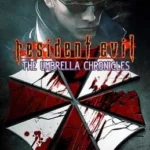
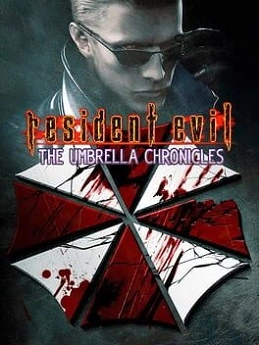
Resident Evil: The Umbrella Chronicles is a 2007 on-rails light gun shooter developed by Cavia Inc. in collaboration with Capcom (including members of the disbanded Clover Studio, creators of Viewtiful Joe and Ōkami) and published by Capcom for the Nintendo Wii. Released on November 13, 2007 in North America, November 15 in Japan, and November 30 in Europe (excluding Germany, where it was denied a USK rating), it retells the events of Resident Evil Zero, the Resident Evil remake, and Resident Evil 3: Nemesis through 22 rail-shooter levels, narrated by Albert Wesker, and adds an entirely new Wesker-focused storyline set in Russia in 2003.
It sold over 1.4 million copies worldwide. The r/residentevil thread “Should I play the Umbrella Chronicles?” sits in its Knowledge Panel with 2,380 monthly organic visitors — the highest-traffic community post in this game’s SERP, reflecting a question the franchise’s fanbase has been asking new players to consider for nearly two decades.
Technical Specifications
| Attribute | Details |
|---|---|
| Developer | Cavia Inc. (with Capcom, former Clover Studio staff) |
| Publisher | Capcom |
| Producer | Masachika Kawata |
| Platform | Nintendo Wii |
| Release | Nov 13, 2007 (NA) · Nov 15, 2007 (Japan) · Nov 30, 2007 (EU) |
| HD Re-release | Resident Evil Chronicles HD Collection, PS3, June 26, 2012 |
| Metacritic | ~72–75 (mixed-to-positive, wide critic spread) |
| Genre | On-rails light gun shooter |
| Sales | 1.4 million+ (Wii version) |
| Compatible peripherals | Wii Remote · Wii Zapper (optional) |
Why It Exists: “Wii Users Like Easiness”
Umbrella Chronicles was not originally conceived as a rail shooter. Producer Masachika Kawata — who had previously overseen the PS2 port of Resident Evil 4 — revealed in an interview with Famitsu that the game was initially planned as a cooperative game playing similarly to RE4 itself. Capcom changed direction deliberately: Kawata stated that “Wii users like easiness,” that an RE4-style game was “too complicated” for the platform’s audience, and that the team purposefully “compromised to a lower difficulty level” and “reduced enthusiast-only elements” to fit what Capcom believed the Wii’s installed base wanted.
The resulting on-rails format — aim with the Wii Remote, shoot, move automatically along a fixed path — was a genre choice explicitly driven by an assumption about the platform’s casual audience rather than a creative preference of the development team.
Retelling Three Games Through Wesker’s Eyes
The game’s structural conceit is that Albert Wesker — narrating throughout — is reconstructing the Umbrella Corporation’s history for the player, exposing the company’s secret actions across three previously told stories:
“Train Derailment” and “The Mansion Incident” retell Resident Evil Zero: Rebecca Chambers and Billy Coen aboard the Ecliptic Express, then infiltrating the Umbrella Training Facility, stalked by the resurrected James Marcus.
A remixed retelling of the original Resident Evil (based on the 2002 GameCube remake) covers the Spencer Mansion incident from a compressed, rail-shooter perspective, with new vignettes — including scenes of Wesker travelling from the Umbrella factory to the RPD between RE0 and RE1, and his post-Tyrant awakening with his enhanced virus.
“Raccoon’s Destruction” retells Resident Evil 3: Nemesis, covering Jill Valentine’s escape from the city alongside Carlos Oliveira, with additional side-vignettes depicting Ada Wong’s and HUNK’s separate escapes from Raccoon City that the mainline games only reference.
The fourth scenario is entirely new material: set in Russia in 2003, it follows Umbrella operative Sergei Vladimir and his two Tyrant-class bodyguards (the “IVANs”) as he attempts to rescue Oswell Spencer and secure Umbrella’s central computer archive — referred to in-game as the “Red Queen,” a naming choice that drew some criticism from fans for referencing the Resident Evil film series’ AI antagonist rather than original franchise material.
Nine playable characters appear across the campaign: Rebecca Chambers, Billy Coen, Chris Redfield, Jill Valentine, Carlos Oliveira, Albert Wesker, Ada Wong, Richard Aiken, and HUNK.
Canon Status
The retellings are explicitly non-canonical — condensed, remixed, and reordered specifically to fit the rail-shooter format and to allow Wesker’s narration to connect disparate story threads. The new Sergei Vladimir material occupies a more ambiguous position: it fills gaps in the timeline between Code: Veronica and Resident Evil 4 that the mainline games left unaddressed, and elements of it (Spencer’s death, the Umbrella Corporation’s final collapse) are generally treated by the community as loosely canonical background even though the specific playable sequences are not.
Gameplay: Beyond House of the Dead
Reviewers consistently noted that Umbrella Chronicles offered more depth than the light gun genre’s dominant reference point, Sega’s House of the Dead series. Missions run 10 to 20 minutes each — considerably longer than a typical arcade shooter stage — with environmental destruction revealing hidden ammunition, currency, health items, and collectible file pages that expand the Umbrella Corporation’s backstory. Weapon upgrades are purchased between missions using currency earned from destroyed environmental objects, adding a light progression layer between story sequences. Multiple branching paths exist within some levels, though not consistently enough to provide substantial replay incentive on their own.
Two-player co-op is supported throughout — a second Wii Remote allows a friend to join any mission, and multiple contemporary reviews specifically recommended the game as significantly more enjoyable in co-op than solo.
The Wii Zapper peripheral (a gun-shaped shell for the Wii Remote and Nunchuk, announced at E3 2007) was compatible but not required, and Nintendo Life’s review specifically recommended against using it, describing the trigger mechanism as “awkward” compared to holding the Remote directly.
Reception: The Split Verdict
Critical reception was genuinely divided along a specific fault line: reviewers evaluating the game as a Resident Evil fan-service product were considerably more positive than reviewers evaluating it purely as a rail shooter against genre peers like House of the Dead or Time Crisis.
IGN praised the “amazingly cool” design and called the presentation “pretty impressive,” while criticising the pacing as too slow and noting the comparatively weak coverage given to Resident Evil 2. GameSpot praised the accessible controls but found the on-rails structure “restrictive” and criticised the music for undermining atmosphere. 1UP.com called it “a surprisingly meaty experience” but noted it “never really amounts to more than its concept.” One GameFAQs critic pull-quote — “Resi fanboys should feel free to add ten to the score; straight-up shooter fans with no love for zombies should deduct ten” — captures the reception split more precisely than any single numeric score could.
User reviews on Metacritic follow the same pattern: fans of the franchise frequently rate the game 7.5–8/10 and describe it as “a must-play” for series completionists offering “over 20 hours” of content toward 100% completion, while dedicated shooter-genre players are notably harsher, with at least one user citing the Talos boss fight’s “wonky mechanics” as a specific breaking point despite having 100%-completed multiple mainline Resident Evil titles.
HD Collection (2012)
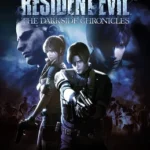
Resident Evil: Chronicles HD Collection, released for PlayStation 3 on June 26, 2012, bundles Umbrella Chronicles with its 2009 sequel, Resident Evil: The Darkside Chronicles (which retells Resident Evil 2 and Code: Veronica), in upscaled HD presentation. The collection supports PlayStation Move as its primary intended input, though it remains fully playable with a standard DualShock controller.
Contemporary reassessment in the HD Collection’s reviews consistently rated Darkside Chronicles as the more accomplished of the two games, describing it as “more evolved” than Umbrella — a characterisation reflecting Umbrella Chronicles‘ position as the format’s first attempt, with the sequel refining what the original established. The HD Collection was sold digitally only, with no physical disc release, which several reviews noted as a missed opportunity given the games’ fan-collector appeal.
Availability
The original Wii version is available only as a physical cartridge, through Amazon, eBay, GameStop retro, and specialty retro retailers; PriceCharting.com tracks its ongoing collector value. The HD Collection remains available digitally on the PlayStation Store for PS3, with no PS4, PS5, Xbox, PC, or Switch release of either version having ever been produced — making the PS3 the only platform on which Umbrella Chronicles is still purchasable in any digital form.
Resident Evil news
More news
Capcom Plans to Evolve RE Engine Into an AI-Generation Engine

Roy Lee Reportedly Developing a New Silent Hill Movie
Valve Deliberately Leaked Left 4 Dead 2 Trailer to Dodge ESRB Rules

Steam Gross Revenue Tops $15 Billion in First Eight Months of 2026