 79
79  iOS (iPhone/iPad),
  Nintendo Switch,
  PC,
PC,  PS4,
PS4,  PS5,
PS5,  Xbox One,
  Xbox Series X/S
 Capcom
Where to buy



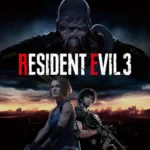
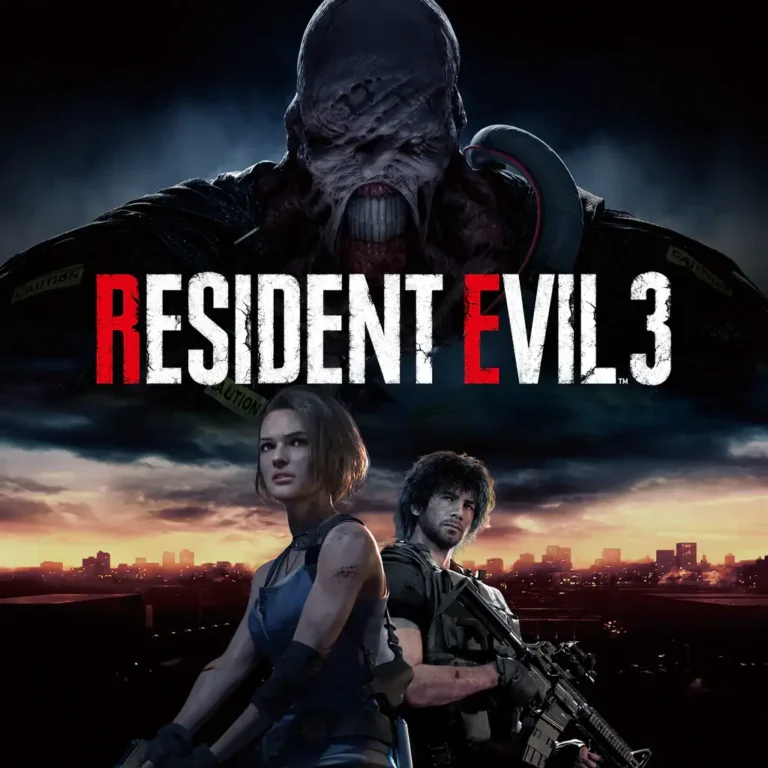
Resident Evil 3 (2020) is a third-person action horror game developed and published by Capcom. Released on April 3, 2020, for PlayStation 4, Xbox One, and PC, it is a remake of Resident Evil 3: Nemesis (1999), following Jill Valentine escaping Raccoon City while pursued by Nemesis. It was developed by the same division responsible for the Resident Evil 2 remake (2019).
It received a Metacritic score of 80. The r/residentevil thread “Resident Evil 3 Remake might be disappointing but…” sits in its Knowledge Panel with 1,644 monthly organic visitors — a defensive formulation that the community arrived at because the game is, by most accountings, disappointing as a remake of the 1999 original, and enjoyable as a standalone action game, and both of those things are true simultaneously.
Technical Specifications
| Attribute | Details |
|---|---|
| Developer | Capcom Division 1 |
| Publisher | Capcom |
| Director | Kiyohiko Sakata |
| Producer | Peter Fabiano |
| Engine | RE Engine |
| Platform(s) | PS4 · Xbox One · PC (Steam) |
| Release Date | April 3, 2020 |
| Metacritic | 80 (PS4) · 80 (Xbox One) · 79 (PC) |
| Genre | Third-person action horror |
| Mode | Single-player |
Raccoon City: Expanded, Then Abbreviated
The remake opens with a more expansive Raccoon City environment than the original: the streets of the city are a proper open zone rather than a linear corridor, and Jill’s navigation of them before reaching the safety of the subway provides a sense of scale and environmental collapse that the 1999 game’s production constraints did not allow.
This expanded opening is the remake’s most praised addition and, for many players, its most sustained creative success. The city looks and feels like a place that was alive last week: storefronts, apartment buildings, streets with vehicles and environmental details that communicate what was lost. Nemesis’s pursuit of Jill through those streets — in its early scripted appearances — is visually spectacular.
The caveat, which becomes apparent as the game progresses: the City of Raccoon City that the opening establishes is not consistently explored. The game’s 5–6 hour runtime means what begins as a large-feeling environment compresses into more directed sequences in its second half. Players who played the 1999 original will identify specific locations and areas that were represented there and are absent here.
Jill Valentine and Carlos Oliveira
Jill Valentine is characterised in the remake with more active personality than the original’s more guarded portrayal. She is louder, more outwardly combative, and given to verbal sparring with antagonists that establishes her as someone who has been in enough dangerous situations to have opinions about them. Critics were divided on this reading of the character; the community response has been largely positive about Jill’s remake personality while noting it is a different interpretation than the original.
Carlos Oliveira receives more development than he did in 1999. His hospital section — an extended playable sequence where players control Carlos navigating the Raccoon City hospital for medical supplies — is the remake’s most consistently praised standalone segment: atmospheric, well-paced, and featuring genuinely effective horror tension that the main campaign does not always sustain. Carlos in the remake is a more fleshed-out character than the original’s version, and the hospital section gives him room to demonstrate both his competence and his moral position relative to Umbrella.
Nemesis: Scripted vs. Dynamic
The 1999 original’s Nemesis pursued Jill across multiple areas, appeared in non-scripted zones, dropped items when temporarily defeated, and created sustained tension through unpredictable presence. His mechanics were the defining argument for the original game’s survival horror quality and the element most cited by the community as what the remake most needed to replicate.
The remake’s Nemesis appears at specific scripted confrontation points and in sequences designed as set pieces. He is visually more imposing than his 1999 counterpart — a larger, more dynamic creature rendered through RE Engine’s high-fidelity character modelling — and his individual encounters are cinematically staged. He does not pursue dynamically across the game’s open street sections in the early game; he appears where the game has decided to place him.
The r/residentevil Short Video “my take on why RE3 Remake so badly [missed its potential]” and the Eurogamer review “at times brilliant but not a patch on its predecessor” both identify Nemesis’s reduced dynamic threat as a primary failure. Eurogamer’s specific phrasing — “not a patch on its predecessor” — refers to the RE2 Remake, released eleven months earlier, whose Mr. X set a standard for pursuer enemy dynamic behaviour that the RE3 Remake’s Nemesis did not meet or attempt to match.
What Was Removed
The specific absences from the 1999 game that the remake community most consistently documents:
The Clock Tower area — the distinctive gothic clocktower setting of the 1999 game’s mid-section, which provided significant atmosphere and a memorable boss encounter, is absent from the remake.
Mercenaries: Operation Mad Jackal — the standalone arcade mode featuring Carlos, Mikhail, and Nicholai in scored time-attack runs, which the original’s community regarded as one of survival horror’s best extra modes, was not included.
Live Selection moments — the 1999 game’s branching narrative choices (Fight or Run? Which action to take at this moment?) were mostly removed, reducing replayability and narrative variation.
Multiple city sections and routes — the remake’s Raccoon City, despite its expanded opening, contains fewer distinct areas than the 1999 game’s more extensive street map.
The r/patientgamers Discussion thread “Resident Evil 3 Remake (2020) lacks the sense of [danger]” appears in this SERP, reflecting the specific critical position that the removed elements contributed to a quality that the remake does not replicate.
The Resistance Multiplayer
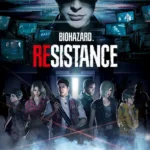
Bundled with the remake as a separate game was Resident Evil Resistance: an asymmetric 4v1 multiplayer mode in which one player controls a “Mastermind” placing traps and enemies while four players cooperate to survive and escape. The mode was developed by a different team and received poor reviews. It has since been shut down. Its inclusion in the bundle was cited as evidence that resources that could have extended the main campaign were allocated elsewhere.
“Might Be Disappointing But…”
The Knowledge Panel thread’s formulation captures the community’s most common settled position: the remake is disappointing specifically as a remake of Resident Evil 3: Nemesis, which is a specific and precise disappointment. The 1999 game has a well-defined identity — the dynamic Nemesis, the Live Selections, Mercenaries mode, the Clock Tower — and the remake does not engage with most of that identity.
Evaluated on its own terms — a 5–6 hour cinematic action horror game with high production values, one excellent secondary character section, effective early city atmosphere, and solid if scripted major encounters — it is competent to good. Evaluated against the RE2 Remake’s standard of expanding and improving on the original while preserving its character, it fell short in every direction.
Whether this constitutes a failure depends on what the player is bringing to it. First-time players without familiarity with the 1999 game report enjoying the remake on its own terms. Players who loved the 1999 game report the specific disappointment the Knowledge Panel post acknowledges.
Reception
Resident Evil 3 (2020) received a Metacritic score of 80 on PS4 and Xbox One and 79 on PC. Critics praised the visual quality, Carlos’s hospital section, and Jill’s characterisation. Consistent criticisms: the short runtime, Nemesis’s scripted rather than dynamic behaviour, the missing content from the 1999 original, and the bundled Resistance mode as an inadequate substitute.
The game sold approximately 5 million copies — significantly less than the RE2 Remake (10 million) and RE4 Remake (7 million in its first year). It is available on Steam, PS4, and Xbox; no current-gen optimised PS5 or Xbox Series version exists beyond backward compatibility.
The 1999 Resident Evil 3: Nemesis remains available and is broadly considered by the community to be the version of this story that best represents it. A separate card covers that game.
DLC & Expansions 1
Resident Evil news
More news
Capcom Plans to Evolve RE Engine Into an AI-Generation Engine

Roy Lee Reportedly Developing a New Silent Hill Movie

Valve Deliberately Leaked Left 4 Dead 2 Trailer to Dodge ESRB Rules

Steam Gross Revenue Tops $15 Billion in First Eight Months of 2026