 38
38  PC
PC PS4
PS4 Capcom

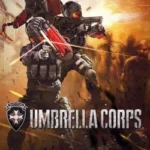
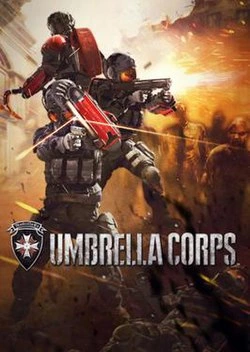
Umbrella Corps is a 2016 online tactical third-person shooter developed and published by Capcom. Released for PlayStation 4 and PC on June 21–22, 2016, it is set in the Resident Evil universe and follows mercenaries fighting each other across arenas built from iconic franchise locations, while zombies function as a shared environmental hazard that either team can weaponise.
It received a Metacritic score of 32 on PS4 — one of the lowest scores Capcom has ever received for a title bearing the Resident Evil name. The r/residentevil thread currently in its Knowledge Panel is titled “Today marks 8 years since the release of Resident Evil Umbrella Corps.” It has 560 monthly visitors. It does not evaluate the game. It simply notes that it happened.
Technical Specifications
| Attribute | Details |
|---|---|
| Developer | Capcom |
| Publisher | Capcom |
| Platform(s) | PlayStation 4 · PC (Steam) |
| Release Date | June 21, 2016 (EU) · June 22, 2016 (NA) |
| Metacritic | 32 (PS4) |
| Genre | Online tactical third-person shooter |
| Status | Available on Steam · Servers effectively dead |
The Premise
The year is 2013. Multiple organizations have emerged to compete for Umbrella Corporation’s bioweapon research. These organizations hire mercenaries and send them into the same locations simultaneously, resulting in small firefights where teams attempt to eliminate each other while working around zombie populations that occupy the same spaces.
The game is set in arenas inspired by Resident Evil locations — the village from RE4, the Spencer Mansion, Raccoon City streets — repurposed as training grounds and combat zones. It is not a survival horror game, not a story-driven game, and not connected to any specific event in the franchise’s main narrative.
The Zombie Jammer
The game’s central mechanical conceit is the zombie jammer: a device worn by each player that emits a signal preventing nearby zombies from recognising them as targets. While a player’s jammer is active, zombies ignore them and function as background environment. When a jammer is damaged sufficiently — by enemy gunfire, explosions, or melee impacts — it deactivates, making that player suddenly visible and attackable by zombies in their immediate area.
The intended emergent gameplay: players can target enemy jammers to weaponise the zombie population against them, creating dynamic three-way pressure where managing zombie proximity becomes as important as tracking enemy movement. In practice, the maps were small enough and the damage output high enough that jammer-based zombie deployment rarely played out as a deliberate strategy. Reviews described zombies as more of a nuisance than a tactical dimension.
Why the Score Is 32
The specific failures documented across the game’s critical reception:
Map scale: The arenas are very small — built for 3v3 encounters — producing intense firefights with minimal space for the tactical positioning the zombie jammer mechanic required to function as designed. The cramped geometry made strategic play difficult and survival-of-the-luckiest more common.
Movement: Third-person movement felt awkward and inconsistent relative to the genre standards of 2016. Players frequently clipped or became stuck on environmental geometry in maps that were too small to accommodate the movement speed.
Player population: The launch player count was extremely low — reports from some regions cited single-digit concurrent players in the first weeks. An online-only game with insufficient players for reliable matchmaking produces no game. The cycle of low population → long matchmaking → frustrated players leaving → lower population proceeded rapidly.
Value: At $29.99 on launch, the game offered limited content: a small map pool, no single-player mode, no story, and cosmetic DLC priced for a game with an active audience. The pricing did not match the content.
SCMP’s review called it a “lazy shooter” that “tarnishes” the franchise name. The Metacritic aggregation of 32 reflects a genuine consensus across outlets that the game was released in an incomplete state without sufficient content to sustain an audience.
Context: Between RE6 and RE7
Umbrella Corps was released in June 2016 — four years after Resident Evil 6 (2012) and six months before Resident Evil 7 (January 2017). This places it at the precise nadir of the franchise’s commercial and critical trajectory: the period when RE6‘s failure had prompted internal restructuring and before RE7‘s reinvention had demonstrated a viable path forward.
The game’s production history and the choice to release a low-budget online-only competitive game at this specific moment reflect the uncertainty of what Resident Evil was supposed to be during those years. It was not the answer to that question.
Current Status
Umbrella Corps is available for purchase on Steam and PlayStation Store at reduced prices — it has appeared in Humble Bundles. Whether dedicated servers remain active is practically irrelevant: concurrent player counts on Steam have been in the single digits for years, and finding an active match requires more players than currently search for one. The game exists as a purchasable product with no functional multiplayer.
An eight-year anniversary Reddit post is the current primary community signal for a game whose launch-day player count in some regions was lower than the number of people watching the thread.
Resident Evil news
More news
Capcom Plans to Evolve RE Engine Into an AI-Generation Engine

Roy Lee Reportedly Developing a New Silent Hill Movie
Valve Deliberately Leaked Left 4 Dead 2 Trailer to Dodge ESRB Rules

Steam Gross Revenue Tops $15 Billion in First Eight Months of 2026