Resident Evil 4
 96
★ /10
96
★ /10
 Ninitendo GameCube,
  Nintendo Switch,
  PC,
PC,  PS 2,
PS 2,  PS 3,
PS 3,  Wii,
Wii,  Xbox 360
 Capcom
 ND Games
Where to buy



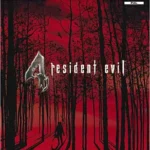
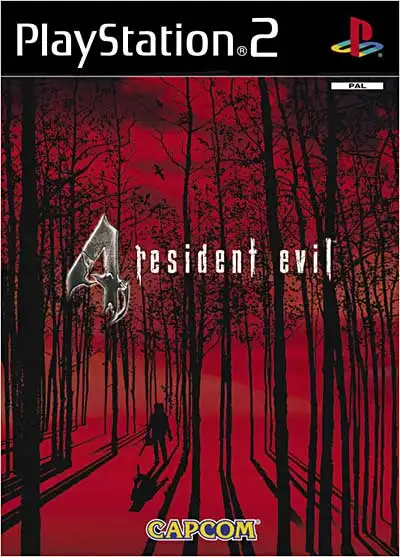
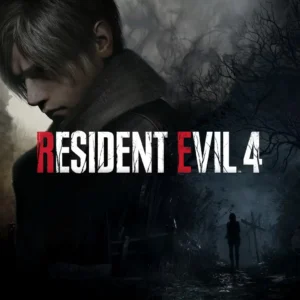
Resident Evil 4 is a 2005 action horror game developed and published by Capcom. Originally released for Nintendo GameCube in Japan on January 11, 2005, and in North America on January 11, 2005, it was directed by Shinji Mikami — his final Resident Evil game and, by most measures, his masterpiece. It holds a Metacritic score of 96 on GameCube and is among the most influential games ever produced.
An important disambiguation: when you search “Resident Evil 4” in 2026, the Steam result (app 2050650) and the Knowledge Panel both point to the 2023 Remake — a different game sharing the same name that received Metacritic scores of 93–94. This card covers the 2005 original. The remake has its own entry.
Technical Specifications
| Attribute | Details |
|---|---|
| Developer | Capcom Production Studio 1 |
| Publisher | Capcom |
| Director | Shinji Mikami |
| Original Platform | Nintendo GameCube |
| Original Release | January 11, 2005 (GCN, NA/Japan simultaneously) |
| Also released on | PS2 (Oct 2005) · Wii (2007) · PC (2007) · HD Remaster (PS3/Xbox 360, 2011) · PC Steam (app 254700, 2014) · Switch (2019) |
| Metacritic | 96 (GameCube) · 91 (PS2) |
| Genre | Third-person action horror |
The Game That Changed Everything
Resident Evil 4 changed what third-person games were. Not what third-person survival horror games were — what third-person games period were.
Before this game, third-person action had a camera that followed the character. After this game, nearly every third-person action game adopted the over-the-shoulder perspective — the camera positioned behind and slightly above the protagonist’s right shoulder, aimed in the direction of engagement, iron sights accessible by holding a trigger. The cover systems of Gears of War (2006) and Uncharted (2007), the combat framing of Mass Effect (2007) and Dragon Age: Origins‘ (2009) third-person sections, the enemy approaches of The Last of Us (2013), the general architecture of the modern action game — all of them cite RE4 or are directly descended from games that did.
Shinji Mikami had directed Resident Evil (1996) and produced the series through Code: Veronica (2000). He understood what the fixed-camera survival horror formula was and what it could not become. Resident Evil 4 was the act of deliberately breaking the mould he had built, producing something that was recognisably Resident Evil in name and some mechanics while being completely different in structure, pacing, and camera.
Rural Spain and Los Illuminados
The game is set not in a city under virus outbreak but in rural Spain — a village, then a castle, then a military island. Leon S. Kennedy, six years after Resident Evil 2 now a trained government special agent, has been dispatched to recover Ashley Graham, the President’s daughter, who has been kidnapped by the Los Illuminados cult led by the self-styled Saddler.
The rural European setting — stone churches, wooden houses, medieval castle towers, foggy valley paths — is the game’s first and most significant visual statement that this is not the same Resident Evil. It is not Raccoon City. There are no zombies. What the cult’s members carry is not the T-Virus but something different — a neural parasite called the Plaga — and it produces enemies who can think, communicate, and coordinate.
Leon S. Kennedy
The Leon of Resident Evil 4 is a different character than the nervous rookie of RE2. He is quiet, physically capable, and given to dry one-liners delivered with the minimal effort of someone who has been doing this for six years and is not particularly surprised by giant monster men. The line “Your right hand comes off?” — said to a cultist who is literally removing and weaponising his own hand — achieves a specific kind of deadpan that the game uses consistently.
His relationship with Ashley involves genuine protective concern without sentiment. He has a brief codec-style communication relationship with an American intelligence contact called Hunnigan. He interacts briefly with Ada Wong, whose parallel mission is never fully explained in the main campaign.
The Merchant
“What’cha buying?“
The Merchant — a hooded figure of completely unexplained origin who appears at intervals throughout the game’s three settings, offering weapons, weapon upgrades, and supplies for purchase with the gold currency the game’s enemies drop — is one of the most beloved supporting characters in the franchise’s history. His VoiceLines, his inventory management function, and the specific texture of his scripted interjections (“Stranger” when Leon approaches, “Come back any time” on departure) gave a game full of intense encounters a recurring moment of relative warmth.
He has no backstory. He is never explained. The 2023 Remake included him, voiced differently and given more personality. The community generally prefers the 2005 version’s inexplicable mystery.
The Attache Case
Inventory management in Resident Evil 4 operates through a Tetris-like grid system built into Leon’s attache case. Each item occupies a specific shape and size of grid space — a handgun takes a different footprint than a shotgun, a grenade than a herb, an egg than a first aid spray. The total grid space is fixed (and can be expanded by purchasing larger cases from the Merchant).
Optimal attache case organisation is a meta-puzzle layered over the combat and exploration puzzle of the rest of the game. Players who organise efficiently can carry substantially more than players who don’t think about layout. This inventory system has since been replicated in survival horror games including the RE2 Remake and the series’ subsequent entries.
Ganados and the New Enemy Type
The Ganados (infected villagers, castle guards, and island soldiers) are not zombies — they cannot be killed by removing the head, they carry and use weapons, they can attempt to grab Leon for follow-up attacks by other Ganados, they call out to each other, and they have rudimentary tactical behaviour. A group of villagers hearing a gunshot will converge from multiple directions. A Ganado with a shield blocks standard shots and requires circumvention.
This intelligent enemy design was the mechanical reason for the camera change: enemies who could flank required the player to be able to see what was around them, which required the camera to move with engagement rather than staying fixed. The design and the presentation are inseparable.
Notable enemy types built on this foundation:
Dr. Salvador — the chainsaw villager who appears early in the village section and can one-shot Leon. His arrival (announced by the sound of his chainsaw) is one of gaming’s most effective introductory moments of escalation.
Regenerators — late-game enemies that regenerate damage rapidly unless shot with specific equipment (the IR Scope, which reveals the parasites that must be destroyed). Their breathing sound is among the game’s most effectively unsettling audio design choices.
El Gigante — multi-stage giant enemies that require environmental use (available lever or a dog Leon can optionally rescue in the game’s opening).
Salazar
Ramon Salazar is the castle’s lord — small, theatrical, deeply earnest in his villainy, and given to extended monologues that Leon punctuates with flat commentary. Their interactions are the game’s most overtly comedic content and among its most memorable. Salazar’s dialogue escalates from pompous to desperate in proportion to his failing attempts to stop Leon, making the character’s arc a comedy of diminishing dignities.
His bodyguard, the Verdugo, is among the game’s most technically demanding encounters — a creature that requires specific environmental tools to fight effectively and kills rapidly if those tools are not used.
Separate Ways and Ada Wong
Separate Ways is an additional playable storyline that shows Ada Wong’s parallel mission during the same events as the main game. It was a PS2 exclusive at launch, not included in the original GameCube release, and is now standard in all current versions. It reveals Ada’s actual objectives and employer, explains several events in the main game that were otherwise unexplained, and provides additional boss content.
Assignment Ada is a shorter, score-attack arcade mode playable as Ada after completing the main campaign.
The Wii Version
The 2007 Wii release is frequently cited as the version of Resident Evil 4 that most fully realised the game’s combat feel. The Wii Remote’s pointer controls allowed direct aiming at screen positions — pointing at an enemy’s head rather than using the laser sight and waiting for it to settle — producing a precision and responsiveness that the GameCube and PS2 controls had not achieved. Many players who completed the game on Wii cite those controls as the definitive version of the combat experience.
The 2023 Remake
The 2023 Resident Evil 4 (app 2050650) is a complete ground-up rebuild of the same story and setting by a different Capcom team (directors Yasuhiro Anpo and Kazunori Kadoi). It holds Metacritic scores of 93–95 across PS5, Xbox Series, and PC. The Short Videos in the 2026 SERP for “Resident Evil 4” include “RE4 Remake: Capcom’s Magnum Opus” — a characterisation the community gives it.
The remake expands the narrative, reworks the combat to feel more modern (similar to RE2 Remake’s design), significantly expands the Separate Ways content as paid DLC, and adds the Chainsaw Demo as a standalone playable preview. It does not replace the original — the original’s specific tone, its QTEs, its specific Merchant voice, and Shinji Mikami’s directorial sensibility are not reproduced — but it is a serious creative work that uses the 2005 game as source material rather than template.
The r/residentevil4 subreddit (2,947 monthly organic visitors from search) discusses both versions.
Where to Play the Original
The 2014 Steam version (app 254700) of the original Resident Evil 4 is the most accessible current PC option; community mods on the Steam Workshop address remaining presentation issues. Physical GameCube, PS2, and Wii versions are available through retro game retailers. The Nintendo Switch version (2019) is a stable port. No “1920×1080 Classic” enhanced re-release comparable to the RE1/RE2/RE3 GOG editions has been released for RE4 specifically; the Steam version predates that series.
Reception and Legacy
Resident Evil 4 holds Metacritic scores of 96 on GameCube and 91 on PS2. It sold approximately 10 million copies across all platforms and was the highest-selling GameCube game at the time of its release. It won numerous Game of the Year awards for 2005 and appears regularly on ranked lists of the greatest games ever made — a position it has held, without significant revision, for twenty years.
Shinji Mikami left Capcom after its completion to found Tango Gameworks (later making The Evil Within series and Hi-Fi Rush). He had directed what was, by any metric, the most influential third-person action game of its decade, and he knew it was the kind of project where the correct decision was to stop.
The specific influence of Resident Evil 4‘s camera, combat pacing, Merchant upgrade economy, Tetris inventory, and enemy intelligence design can be traced forward through virtually every third-person action game of the subsequent twenty years. The game is no longer the defining example of its genre; it is the definition of the genre itself.
DLC & Expansions 1
Resident Evil news
More news
Capcom Plans to Evolve RE Engine Into an AI-Generation Engine
Roy Lee Reportedly Developing a New Silent Hill Movie
Valve Deliberately Leaked Left 4 Dead 2 Trailer to Dodge ESRB Rules

Steam Gross Revenue Tops $15 Billion in First Eight Months of 2026