 92
92  PS5
PS5Where to buy

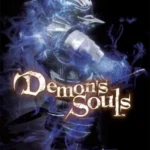
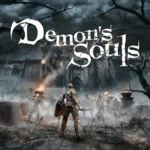
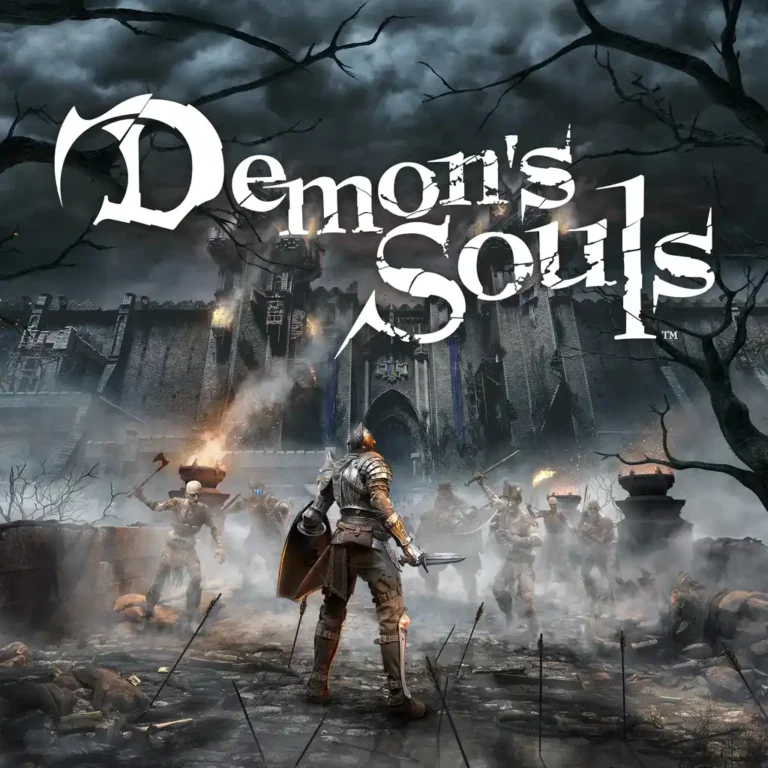
Demon’s Souls (2020) is a remake of FromSoftware’s genre-founding 2009 action RPG, developed by Bluepoint Games and Japan Studio and published by Sony Interactive Entertainment as a PlayStation 5 launch title on November 12, 2020. It holds a Metacritic score of 92 and was near-universally treated as the PS5’s first must-have exclusive — a complete visual and technical reconstruction of the PS3 original, built on the original game’s own code to preserve its design beat for beat.
It also carries two distinctions nobody predicted at launch: it turned out to be Japan Studio’s final game before Sony folded the storied team into Team Asobi — and Bluepoint’s final released game before that studio’s own shutdown in 2026, making the remake an unintentional farewell from both of its developers.
Technical Specifications
| Attribute | Details |
|---|---|
| Developers | Bluepoint Games · Japan Studio |
| Publisher | Sony Interactive Entertainment |
| Director | Gavin Moore |
| Composer | Shunsuke Kida (original score, newly re-recorded with full orchestra and choir) |
| Remake of | Demon’s Souls (2009, FromSoftware) |
| Release | November 12, 2020 (PS5 launch title, NA/JP/AU) · November 19, 2020 (worldwide) |
| Metacritic | 92 |
| Genre | Action RPG, Soulslike |
| Mode(s) | Single-player · Asynchronous online (messages, phantoms, invasions — active) |
Bluepoint’s Biggest Reconstruction
Development began in 2017, straight off Bluepoint’s acclaimed Shadow of the Colossus remake, with Japan Studio’s internal development department leading and FromSoftware entirely uninvolved — Hidetaka Miyazaki gave the project his blessing but no participation. The approach was Bluepoint’s signature: keep the original game’s code as the running foundation — same level geometry, same enemy placement, same combat logic and timing — while rebuilding every visible and audible asset from scratch to serve as the PS5’s graphical benchmark at launch. The result runs at a level the 2009 original could only gesture at, with near-instant loading that quietly transforms a game built around frequent death.
What Changed, What Didn’t
Design-wise, almost nothing moved: no new difficulty options, no reworked bosses, World Tendency intact, and the famous broken sixth Archstone still broken — Bluepoint resisted every temptation to “fix” the original’s mysteries. The additions sit around the edges: a vastly expanded character creator, a photo mode with filters usable in gameplay (including a “classic mode” filter approximating the PS3 look), the mirror-image Fractured World mode, new armor sets, and quality-of-life touches like item-send-to-storage. Community debate about whether the remake plays slightly easier than the original — faster loading, more responsive controls, generous performance — remains a recurring discussion, but mechanically the answer is that it’s the same game.
The Art-Direction Argument
The one genuine controversy — still alive in community threads years later — is aesthetic. Bluepoint’s reconstruction reinterpreted the original’s designs rather than upscaling them: enemies, armor, lighting, and whole moods were redrawn in a richer, more detailed, more conventionally “next-gen” register, and a vocal contingent of longtime fans argues that something specific to Miyazaki’s vision — the sickly pallor, the flat dread, the deliberate ugliness — was translated into handsome high-fantasy in the process. The Flamelurker and Fool’s Idol redesigns became the canonical examples. Most players and nearly all critics considered the trade worth it; the purist counterargument is why the PS3 original retains an audience the remake never fully absorbed. There is no wrong answer — but it’s the essential context for the recurring “did people really not like the remake?” threads.
Reception
Reviews were emphatic: a 92 on Metacritic, with critics calling it the best launch title of its generation and the clearest possible demonstration of the new console — several framed the irony that the PS5’s killer app was an eleven-year-old game. Praise centered on the fidelity of the reconstruction, the re-recorded orchestral score, and the preservation of the original’s design without dilution. The criticisms mirrored the fan debate: stylistic liberties versus the original’s art, a bittersweet note about the reworked audio direction, and the $69.99 price point that made it an early flashpoint in that generation’s pricing shift.
The PC Port That Never Was
One footnote refuses to die: Sony’s own 2020 announcement trailer briefly listed the game as coming to PC, generating a news cycle before Sony retracted the mention as an error. Unlike nearly every other major PlayStation exclusive since, Demon’s Souls has never received a PC port — as of this writing it remains PS5-only, one of the few first-party flagships of its generation still confined to the console it launched.
Where to Play It Today
Demon’s Souls is available on the PlayStation Store for PS5 and appears periodically in the PlayStation Plus game catalog. Its online layer — messages, bloodstains, phantoms, and invasions — remains active, which gives it a claim the 2009 original lost in 2018: right now, this is the only place Boletaria’s multiplayer still breathes.