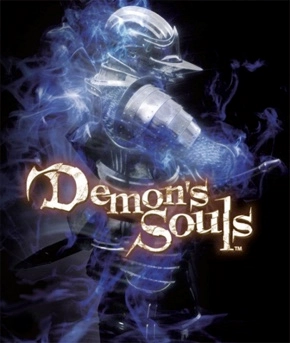
Demon’s Souls
 89
★ /10
89
★ /10
 PS 3
PS 3 FromSoftware, Inc.
 Bandai Namco Entertainment
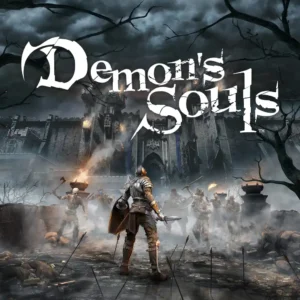
Demon’s Souls is a 2009 action RPG developed by FromSoftware with supervision from Sony’s Japan Studio, released exclusively for PlayStation 3 — February 5, 2009 in Japan, October 6, 2009 in North America via Atlus, and June 25, 2010 in PAL regions via Namco Bandai Partners. It holds a Metacritic score of 89 from 81 reviews, and its historical weight dwarfs even that number: this is the game that invented the Soulslike — the direct ancestor of Dark Souls, Bloodborne, Elden Ring, and the entire genre that followed, from Khazan to Another Crab’s Treasure.
This entry covers the PS3 original; the 2020 PlayStation 5 remake by Bluepoint Games has its own page. The two are easy to confuse in search results, and the differences — in availability especially — matter.
Technical Specifications
| Attribute | Details |
|---|---|
| Developer | FromSoftware (with Japan Studio supervision) |
| Publisher | Sony Computer Entertainment (JP) · Atlus (NA) · Namco Bandai Partners (PAL) |
| Director & Writer | Hidetaka Miyazaki |
| Producers | Masanori Takeuchi · Takeshi Kajii |
| Composer | Shunsuke Kida |
| Release | February 5, 2009 (JP) · October 6, 2009 (NA) · June 25, 2010 (PAL — PlayStation 3 only) |
| Metacritic | 89 (81 reviews) |
| Servers | Offline since February 2018 (originally planned for 2012; extended five years) |
| Genre | Action RPG — the genre’s founding Soulslike |
| Mode(s) | Single-player · Asynchronous online (defunct) |
The Rescue Job That Built a Career
The project began as Sony’s request for a dark fantasy RPG in the spirit of FromSoftware’s own King’s Field series — and by all accounts it was going badly. Hidetaka Miyazaki, then a little-known FromSoftware planner, heard the project was troubled and volunteered to take it over, reasoning that if his ideas failed, nobody would care, because the game was already considered a loss internally. His ideas did not fail. Miyazaki rebuilt the floundering project around risk-heavy combat, deliberately opaque storytelling, and a then-unheard-of respect for player death as a design tool — and Demon’s Souls became the foundation of the most influential design vocabulary of the next two decades of action games.
Boletaria and the Old One
The kingdom of Boletaria prospered under King Allant XII through the power of souls — until Allant’s use of the forbidden Soul Arts woke the Old One, a primordial being whose colorless fog swallowed the kingdom, spawning soul-hungry demons and stripping the minds from those they fed on. The player’s nameless hero, the Slayer of Demons, enters the fog and — dying almost immediately, by design — is bound to the Nexus, a hub between five shattered lands, tasked with felling the kingdom’s demons and lulling the Old One back to slumber. The structure is non-linear across five Archstones (a sixth, famously, is broken and inaccessible — a permanent mystery), and the storytelling style Miyazaki established here — fragments, item descriptions, ambiguity — became a genre signature.
Inventions That Became a Genre
An extraordinary amount of now-standard design was minted here: souls as combined currency-and-experience dropped on death and recoverable at the site of your demise; asynchronous multiplayer in which other players’ messages, deaths, and ghostly silhouettes bleed into your world; summoning cooperators as blue phantoms and invading strangers as hostile black ones; and World Tendency — a system unique to this game even within FromSoftware’s catalog, in which player actions shift each world along a white-black axis, dynamically changing enemy difficulty, item availability, and access to events. Every Soulslike on our site descends from some subset of this list.
Sony Said No
Initial Japanese sales were weak and trade-show reactions were hostile — Sony’s own leadership famously judged the game a failure and declined to publish it in the West. Atlus picked up the North American release instead, and word of mouth did the rest: the game became an import cult hit, then a localized success, eventually passing 1.5 million copies worldwide. The decision had a second historical consequence: Sony’s cold feet left FromSoftware free to take the follow-up — Dark Souls — multiplatform with Bandai Namco, and it took the breakout success of that series before Sony returned to commission an exclusive, which became Bloodborne.
Reception
Western critics landed on near-universal acclaim: an 89 Metacritic, multiple Game of the Year awards from outlets like GameSpot, and reviews that framed the difficulty not as a flaw but as the point — a return to trust in the player’s ability to learn. The innovative online systems and Shunsuke Kida’s score drew particular praise. Criticism was largely confined to the same opacity fans celebrated: obtuse systems (World Tendency above all) that the game never explains, and a structure with no pause, no map, and no mercy for the unprepared.
The Server Shutdown
The original’s online layer — messages, bloodstains, phantoms, invasions, and the community-driven World Tendency events — went dark permanently in February 2018, after a five-year stay of execution from the originally announced 2012 shutdown. Since then the PS3 game has been single-player only, with World Tendency running purely off the player’s own actions. It’s a meaningful loss: a significant slice of what made the 2009 release historic now survives only in its remake’s re-implementation and in fan-run private server projects.
Where to Play It Today
The original Demon’s Souls remains a PlayStation 3 exclusive — never ported, never remastered on its own terms — and with PS3 digital storefront purchases effectively wound down, physical discs on the secondary market are the practical way to play it. For everyone else, the 2020 remake on PlayStation 5 is the accessible route into Boletaria, with the significant caveat — covered on that page — that it’s a visual reconstruction by a different studio, not the original’s art direction preserved.