 PC
PC PS 1
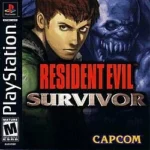
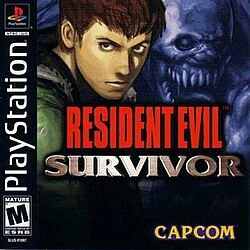
PS 1Resident Evil Survivor is a 2000 first-person light gun shooting game developed and published by Capcom, released in Japan on January 27, 2000, and in Europe on August 25, 2000. Set on Sheena Island — an Umbrella Corporation industrial city where civilians are used as unwilling T-Virus test subjects — it follows Ark Thompson, a government agent who wakes up on the island with no memory of who he is or why he came there.
It was cancelled in North America before release. It appears on badgamehalloffame.com. The r/residentevil thread in its Knowledge Panel begins “I know RE Survivor is an asset flip but I really…“
Technical Specifications
| Attribute | Details |
|---|---|
| Developer | Capcom |
| Publisher | Capcom (JP/EU) · Eidos Interactive (NA — cancelled) |
| Platform | PlayStation 1 |
| Release | Jan 27, 2000 (Japan) · Aug 25, 2000 (Europe) |
| NA Release | Cancelled (never officially released) |
| GunCon support | PS1 GunCon (requires CRT television) |
| Genre | First-person light gun shooter |
| Availability | Physical only (PS1 import / EU copy) · eBay, retro retailers |
| Canon Status | Canonical |
Sheena Island and Ark Thompson
Sheena Island is an Umbrella-owned private island functioning as an industrial city — populated by civilians who are exposed to the T-Virus in secret experiments to produce Tyrant units. When the island’s T-Virus outbreak occurs, its population becomes the game’s zombie encounter pool.
Ark Thompson was an agent assigned to investigate Sheena Island by Leon S. Kennedy, working in parallel to Leon’s own RE2 investigations in Raccoon City. A viral exposure on the island caused amnesia; Ark wakes up at the game’s opening not knowing who he is, what he was doing there, or how to escape. Recovering his identity and his mission while surviving the outbreak is the game’s narrative structure.
The story is canonical and self-contained. Ark Thompson does not appear in any other RE game, but the island’s events occur within the franchise’s established timeline.
The Asset Flip Reality
The Knowledge Panel thread’s opening admission — “I know RE Survivor is an asset flip” — describes the game’s development approach honestly. Sheena Island’s interior environments, enemies, item pickups, and several character models were drawn from Resident Evil 2 and Resident Evil 3‘s existing assets, modified for first-person perspective use. The game was developed quickly and at low cost by reusing what Capcom already had.
The first-person view was designed specifically for the PS1 GunCon — a light gun controller requiring a CRT television — which is the game’s central gimmick. Using a standard DualShock controller produces a basic, slow-panning first-person experience. With a GunCon on a CRT, the game functions as an arcade-style walking shooter with the RE universe’s content layered over it. Without one, it is less functional than with.
The recognition that the game is an asset flip does not prevent the Knowledge Panel thread’s author from finishing the sentence positively — suggesting there is something worth finding here for players who approach it with adjusted expectations.
The North American Cancellation
The North American release of Resident Evil Survivor was planned under Eidos Interactive and cancelled before it reached shelves. The cancellation occurred in 1999 following the Columbine High School shooting (April 20, 1999), as political and commercial scrutiny of violent video games intensified and several publishers made preemptive decisions to avoid association with first-person shooting games.
Physical North American boxes and cartridges were reportedly pressed before the cancellation. Some copies entered circulation through various channels; the game was never formally available at retail in North America. European and Japanese PS1 copies are the current physical options, available on eBay and from import retailers.
Survivor 2
Resident Evil Survivor 2 – Code: Veronica is a separate gun shooter released for arcades in Japan in 2001, then on PlayStation 2 in Japan and Europe. It uses the Code: Veronica setting and its characters (Claire Redfield, Steve Burnside). It was never released in North America in any form. It is more obscure than the first Survivor and has fewer available copies outside Japan.
The Discussions thread “I review both Resident Evil Survivor games” in the current SERP indicates active retrospective coverage of both titles from the retro community. The dedicated fan site residentevil-survivalunit.com — drawing 2,138 monthly organic visitors — covers both Survivor games alongside Dead Aim, treating the Gun Survivor sub-series as a coherent archival subject.
Reception
Resident Evil Survivor received poor reviews in Japan and Europe at the time of release; its appearance on badgamehalloffame.com reflects how the title is positioned in retrospective gaming criticism. The Reddit thread “Resident Evil Survivor on PS1 is not half as bad as people say” — at position five in the current SERP — represents the contemporary community’s measured reassessment: not a defence of the game as good, but an argument that its reputation as purely terrible overstates the case.
For the specific audience interested in the complete Gun Survivor sub-series history (Survivor → Survivor 2 → Dead Aim), it is the chronological starting point. For all other audiences, it is a PS1 import curiosity with a cancelled North American release and an honest Knowledge Panel summary.