Resident Evil 5
 84
★ /10
84
★ /10
 Nintendo Switch
 PC
PC PS 3
PS 3 PS4
PS4 Xbox 360
 Xbox One
 Capcom
 1C-SoftClub
Where to buy



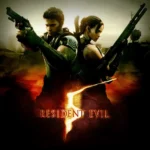
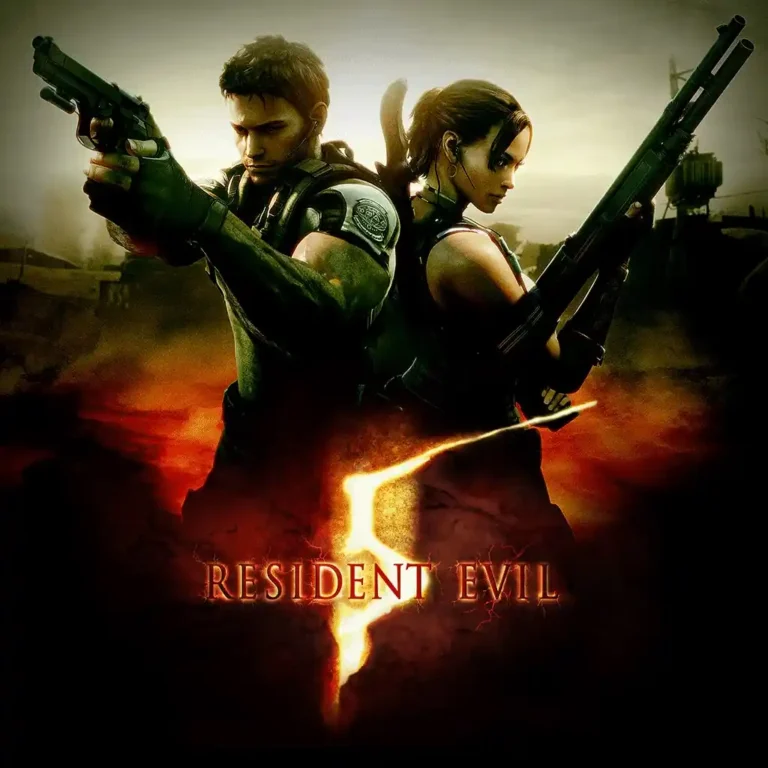
Resident Evil 5 is a 2009 third-person action game developed and published by Capcom. Released for PlayStation 3 and Xbox 360 on March 5, 2009, and for PC on September 15, 2009, it was directed by Jun Takeuchi and designed from the ground up as a two-player co-operative game. It received Metacritic scores of 83–84 across platforms.
Technical Specifications
| Attribute | Details |
|---|---|
| Developer | Capcom Production Studio 1 |
| Publisher | Capcom |
| Director | Jun Takeuchi |
| Platform(s) | PS3 · Xbox 360 (Mar 5, 2009) · PC (Sep 15, 2009) · PS4/Xbox One (Jun 28, 2016) · Switch (May 21, 2019) |
| Metacritic | 83 (PS3) · 84 (PC) · 79 (PS4) |
| Genre | Third-person action, Co-op action |
| Mode(s) | Single-player · 2-player local/online co-op |
Kijuju: Setting and Context
Resident Evil 5 is set in Kijuju, a fictional region of West Africa, in 2009. The BSAA (Bioterrorism Security Assessment Alliance), the organisation formed in the wake of the Raccoon City disaster, has been deployed to investigate bioterrorism activity in the region. Chris Redfield — veteran of the original Spencer Mansion, now a senior BSAA operative — is sent to Kijuju as the primary agent. His partner is Sheva Alomar, a BSAA agent who was born in Kijuju and lost her parents to Umbrella’s experimental activities in the region when she was a child.
The setting is bioterrorism-related, not T-Virus from Raccoon City. The Majini — Kijuju residents infected with a variant of the Plaga parasite introduced in Resident Evil 4 — are the primary enemies. They are intelligent, communicate, and coordinate tactically in the same way the Ganados of RE4 did.
Chris Redfield and Sheva Alomar
Chris’s appearance in Resident Evil 5 is his most physically substantial in the series — visually he has been in intensive training for twelve years since RE1 and presents accordingly. His emotional stakes are higher than a standard mission: he discovers that Jill Valentine, his S.T.A.R.S. partner who disappeared after RE3: Nemesis, is alive and working for Wesker under brainwashing. Freeing her and confronting Wesker are the game’s ultimate objectives.
Sheva Alomar is the series’ first Black playable protagonist and is characterised as a fully realised person rather than a stereotype: she has a specific regional background, personal motivations, a perspective on the BSAA’s presence in her homeland, and a complete arc across the campaign. In co-op, she is controlled by the second player. In solo play, she is controlled by the game’s AI partner — which is functional but inconsistent, a topic the community has discussed continuously since launch.
The Co-Op Design Philosophy
Resident Evil 5 was built for two players from the start. Every mechanic — item sharing, door-opening, enemy flanking, cover positioning — is designed with two human players in mind. The game’s best version is local or online co-op.
In co-op, the experience is consistently praised. The Video carousel for this game includes a thread titled “We played Resident Evil 5 coop all the way through” — reflecting a specific experience of sustained co-op play that the community cites as the correct way to experience the game. Managing inventory between two players, coordinating against enemies who flank from multiple directions, assisting each other in crisis situations — these interactions are the game’s design intent.
Without a co-op partner, the AI Sheva manages basic functions adequately but is a less creative partner than a human player, and the experience shifts from collaborative to escort mission depending on circumstances.
The Majini and Combat
The combat inherits Resident Evil 4‘s over-the-shoulder framework and refines it: Chris can carry slightly more than Leon, weapons are more varied across categories, and the Majini’s coordination requires more tactical engagement than the average Ganado encounter.
A persistent criticism from players who loved RE4‘s specific tension: the game moves faster and is more densely action-oriented, with fewer of the deliberate pacing pauses that gave RE4 its specific rhythm between combat sections. Resident Evil 5 is closer to a sustained action game than its predecessor; the survival horror elements that persisted in RE4 (limited ammo, careful positioning, the threat of death from a single mistake) are present but attenuated.
The inventory no longer uses the Tetris attache case — each character carries nine item slots in a linear grid, divided between the two players in co-op. The shared economy between partners adds a negotiation layer absent from the single-character RE4 system.
Albert Wesker’s Final Act
Albert Wesker first appeared in Resident Evil (1996) as the Alpha Team captain and was revealed as Umbrella’s agent within S.T.A.R.S. He has appeared across Code: Veronica, RE4 (briefly), and RE5 as the series’ most recurring human antagonist. In RE5, his plan — infecting the global population with a new mutagenic virus using a dispersal mechanism — represents the largest-scale threat in the franchise’s history.
His confrontation with Chris is the culmination of a twelve-year narrative thread. He moves faster than humanly possible, deflects bullets, and requires coordinated attack from both Chris and Sheva to damage. The final encounter — set in an active volcano, involving a helicopter and ultimately a boulder and lava — is the most cinematically extravagant boss sequence in the series to that point.
Resident Evil 5 is Wesker’s last appearance as a living villain. After this, the character is definitively dead.
Lost in Nightmares and Desperate Escape
Two story DLC episodes complete the game’s narrative:
Lost in Nightmares takes Chris and Jill back to the Spencer Estate — the actual Spencer Mansion, set in the period just before Wesker’s “death” in RE1. The episode deliberately replicates the atmospheric horror of the original game: limited resources, fixed-perspective horror sequences, and the specific dread of the first game rendered in RE5’s engine. It is widely considered the series’ best DLC episode and a sharp contrast to RE5’s main action tone.
Desperate Escape follows Jill and Josh Stone (the BSAA Africa unit commander) escaping from their situation after Jill is freed from Wesker’s control. More action-forward than Lost in Nightmares, it fills in events that were offscreen during the main campaign.
Both are included in the Gold Edition (the current standard version), alongside a Mercenaries Reunion mode and Versus competitive multiplayer.
The Controversy: Honest Discussion
The conversation around Resident Evil 5‘s setting has been ongoing since 2009. The specific concern raised at the time — most prominently by Newsweek journalist N’Gai Croal — was about the game’s imagery: African villagers as infected enemies, certain compositional shots that critics argued recalled historical propaganda imagery of Africa as a place of danger and diseased people.
Capcom’s responses included the creation of Sheva Alomar as a Black African co-protagonist and the framing of the bioterrorism narrative as corporate exploitation of the region rather than inherent threat from it. Whether these addressed the concern adequately is something critics and players have debated for sixteen years. The discussion is present in the “honest thoughts” Reddit thread and in retrospective coverage; it is part of the game’s reception history.
The separate question — whether the game is fun to play — is less contested: as a co-op action game, it is competent to good, with high production values, a satisfying Wesker confrontation, and the best DLC the series’ classic action era produced.
RE5 in the Franchise
Resident Evil 5 sits at the peak of the franchise’s action phase and the beginning of its commercial difficulties. It sold well — over 13 million copies across all versions — and the 2009 moment it occupied was one where cinematic action games were commercially dominant. It preceded the period of community backlash (Resident Evil 6, 2012) and the subsequent return to atmospheric survival horror (Resident Evil 7, 2017) that reoriented the franchise.
For players whose primary criterion is co-op experience, it remains among the stronger options in the franchise and in the broader third-person action genre. For players whose primary criterion is survival horror tension, it represents the franchise at its furthest from that purpose.
Reception
Resident Evil 5 received Metacritic scores of 83 on PS3/Xbox 360 and 84 on PC — consistent positive reception that critics framed as a very good action game that was not quite the survival horror experience the franchise had historically provided. The PS4/Xbox One remaster (2016) scored 79, reflecting critical reassessment in a period where Resident Evil 7‘s return to horror had reminded critics what the series could be.
The community’s “honest thoughts” are where the variation lives: enthusiastic praise from players who played it in co-op, measured disappointment from players who expected the RE4 formula’s specific tension, and ongoing discussion about the setting that has never fully resolved. All of these responses are correct about something real in the game.
Resident Evil news
More news
Capcom Plans to Evolve RE Engine Into an AI-Generation Engine

Roy Lee Reportedly Developing a New Silent Hill Movie

Valve Deliberately Leaked Left 4 Dead 2 Trailer to Dodge ESRB Rules

Steam Gross Revenue Tops $15 Billion in First Eight Months of 2026