Resident Evil Gaiden
 Game Boy Color
 Virgin Interactive Entertainment
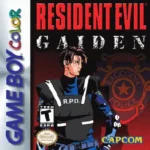
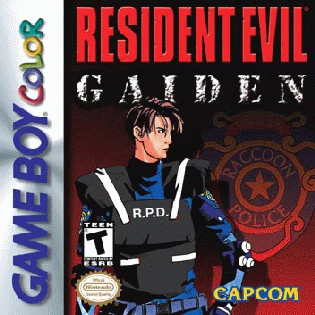
Resident Evil Gaiden is a 2001 action game developed by M4 Ltd — a British studio, not Capcom — and published by Capcom for the Game Boy Color. Released first in Europe on December 14, 2001, then in Japan on January 31, 2002, and in North America on June 14, 2002, it follows Leon S. Kennedy and Barry Burton investigating a new Umbrella bioweapon aboard the luxury cruise ship Starlight.
The Knowledge Panel for this game links to eBay. There is no digital re-release. The NintendoLife article at position #23 is titled “Resident Evil Gaiden Is Good, Actually.” The Short Video from Facebook describes it as “the Resident Evil game you never played.”
All three of those things are accurate.
Technical Specifications
| Attribute | Details |
|---|---|
| Developer | M4 Ltd (UK) |
| Publisher | Capcom |
| Platform | Game Boy Color |
| Release | EU: Dec 14, 2001 · Japan: Jan 31, 2002 · NA: Jun 14, 2002 |
| Genre | Action, Survival horror (hybrid) |
| Availability | Physical only (GBC cartridge) · eBay, Amazon, retro retailers |
| Canon Status | Disputed / generally considered non-canonical |
The Cruise Ship Starlight
Leon S. Kennedy is dispatched to the Starlight, a luxury ocean liner where Umbrella has smuggled a new biological weapon. Barry Burton went in first and has gone silent. Leon must find Barry, deal with the ship’s infected population, and protect Lucia, a young girl he encounters aboard who has an unusual resistance to the virus.
The premise is the most tonally incongruous in the franchise — zombies on a cruise ship, a luxury environment becoming a survival horror setting — and it works in the specific way that limited hardware forces creative constraints to become visual storytelling. A GBC cannot render the Spencer Mansion. What it can render is top-down corridors of a ship, and the imagination supplies the rest.
The Gameplay
Resident Evil Gaiden uses two gameplay modes in alternation:
Top-down exploration: The game’s default view, with Leon shown from above navigating the Starlight’s decks, cabins, and utility areas. Item collection, puzzle solving, and navigation operate in this perspective. The top-down view is visually minimal by the standards of any other RE game, but communicates the spatial logic of the ship effectively.
First-person combat: When Leon encounters an enemy, the perspective shifts to first-person, and a moving reticle crosses the screen left and right. The player must press the action button when the reticle aligns with the enemy to fire. The timing window varies by weapon and enemy type. Fully automatic weapons fire continuously but with accuracy that depends on reticle timing; more powerful weapons have narrower timing windows.
The first-person combat is the mechanic most often cited as RE Gaiden’s highest barrier to appreciation: it sounds worse than it plays. The NintendoLife defense article argues specifically that the mechanic is more engaging in practice than its description suggests, that different enemies require different timing strategies, and that the system produces genuine tension of a type appropriate to the franchise. This is the honest case for it.
Barry Burton
Barry Burton — the large, mustached, memorably voiced S.T.A.R.S. Bravo Team member whose ammunition generosity and family loyalty defined his Resident Evil (1996) characterisation — appears here as Leon’s partner and the investigation’s missing person. His appearance in 2002 on a cruise ship is one of the reasons the game’s canonical status is disputed: Barry’s whereabouts during this period of the franchise timeline are imprecisely established, and his appearance in Gaiden creates continuity questions that Capcom has not formally resolved.
For players who are specifically Barry Burton enthusiasts — a category that exists and is larger than might be expected — Gaiden is one of his most substantial appearances in the franchise.
The Plot Twist
Resident Evil Gaiden has a narrative twist in its final act that is genuinely surprising by the standards of any game of its era, let alone a Game Boy Color spin-off. The specifics are best encountered rather than read about; the short version is that the game questions the identity of a character the player has spent significant time with, and the resolution involves one of the more unsettling concepts in the franchise’s history.
The twist was noted by critics at the time and has been discussed in retrospective coverage as the game’s most significant creative achievement — evidence that M4 Ltd was taking the project seriously rather than producing a licensed product on autopilot.
Canon Status and the Franchise
Capcom has not formally addressed Resident Evil Gaiden‘s canonical status. The game’s continuity is inconsistent with the established timeline in specific areas (Barry’s location, certain character details), and it has never been referenced in any subsequent mainline Resident Evil entry. The community’s working consensus: non-canonical, or at most fan-optional canon in the same category as certain novel and audio drama adaptations.
The word “Gaiden” (外伝) in Japanese typically means “side story” or “spin-off” — a tale adjacent to the main narrative rather than part of it. The title itself signals the intended relationship to the mainline franchise.
Availability
Resident Evil Gaiden has never been re-released digitally. It is not on the Nintendo eShop, not on GOG, not on Steam. The Knowledge Panel’s eBay link reflects the reality of its current availability: physical Game Boy Color cartridges, purchased secondhand.
PriceCharting.com is the fourth organic result for this game, which indicates that the community is actively monitoring resale prices — a signal that the cartridge has some collector value. eBay, Amazon, GameStop retro, DK Oldies, and speciality retro game retailers carry physical copies at varying prices.
Reception
Contemporary reviews in 2002 were mixed: the game was credited with technical ambition for the GBC platform and a genuinely interesting story, and criticised for the first-person combat’s initial impenetrability and the game’s brevity. The IGN review from June 2002 is the primary formal review record for the North American release.
Retrospective coverage has been more generous, shaped partly by appreciation for what the game attempted on very limited hardware and partly by the NintendoLife “is good actually” case for its combat. For the specific audience of players who want to have played every RE game in the franchise’s history, Gaiden is the most unusual and most obscure mandatory stop — a GBC spin-off with a legitimate plot twist, a British development team, and a eBay listing as its current purchase page.
Resident Evil news
More news
Capcom Plans to Evolve RE Engine Into an AI-Generation Engine

Roy Lee Reportedly Developing a New Silent Hill Movie

Valve Deliberately Leaked Left 4 Dead 2 Trailer to Dodge ESRB Rules

Steam Gross Revenue Tops $15 Billion in First Eight Months of 2026