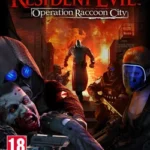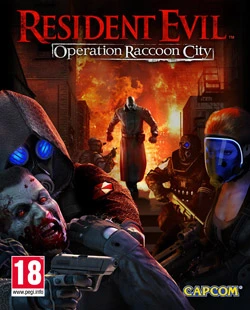
Resident Evil: Operation Raccoon City
 52
★ /10
52
★ /10
 PC
PC PS 3
PS 3 Xbox 360
 Capcom
Resident Evil: Operation Raccoon City is a 2012 squad-based third-person shooter co-developed by Slant Six Games and Capcom, published by Capcom for PlayStation 3, Xbox 360, and Windows. Released March 20, 2012 in North America, it places the player on the side of Umbrella Corporation’s own soldiers — the Umbrella Security Service (USS) — sent into Raccoon City not to survive the T-Virus outbreak, but to erase evidence of Umbrella’s involvement and eliminate anyone who could testify to it, including Leon S. Kennedy.
It is explicitly non-canonical, retelling events from Resident Evil 2 and 3: Nemesis from the perspective of Umbrella’s own cleanup squad rather than the series’ usual survivors. The r/residentevil discussion “What’s your opinion on this RE game, Operation Raccoon City?” is one of the most consistently revisited threads about the game — a sign that opinion on it has never fully settled, even years after release.
Technical Specifications
| Attribute | Details |
|---|---|
| Developer | Slant Six Games (with Capcom) |
| Publisher | Capcom |
| Producer | Masachika Kawata |
| Platform(s) | PS3 · Xbox 360 · Windows |
| Release | Mar 20, 2012 (NA) · Mar 23, 2012 (EU) · Apr 26, 2012 (Japan) |
| Metacritic | 52 (Xbox 360) · 48 (PC) · low-50s (PS3) |
| Canon Status | Non-canonical |
| Sales | 2.1 million+ units |
| Mode(s) | Single-player · 4-player co-op · Competitive multiplayer |
Playing the Villains
The premise is the game’s most genuinely interesting idea: instead of another survivor fighting to escape Raccoon City, the player controls Wolfpack, a six-member USS squad sent in to retrieve William Birkin’s G-Virus samples and then to systematically destroy the evidence — and the witnesses — of what Umbrella has done. That includes hunting down Leon S. Kennedy, the rookie cop who would otherwise be a mainline protagonist, along with Claire Redfield and Sherry Birkin.
Two campaigns are playable. The USS campaign follows Wolfpack through their cover-up mission, culminating in a genuine branching choice: half the squad can spare Leon, Claire, and Sherry and defect from Umbrella in disgust, or the team can carry out its orders and execute them. The Spec Ops campaign, following a separate American military unit (Echo Six) investigating the outbreak from the outside, intersects with the same events from an opposing angle — encountering Jill Valentine fleeing Nemesis, discovering Umbrella’s underground laboratory, and confronting a mutated Birkin.
The idea of playing morally compromised antagonists whose choices genuinely affect a returning fan-favourite character’s fate is a rare structural experiment for the franchise, and it’s the aspect of the game most frequently cited — even in otherwise critical assessments — as worth acknowledging.
Twelve Characters, Six Classes
Twelve playable characters split evenly between the two factions, each assigned to one of six classes: Assault, Recon, Surveillance, Field Scientist, Demolitions, and Medic. On the USS side: Vector (a cloaking recon specialist), Lupo (team leader), Beltway (explosives), Spectre (marksman), Bertha (medic), and Four Eyes (a scientist able to reprogram Umbrella’s own bio-organic weapons mid-fight). The Spec Ops roster — Dee-Ay, Willow, Tweed, Harley, Shona, and Party Girl — mirrors the class structure from the opposing side.
Destructoid’s review specifically praised the tactical possibilities this created: “it’s just great fun to play as the bad guys, doing Umbrella’s dirty work” (full review), and noted that classic franchise threats — Hunters, Nemesis, mutated Birkin — appear as genuine dangers to the player squad rather than as scripted setpieces.
What the Reviews Actually Said
Critical reception at launch was consistently poor, and the specific complaints were remarkably aligned across outlets. GameSpot’s review found the game generic. Kotaku’s review called it “an insult to Resident Evil fans” and “a failure at the most basic level for shooter fans” (full review). One contemporary retrospective described it as feeling like a beta build shipped as a finished product, citing inconsistent enemy damage thresholds and unpolished class balance as evidence the game needed more development time than it received.
The single most consistent specific complaint, across nearly every review: AI teammates. Destructoid’s review warned readers “against playing it solo,” describing AI companions as “thoroughly incompetent” — walking into landmines, refusing to heal themselves, missing shots, and failing to revive downed players. This is not a minor criticism in a game explicitly built around four-player squads; it is close to disqualifying for anyone without three human friends willing to join in.
Ammunition scarcity, borrowed from the survival horror tradition, was widely felt to work against the game’s own action-shooter design rather than in service of it — several reviews noted that scarcity read as frustrating rather than tense when the game’s pacing and enemy density were built for a Left 4 Dead-style shooter rather than a Resident Evil-style horror game.
The Case for It
Despite the critical drubbing, Operation Raccoon City found a real audience: it sold more than 2.1 million units, a genuinely strong commercial result for a game with these review scores. Community sentiment years later is notably split from the contemporary critical consensus. Some players — including several posting Portuguese-language reviews on Metacritic — specifically praised the weapon variety, the frantic pace, four-player online co-op, and the additional Versus mode, with more than one describing it as unfairly maligned at launch.
One Metacritic user review put the tension of the game’s reputation plainly: the mechanics that changed established outcomes from the classic games, combined with genuine bugs, were “its great problem, even so” — while still calling the overall experience “muito divertido” (very fun). Destructoid’s review reached a similar landing point despite its criticisms, concluding the game was “a genuinely good time” for a coordinated group of four players willing to treat its rough edges as part of the challenge.
DLC and the End of Slant Six
Capcom released free downloadable Spec Ops missions in April–May 2012, followed by paid expansion packs including Echo Six, which added three missions continuing the Spec Ops storyline and introduced Super Parasite Tyrants as new threats.
Operation Raccoon City was Slant Six Games’ last major release. Despite the game’s respectable sales, the studio closed in 2013 after a string of smaller, less successful titles. It remains the studio most associated with this specific experiment in the Resident Evil franchise — playing the villains of your own favourite games — an idea good enough that its absence from the franchise’s subsequent decade is somewhat conspicuous, even by the admission of players who otherwise consider the execution a disappointment.
Availability
Operation Raccoon City is available on PS3, Xbox 360, and Windows. The Xbox 360 version was added to Xbox One and Xbox Series X/S backward compatibility in November 2021; the PS3 version streams on PS4 and PS5 through PlayStation Now-descended cloud infrastructure. Physical copies remain available through Amazon, eBay, and retro retailers.
Resident Evil news
More news
Capcom Plans to Evolve RE Engine Into an AI-Generation Engine

Roy Lee Reportedly Developing a New Silent Hill Movie
Valve Deliberately Leaked Left 4 Dead 2 Trailer to Dodge ESRB Rules

Steam Gross Revenue Tops $15 Billion in First Eight Months of 2026