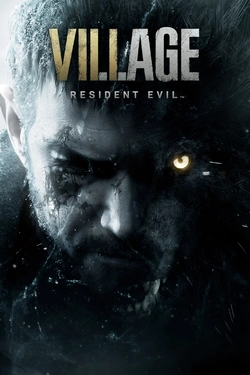
Resident Evil Village
 84
★ /10
84
★ /10
 Android,
  iOS (iPhone/iPad),
  Nintendo Switch 2,
  PC,
PC,  PS4,
PS4,  PS5,
PS5,  Xbox One,
  Xbox Series X/S
 Capcom
Where to buy



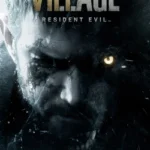
Resident Evil Village is a 2021 first-person action horror game developed and published by Capcom. Released for PlayStation 4, PlayStation 5, Xbox One, Xbox Series X/S, and PC on May 7, 2021, it is the direct sequel to Resident Evil 7: Biohazard (2017), the conclusion of Ethan Winters‘ story, and the game in which Capcom introduced Lady Alcina Dimitrescu — a nine-and-a-half-foot vampire aristocrat who became, before the game was released, one of the most extensively discussed video game characters in recent memory.
It received Metacritic scores of 84 on PS5 and PC, and 83 on Xbox Series X. The r/residentevil review thread at position eight draws 2,147 monthly organic visitors. Eurogamer’s review called it “an entertaining if uneven slice of horror.” Both of those assessments coexist in the game because the game contains both of those things.
Technical Specifications
| Attribute | Details |
|---|---|
| Developer | Capcom Division 1 |
| Publisher | Capcom |
| Director | Morimasa Sato |
| Platform(s) | PS4 · PS5 · Xbox One · Xbox Series X/S · PC · Switch (cloud) · iOS/iPadOS (2023) |
| Release Date | May 7, 2021 (NA) |
| Metacritic | 84 (PS5, PC) · 83 (Xbox Series X) |
| Genre | First-person action horror |
| Mode | Single-player · Mercenaries mode |
After RE7: More Action, Still Horror
Resident Evil 7 was atmospheric, constrained, and genuinely frightening throughout. Resident Evil Village takes the same first-person perspective and the same protagonist and moves in a different direction: more open, more varied, more action-forward as it progresses.
The comparison that critics and community reach for most consistently is Resident Evil 4 (2005): a European setting, a vendor who sells and upgrades weapons, set-piece driven gameplay that shifts registers between tension and action, and a design that prioritises moment-to-moment engagement over sustained atmosphere. The comparison is useful and incomplete. Village opens with genuine horror and doesn’t fully become an action game until its final third, but the tonal journey from beginning to end covers more ground than RE7 did.
The game was designed with awareness of this trajectory. Whether the evolution across its runtime is satisfying or represents a loss of focus is the central community disagreement about the game.
The Village and Mother Miranda
Ethan Winters and Mia are living in an unspecified European country, approximately three years after the events of RE7. Their daughter Rose is kidnapped; Ethan pursues her to a village under a mountain that appears cut off from the outside world by perpetual snow and something older than weather.
The village is controlled by four lords who answer to Mother Miranda — an ancient figure of enormous biological and supernatural capability. Miranda has divided the surrounding territory between them: a castle, a house of dolls, a reservoir, and a factory. To find Rose, Ethan must move through each domain.
Mother Miranda‘s history — a grieving mother who discovered the Megamycete (the biological organism connecting Village to RE7‘s Mold) and spent decades weaponising it — is the game’s deepest lore thread. The conspiracy connecting the village to the broader franchise history runs through her work. For players who want the complete picture, the archives and files in each lord’s domain collectively assemble a coherent history.
The Four Lords
Lady Alcina Dimitrescu occupies Castle Dimitrescu, which covers the game’s substantial first act. A vampire aristocrat of extraordinary physical scale — confirmed by Capcom at approximately 9’6″ (2.9m) including heeled boots and hat — she pursues Ethan through the castle’s rooms and towers while her three daughters operate as secondary threats. Her voice, provided by Maggie Robertson, establishes her as imperious, theatrical, and entirely certain of her own superiority. The castle section is the game’s best sustained horror sequence: a nearly invulnerable pursuer, a coherent interior layout to learn and escape, and gothic atmosphere that the game does not consistently maintain elsewhere.
Donna Beneviento inhabits a doll maker’s house in the woods. Her section is the shortest of the four and the game’s most purely frightening. On entering the house, Ethan loses access to all weapons and items. What follows — navigating the house, solving puzzles, being hunted in the basement by a creature called The Baby — is the sequence critics and players most consistently cite as the game’s creative peak and the best horror set piece in the series since RE7‘s Baker estate.
Salvatore Moreau commands a reservoir and a waterlogged village section. His is the most universally criticised domain — visually distinctive but mechanically limited, and the one most players complete without finding it memorable.
Karl Heisenberg controls an enormous underground factory operated by industrial corpse-constructs animated by his magnetic powers. His section is the most overtly action-forward — large rooms of enemies, heavy weapons, industrial scale. Heisenberg himself is the lords’ most talkative and most sympathetically complex member; his specific proposition to Ethan adds narrative texture that the factory’s combat-heavy design does not always support.
Lady Dimitrescu: The Cultural Moment
Lady Alcina Dimitrescu became an internet phenomenon before the game was released. A January 2021 trailer showing her in the castle produced an immediate and extensive community response: fan art, discussion, and a level of sustained attention unusual for a character visible for less than two minutes. Capcom’s acknowledgment of this response — including the official height confirmation — fed the cycle without disrupting it.
She appears on the game’s cover art and primary marketing. Her section, arriving early, sustains the specific quality that the reveal generated. She is the game’s defining marketing image and one of its most successful creative decisions: a character designed as a horror antagonist who became beloved before anyone had fought her.
Maggie Robertson‘s voice performance was nominated for the BAFTA for Performer in a Supporting Role (2022).
The Duke
The Duke is the game’s vendor — analogous to RE4‘s Merchant but substantially different in character. He is enormously large, unfailingly jovial, and present in seemingly every location in the village without anyone explaining how this is possible. He sells weapons, provides upgrades, and offers food recipes that permanently increase Ethan’s capabilities when cooked using meat found in the environment.
“Do you have a moment to buy something, hm?” The Duke’s equanimity about a situation that should be terrifying, and his cheerful professionalism in the middle of everything, makes him the game’s tonal complement to the horror around him — exactly as the Merchant was in RE4.
Ethan Winters’ Conclusion
Resident Evil Village concludes Ethan’s story. The game’s ending addresses what Ethan is, what Rose is, and what the relationship between them means. The final revelation about Ethan’s nature connects directly to events from RE7 in ways that retrospectively change how some of those events read. The details are best discovered in play.
The Shadows of Rose DLC (included in the Gold Edition) is set decades after the main game, following Rose Winters as an adult who must confront the Megamycete inside a reality constructed from its biomass. It provides the franchise’s most recent update on the Winters family timeline and functions as an epilogue for the two-game arc.
Gold Edition
The Resident Evil Village Gold Edition includes the main game plus the Winters’ Expansion: Shadows of Rose, an expanded Mercenaries mode featuring Lady Dimitrescu and Karl Heisenberg as playable characters, and additional content. The Gold Edition is the recommended current purchase.
Should I Buy It?
The “Should I buy Resident Evil Village?” thread appearing twice in the current SERP reflects a genuine community split. The answer varies by what the player values:
Players who loved RE7‘s pure sustained horror find Village‘s first half (Dimitrescu, Beneviento) strong and its second half (Heisenberg’s factory, the conclusion) less satisfying. Players who loved RE4‘s European action-horror rhythm find Village more consistently enjoyable. Players who have not played RE7 can follow Village‘s story with brief familiarity with the previous game’s premise.
The House Beneviento section is the game’s strongest argument for itself: the best horror sequence in the series since the Baker estate, achieved through complete simplicity of design. The 8-12 hour runtime means no section overstays its welcome for long. The Duke is an excellent character. Lady Dimitrescu is everything the marketing suggested she would be.
Reception
Resident Evil Village holds Metacritic scores of 84 on PS5 and PC and 83 on Xbox Series X. Critics consistently praised the Castle Dimitrescu and House Beneviento sections, the production quality, and the conclusion of Ethan’s arc. Consistent criticisms: the tonal shift from horror to action across the game’s latter half, the Moreau section, and the sense that the final third does not sustain what the first half established.
Commercial performance exceeded Capcom’s expectations: over 10 million copies sold across all platforms. Available on iOS and iPadOS (September 2023), Xbox Game Pass, and PlayStation Plus at various points.
Resident Evil news
More news
Capcom Plans to Evolve RE Engine Into an AI-Generation Engine

Roy Lee Reportedly Developing a New Silent Hill Movie

Valve Deliberately Leaked Left 4 Dead 2 Trailer to Dodge ESRB Rules

Steam Gross Revenue Tops $15 Billion in First Eight Months of 2026