Resident Evil Zero
 83
★ /10
83
★ /10
 Ninitendo GameCube,
  Nintendo Switch,
  PC,
PC,  PS 3,
PS 3,  PS4,
PS4,  Wii,
Wii,  Xbox 360,
  Xbox One
 Capcom
Where to buy




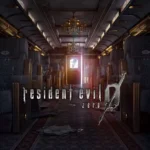
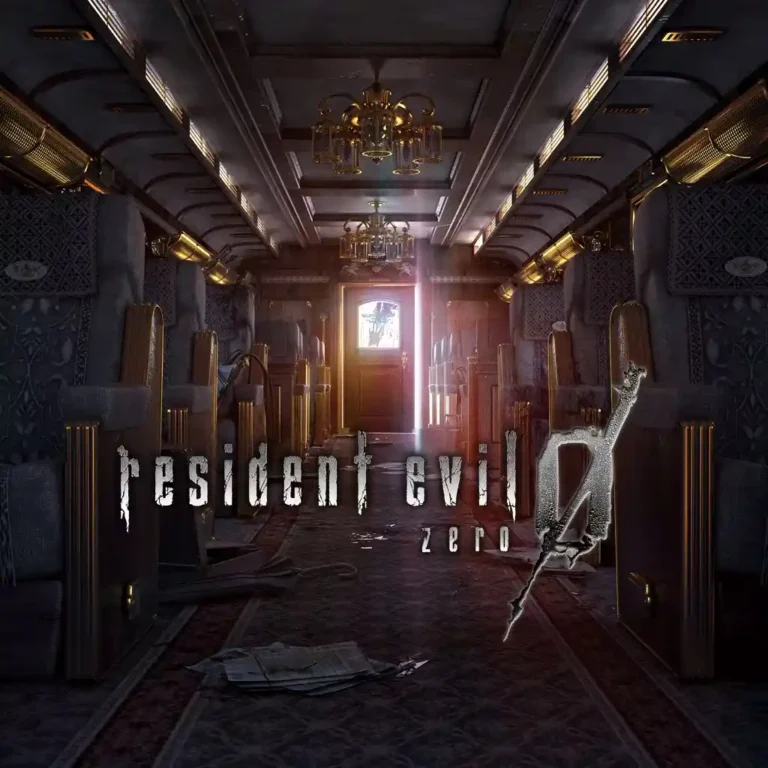
Resident Evil Zero (also known as Resident Evil 0) is a 2002 survival horror game developed and published by Capcom. Originally released for Nintendo GameCube on November 12, 2002, it is a prequel to the original Resident Evil (1996), taking place the night before S.T.A.R.S. Alpha Team arrives at Spencer Mansion. An HD Remaster was released on January 19, 2016 for PC, PS3, PS4, Xbox 360, Xbox One, and Nintendo Switch.
The r/residentevil thread “Unbiased Resident Evil Zero review: I tried to be impartial” sits in its Knowledge Panel with 2,564 monthly organic visitors. The title — “I tried to be impartial” — reflects accurately that this is the classic Resident Evil entry that most consistently generates polarised responses. The mechanic responsible is the removal of item boxes.
Technical Specifications
| Attribute | Details |
|---|---|
| Developer | Capcom Production Studio 1 |
| Director | Koji Oda |
| Producer | Tatsuya Minami |
| Original Platform | Nintendo GameCube |
| Original Release | November 12, 2002 (Japan + NA simultaneously) |
| HD Remaster | PC · PS3/PS4 · Xbox 360/One · Switch (January 19, 2016) |
| Metacritic | 83 (GCN original) · 70 (PC HD) · 70 (PS4 HD) |
| Current Availability | Steam · GOG (DRM-free) · PS4 · Xbox · Switch |
| Genre | Survival horror |
The Night Before Spencer Mansion
Resident Evil Zero is set in the Arklay Mountains on the night the S.T.A.R.S. Bravo Team’s helicopter goes down — the same night that Alpha Team will later be dispatched to investigate, beginning the events of the 1996 original. It is the earliest-set game in the classic Resident Evil continuity.
Rebecca Chambers — the young S.T.A.R.S. Bravo Team medic who appears briefly in the original Resident Evil as an optional rescuable character — is the primary protagonist. Investigating the abandoned Ecliptic Express, a luxury Umbrella Corporation train found stopped on the tracks, she encounters Billy Coen: a Marine on a military prisoner transport, convicted of massacring civilians, escaping during the helicopter crash. They are forced to cooperate.
The game moves from the train to the Umbrella Research Training Facility — the facility where Umbrella’s scientists were originally trained, abandoned for twenty years, and now the source of the biological contamination spreading through the Arklay region.
James Marcus and the Leech Imagery
The game’s central mystery is James Marcus, co-founder of Umbrella alongside Osmund Spencer and Lord Ashford. Marcus developed the Progenitor Virus — the foundational pathogen that all subsequent Umbrella research was built upon — before being betrayed and killed twenty years earlier by Albert Wesker and William Birkin, who appropriated his research.
The game’s visual identity is defined by leeches: Marcus’s experiments produced leech-based BOWs, leech-like zombies infest the training facility, and the biological nature of whatever has brought Marcus back is expressed through leech symbolism throughout. The leech imagery is the most distinctive horror aesthetic in any classic-era Resident Evil and distinguishes Zero from the more zombie-dominant visual vocabulary of the numbered entries.
Marcus’s motivations — revenge against Spencer and Umbrella for his murder, realised through the contamination that will eventually consume the Arklay Mountains and Spencer Mansion — provide a narrative explanation for the outbreak the original Resident Evil begins in media res.
Rebecca Chambers and Billy Coen
Rebecca Chambers carries the perspective of someone who has trained for emergencies and found that training inadequate. She is nineteen years old, the youngest S.T.A.R.S. member, and the character the series most frequently places in survival situations that exceed her preparation. Her trajectory across the game moves from reluctant jailer to functional partner.
Billy Coen carries the burden of a conviction whose details the game gradually complicates. He is physically capable and experienced in ways that Rebecca is not, which makes their forced partnership practically useful before it becomes personally meaningful. Whether he is guilty of the charge that put him on the transport is left in interpretive space the game deliberately maintains.
Their partnership mechanic — both characters are always present, one controlled by the player and one by AI or a second player — is the structural innovation that defines the game and the mechanical decision that divides its players most sharply.
The Partner System and the Absent Item Box
Resident Evil Zero removed the item box — the storage system present in every preceding Resident Evil that allowed players to deposit items at specific points and retrieve them anywhere an item box appeared. In its place: a partner system in which Rebecca and Billy can each carry a limited number of items, can exchange items between them, and can drop items directly on the floor of the environment.
Items left on the floor remain exactly where they were dropped. Players who need a stored item must physically navigate back to where they left it. The two characters’ separate inventories function as mobile storage between them, but the total capacity is less than any single character would have with an item box system.
The design rationale is clear: survival horror should feel like you have no safe place to put things. An item box is a form of security; removing it means every item decision carries the weight of “where does this actually go?” The design rationale the community finds less persuasive: the game’s maps are large enough that retrieving items from the floor becomes a navigation exercise rather than a tension-generating constraint, and the mental load of tracking item locations across multiple areas is a different kind of difficulty from the franchise’s intended resource-management horror.
The Knowledge Panel review title — “I tried to be impartial” — reflects the item drop system’s capacity to generate strong reactions regardless of stated intent. Players who find it adds genuine tension; players who find it a design error. Both responses are documented in the same thread.
Playing RE0 in Order
The game works as a standalone but gains context from its specific prequel relationship to the original Resident Evil:
Rebecca’s brief appearance in RE1 — where she is rescued by Chris in her own game’s sequence — is more legible after RE0 establishes who she is, where she has been, and why she survived the night at the training facility. The Arklay Mountain contamination and its source have a history that RE1 does not explain and RE0 does. The original Spencer Mansion’s underground laboratory is visible on the facility maps.
The intended sequence for players who want the prequel context: RE0 first, then the original Resident Evil (either 1996 version or the 2002 GameCube Remake). The games were developed to be played in this order.
HD Remaster and Current Availability
The HD Remaster (2016) updated the visual presentation to widescreen with higher-resolution textures, added an optional modern control scheme (camera-relative movement rather than tank controls), and introduced Wesker Mode — an unlockable alternate playthrough in which Albert Wesker replaces Billy Coen as Rebecca’s partner, with his superhuman abilities applied to the partner system. Wesker Mode is a fan service extra that extends replayability after the main campaign.
The HD Remaster is available on Steam and GOG (DRM-free) for PC, as well as PS4, Xbox, and Nintendo Switch. Physical GameCube copies are available through Amazon and eBay retro retailers.
Reception and Position in the Franchise
Resident Evil Zero holds a Metacritic score of 82 on the original GameCube release and 70–71 on the 2016 HD Remaster — the lowest scores of any main-series Resident Evil entry. Critics at the time were divided on the partner system in 2002; subsequent reassessment has not significantly improved the consensus on that mechanic.
The game’s position in the franchise is that of a competent prequel with strong horror atmosphere, the series’ most distinctive visual identity (the leech imagery and Marcus’s design), and the weakest mechanical design of the classic era. The HD Remaster made it accessible on current platforms, and the “I tried to be impartial” community review framing suggests it remains a game that generates honest engagement rather than nostalgic defence.
No Code: Veronica-equivalent remake announcement has been made for RE0. Whether a remake follows the pattern set by RE2, RE3, RE4, and now Resident Evil Veronica (2027) is unconfirmed.