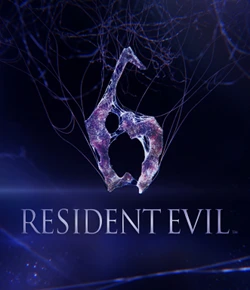
Resident Evil 6
 67
★ /10
67
★ /10
 Nintendo Switch
 PC
PC PS 3
PS 3 PS4
PS4 Xbox 360
 Xbox One
 Capcom
 1C-SoftClub,
  ak tronic Software & Services GmbH, Capcom
Where to buy



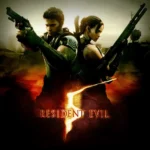
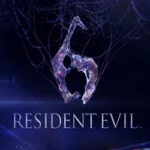
Resident Evil 6 is a 2012 third-person action game developed and published by Capcom. Released for PlayStation 3 and Xbox 360 on October 2, 2012, and for PC on March 22, 2013, it contains four separate campaigns, a combined runtime of approximately 16–20 hours, and a design philosophy that attempted to be everything to everyone. It received Metacritic scores of 74 on PS3 and 71 on Xbox 360.
The r/residentevil thread “Resident Evil 6 — the most controversial game in the series” currently appears in its Knowledge Panel. The thread “What went wrong with Resident Evil 6?” draws 4,190 monthly organic visitors at position four in its current search results. These are not questions the game’s defenders contest. They are questions the game’s defenders have answers to.
Technical Specifications
| Attribute | Details |
|---|---|
| Developer | Capcom R&D Division 1 |
| Publisher | Capcom |
| Director | Hiroyuki Kobayashi |
| Platform(s) | PS3 · Xbox 360 (Oct 2, 2012) · PC (Mar 22, 2013) · PS4/Xbox One (Mar 29, 2016) · Switch (Oct 29, 2019) |
| Metacritic | 74 (PS3) · 71 (Xbox 360) |
| Genre | Third-person action, Co-op action |
| Mode(s) | Single-player · 2-player local/online co-op (per campaign) |
Four Campaigns: The Structural Gamble
Resident Evil 6 is structured as four separate, intersecting campaigns, each following a different protagonist or pair through events that overlap in time and location:
Leon’s campaign (with Helena Harper) is the game’s survival horror chapter. Set partially in a zombie-infected American university and partially in Eastern Europe, it is the most atmospheric of the four, the most deliberately paced, and the one most players who defend RE6 specifically recommend. The zombies here are traditional walkers; the environments are designed for tension; Leon’s specific brand of dry understatement works as horror protagonist characterisation.
Chris’s campaign (with Piers Nivans) is a military action game. BSAA operations in China against Neo-Umbrella’s mutant soldier force produces a campaign that plays closest to a cover-based third-person shooter, with large urban environments designed for squad combat rather than atmosphere or exploration. It is the campaign most different from anything the franchise had previously attempted and the one most critics found indefensible as Resident Evil.
Jake’s campaign (with Sherry Birkin) is an action-chase game built around the revelation that Jake Muller is the son of Albert Wesker. Jake has inherited partial resistance to the C-Virus, making his blood valuable as a potential vaccine. The campaign is pursued by a near-invulnerable BOW called Ustanak (functioning as this game’s Nemesis equivalent) across multiple action sequences and ends with a confrontation. Sherry Birkin’s return — she was the child escaping with Leon and Claire in RE2, now a BSAA agent — provides a narrative thread connecting this game to the earlier franchise.
Ada’s campaign is unlocked after completing the other three. It provides Ada Wong’s perspective on the events of all three previous campaigns, reveals her role in the game’s conspiracy, and mechanically offers the game’s most varied and purposeful mission designs. It is frequently cited as the campaign that most rewards the accumulated knowledge of the other three.
The C-Virus and the Story
The C-Virus is a new bioweapon engineered by a organisation calling itself Neo-Umbrella — operating independently of the defunct original Umbrella Corporation and using its branding specifically to cause confusion and fear. Unlike the T-Virus’s reanimation of dead tissue, the C-Virus can infect living humans, producing different types of mutations depending on application method.
President Adam Benford is infected with the C-Virus and becomes a zombie at the game’s opening. Leon is forced to kill him before he can spread the infection. This event — and the implication that Leon has killed the American president — is the game’s inciting incident and its boldest narrative choice.
The campaigns reveal that someone has been staging the bioterrorism attacks to frame Ada Wong, that Jake Muller’s antibodies make him the key to a vaccine, and that the Neo-Umbrella conspiracy connects through the game’s various antagonists in ways the Ada campaign is required to fully explain. The story is not incoherent; it is very long and delivered in fragments across four campaigns that the player must complete in sequence or parallel to understand completely.
What Went Wrong
The critical consensus on RE6‘s problems is specific rather than general:
The identity crisis is structural. Four campaigns with four different design philosophies means no single campaign has enough space to develop its ideas fully, and players who want one thing (survival horror, military action, chase thriller, spy thriller) will spend significant portions of their time getting something else. The game is a compromise between several audiences that satisfies none of them completely.
The pacing is hostile. Action sequences and cinematic moments follow each other without establishing a rhythm. The game contains too many Quick Time Events — including during combat encounters rather than only in cutscenes — which interrupt player agency at the moments when the game should be most engaging.
The runtime is excessive. 16–20 hours across four campaigns would be appropriate if those hours were consistently high-quality. They are not. Several sequences in Chris’s and Jake’s campaigns are widely acknowledged, including by the game’s defenders, to be padding.
The departure from survival horror is complete. Resources are more plentiful than in any previous mainline Resident Evil. The stamina system allows extended running. The movement system (discussed below) is generous. Fear of death is low relative to the franchise’s prior entries. RE5 reduced survival horror; RE6 eliminated it.
What RE6 Does Better Than Its Reputation Suggests
The movement system in Resident Evil 6 is the most mechanically generous in the franchise’s action era, a fact that is easy to miss when every other element of the design is frustrating:
Leon, Chris, Jake, and Ada can all slide into combat, roll laterally during firefights, dive in any direction, fire while prone, and execute a full melee combo system. The physicality of the characters — how they move under and around enemies, how they use the environment during combat — is more expressive than any prior RE and more expressive than many action games released in the same period.
This movement system is rarely appreciated at the time of initial play because the encounters it is applied to are not well designed to showcase it. In retrospective assessment — and in the “just finished RE6 for the first time” community threads that appear in this SERP — it is often cited as the element that makes the game more enjoyable than expected.
Leon’s campaign specifically holds up independently. Evaluated without comparison to the other three, it functions as a reasonable atmospheric action-horror game with a well-paced location structure and appropriate tonal restraint.
Co-op improves the experience significantly, as it did with RE5. The campaigns are designed for two players; the encounter structure makes more sense when both characters are human-controlled.
RE6 as Catalyst
Resident Evil 6 sold approximately 13 million copies across all platforms — commercially successful by any measure. The critical reception (74/71 Metacritic) represented the most negative response to a mainline numbered Resident Evil since the franchise began. The combination of commercial success and critical disaster produced a specific internal crisis at Capcom: the games were selling, but their identity had been lost.
Resident Evil 7: Biohazard (2017) was the response. First-person. Atmospheric horror. Isolated setting. No returning characters in the main campaign. A deliberate, complete reversal of RE6‘s design philosophy. It received a Metacritic score of 86 and reoriented the franchise. The subsequent RE2 Remake (2019, Metacritic 91) and RE4 Remake (2023, Metacritic 93) extended that reorientation.
Resident Evil 6 is most accurately described as the point at which the series tested whether expanding the audience to maximum possible breadth would work, received a clear answer that it would not, and course-corrected into the most productive creative period in the franchise’s history since RE4 itself. Its contribution to the franchise is negative in the design sense and positive in the consequence.
Reception
Resident Evil 6 received Metacritic scores of 74 on PS3 and PC and 71 on Xbox 360 — the lowest for any mainline numbered entry at the time of its release. Destructoid gave it 4.5/10. Eurogamer gave it 5/10. IGN gave it 7.9/10. The spread is wide because the game is genuinely doing multiple things, some of which work and some of which do not, and critics weighted the ratio differently.
The Digital Trends 10th anniversary retrospective (2022) is the kind of reassessment the game’s reputation has generated: not rehabilitation — RE6 is not now considered a misunderstood classic — but a more precise accounting of what the game is and isn’t, what it tried and failed to do, and what it accidentally preserved (the movement system, Leon’s campaign) while catastrophically discarding the rest.
The community’s characterisation of it as “the most controversial game in the series” is accurate. The controversy is not about whether RE6 is good — it is not, by most accountings — but about where exactly it went wrong, whether individual campaigns redeem it, and what its commercial success and critical failure meant for a franchise whose subsequent creative recovery was among the most significant in recent gaming history.
Resident Evil news
More news
Capcom Plans to Evolve RE Engine Into an AI-Generation Engine

Roy Lee Reportedly Developing a New Silent Hill Movie
Valve Deliberately Leaked Left 4 Dead 2 Trailer to Dodge ESRB Rules

Steam Gross Revenue Tops $15 Billion in First Eight Months of 2026