Halo: Reach
 91
★ /10
91
★ /10
 PC
PC Xbox 360
 Microsoft Game Studios
Where to buy

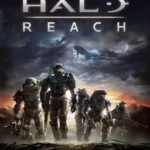
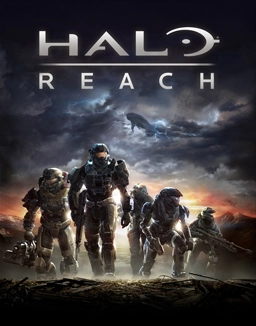
Halo: Reach is a 2010 first-person shooter developed by Bungie and published by Microsoft Game Studios, released September 14, 2010 for the Xbox 360. A direct prequel to Halo: Combat Evolved, it depicts the fall of the planet Reach in the weeks before that game begins — an event already established as a UNSC defeat before a single player picks up the controller. It holds a Metacritic score of 91, sold 8 million copies, and generated over $200 million in its first week, beating Halo 3‘s own record. It’s also Bungie’s last Halo game: every subsequent entry has been made under Microsoft’s internal studio, now known as Halo Studios.
The marketing tagline said it plainly: “From the beginning, you know the end.” Every member of the squad players control dies except one, and that outcome is public knowledge going in — the entire game is built around dread rather than surprise.
Technical Specifications
| Attribute | Details |
|---|---|
| Developer | Bungie |
| Publisher | Microsoft Game Studios |
| Creative Director | Marcus Lehto |
| Audio Director | Martin O’Donnell |
| Composers | Martin O’Donnell · Michael Salvatori |
| In-Universe Setting | August 2552 (weeks before Halo: Combat Evolved) |
| Release | September 14, 2010 (Xbox 360) |
| Also released on | Windows, Xbox One (via Halo: The Master Chief Collection, Dec 2019) |
| Metacritic | 91 |
| First-Week Sales | $200+ million · 8 million copies lifetime |
| Genre | First-person shooter |
| Mode(s) | Single-player/co-op campaign (up to 4 players) · Multiplayer · Firefight matchmaking · Forge |
A Send-Off, Not a Sequel
Development began right after Halo 3 shipped in 2007, running on the studio’s usual three-year cycle while a separate team handled Halo 3: ODST alongside it. Early on, Bungie genuinely considered continuing Master Chief’s story — effectively an unannounced “Halo 4” — before deciding against it. The team didn’t want to carry forward everything that came with picking the Chief back up after Halo 3‘s ending, and chose a prequel instead: a new engine, a new cast, and a story whose outcome the audience already knew from Combat Evolved‘s opening minutes.
The Fall of Reach
Loosely inspired by Eric Nylund’s 2001 novel The Fall of Reach — though built around an entirely new cast rather than adapting it directly — the campaign follows Noble Team, a six-person Spartan squad investigating a lost communications outpost, as a routine insurgent sweep turns into the opening stage of a full Covenant invasion of Reach, humanity’s primary military world and the origin of the SPARTAN-II program itself. The scale is deliberately larger than anything Bungie had built before: open countryside, orbital space combat sequences, and full city-scale set pieces replace the more contained corridors of earlier games.
Noble Team
Players control Noble Six, a fully customizable Spartan-III recruit joining an already-established unit: Commander Carter, second-in-command Kat, heavy weapons specialist Jorge, demolitions expert Emile, and sniper Jun. Six is deliberately quieter and less defined than Master Chief by design — Bungie wanted the character creation system to do the work of making players feel present, rather than asking them to attach to a pre-written personality the way they had with Chief. By the campaign’s end, every member of Noble Team is dead except Jun, who is ordered off-world; Six’s own fate is left to the player to witness directly, fighting alone against overwhelming odds in the game’s final, unwinnable stand.
You Know How This Ends
What sets Reach apart from most prequels, and most Halo games, is that its ending was never a twist to protect — Combat Evolved had already told players nine years earlier that Reach fell and Master Chief was the sole Spartan survivor to escape it. Rather than working around that, Bungie built the entire campaign’s tone in service of it, trading the series’ usual triumphant momentum for a kind of long, dreadful inevitability. It’s the reason the game still gets revisited and re-argued years later — Eurogamer would go on to call it the greatest prequel story the medium has produced, and it’s a common answer whenever the “what’s the big deal with Reach” question comes up among newer fans discovering the game after the fact.
Armor Abilities
Reach replaced the equipment items of Halo 3 with Armor Abilities — equippable powers like Jetpack, Active Camouflage, Sprint, and the notoriously divisive Armor Lock, which made a Spartan briefly invulnerable at the cost of being unable to move or shoot. It was the single biggest change to how a Halo Spartan could move and fight since the original game, and multiplayer balance around Armor Lock specifically became one of the community’s longest-running arguments, prompting Bungie to rework several ability effects in a September 2011 title update.
The Beta That Broke Records
A public multiplayer beta, open to anyone who’d purchased Halo 3: ODST, ran for three weeks in May 2010 and drew more than 2.7 million participants — the largest beta test the franchise, and one of the largest on Xbox Live, had seen up to that point. Bungie used the feedback to tune weapon balance and Armor Ability effects ahead of launch.
Reception and Sales
Reach was received as both a critical and commercial high point for the series: reviewers praised the scale of the new engine, the strength of Noble Team’s characters despite their thin dialogue, and a soundtrack from Martin O’Donnell and Michael Salvatori that leaned into what fans still describe as “hopeful melancholy.” Commercially, it topped even Halo 3‘s own launch, generating over $200 million in its first week against Halo 3‘s $170 million day-one record, and went on to sell roughly 8 million copies.
Bungie’s Goodbye
Reach shipped as Bungie’s last Halo game by design — the studio had already signed a ten-year publishing deal with Activision to build a new original property, which became Destiny, and every subsequent Halo title has been developed by Microsoft’s own studio instead. That context gave Reach‘s marketing and tone an extra layer that wasn’t lost on players at the time: a studio saying goodbye to the universe it built, through a story about people who don’t get to go home either.
Where to Play It Today
Halo: Reach is included in Halo: The Master Chief Collection on Xbox, PC (Steam or the Microsoft Store), and Xbox Game Pass. It was also the very first Halo title to launch on PC through MCC, arriving in December 2019 ahead of the rest of the collection, which followed piece by piece over the following year.