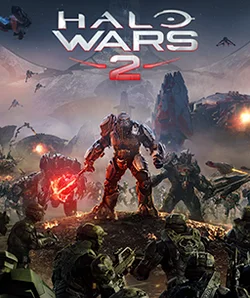
Halo Wars 2
 79
★ /10
79
★ /10
 PC
PC Xbox One
 Microsoft Game Studios
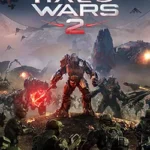
Halo Wars 2 is a 2017 real-time strategy game developed by Creative Assembly and 343 Industries, published by Microsoft Studios and released February 21, 2017 for Xbox One and Windows 10 as an Xbox Play Anywhere title. Set in 2559, nearly three decades after the original Halo Wars and chronologically after Halo 5: Guardians, it holds a Metacritic score of 79 and is best known today for something that wasn’t obvious at launch: it’s the game that introduced Atriox and the Banished, the faction that would go on to headline Halo Infinite four years later.
This was also the first time the Halo Wars sub-series changed hands. With Ensemble Studios shut down after the original 2009 game, Microsoft handed the sequel to Creative Assembly — the UK studio behind the Total War series — working alongside 343 Industries on story integration with the wider franchise.
Technical Specifications
| Attribute | Details |
|---|---|
| Developer | Creative Assembly · 343 Industries |
| Publisher | Microsoft Studios |
| Writer | Kevin Grace |
| Composers | Gordy Haab · Brian Lee White · Brian Trifon |
| Cinematics | Blur Studio |
| In-Universe Setting | 2559 (~28 years after Halo Wars, after Halo 5: Guardians) |
| Release | February 21, 2017 (Xbox One, Windows 10 — Xbox Play Anywhere) |
| Major DLC | Awakening the Nightmare (Sept 2017, Flood-themed campaign) |
| Metacritic | 79 |
| Genre | Real-time strategy |
| Mode(s) | Single-player campaign (12 missions) · Multiplayer skirmish · Blitz (card-based mode) |
A Total War Studio Takes on Halo
Development began in 2014, when 343 Industries approached Creative Assembly — a SEGA-owned studio with decades of real-time strategy pedigree through the Total War series — about building the sequel to Ensemble’s game. 343 specifically wanted the new game’s story woven more tightly into the franchise’s ongoing continuity than the original had been, rather than treated as an isolated side story. It was a notable pairing: a studio known for grounded historical and fantasy warfare taking on a science-fiction universe it had no prior connection to, working in partnership with the team that actually owned Halo’s lore.
Xbox Play Anywhere
Halo Wars 2 launched as one of the highest-profile early titles in Microsoft’s Xbox Play Anywhere initiative — buy the game once and play it on both Xbox One and Windows 10, with saves and achievements shared between them. For an RTS specifically, that mattered more than usual: Creative Assembly built the game to control well on both a gamepad and mouse and keyboard from day one, rather than porting one control scheme onto the other after the fact, and reviewers testing the PC version generally found it ran cleanly even on modest hardware.
The Spirit of Fire, Twenty-Eight Years Later
The campaign picks up where the original game’s cliffhanger left off: the UNSC support ship Spirit of Fire, stranded without a working slipspace drive at the end of Halo Wars, drifts for decades before its crew wakes from cryo-sleep above the Ark — the Forerunner installation responsible for constructing the Halo rings. What they find isn’t the Covenant they left behind. A wrecked UNSC research station holds the only survivor, an AI named Isabel, and the culprit behind the station’s destruction: Atriox, an unusually intelligent, physically massive Brute leading a breakaway mercenary faction that has been tearing through Covenant forces on its own terms.
Atriox and the Banished
The Banished are framed from the start as something the Halo universe hadn’t shown before: not Covenant loyalists, not human insurgents, but a faction assembled entirely around one leader’s ability to survive and profit from the chaos of a collapsing empire. Atriox himself, a former Covenant slave-soldier turned warlord, was voiced by John DiMaggio and largely kept off-screen through much of the campaign — a choice several reviewers singled out as a missed opportunity, since the character’s presence in cutscenes rarely matched his reputation as the story’s central threat.
Blitz: Cards Instead of Bases
Alongside traditional base-building skirmish multiplayer, Halo Wars 2 introduced Blitz, a genuinely new mode built around a ten-card deck rather than a base: instead of constructing buildings and training units the usual RTS way, players spend resources earned on the battlefield to deploy units and leader powers directly from their deck, drafted beforehand from a leader-specific pool alongside a shared general pool — a structure reviewers frequently compared to Hearthstone. It became the part of the game most consistently praised for originality, even among critics who felt the core skirmish mode played it fairly safe.
Reception
Reviewers were positive about presentation and controls and more mixed on substance. Blur Studio’s cinematics were, once again, near-universally praised, and GameSpot called the base gameplay a faithful, accessible continuation of the original — while also noting that the story never developed its characters enough for the cutscenes to feel essential rather than decorative. GamesRadar and others flagged the campaign as shorter than expected and Atriox’s motivations as underexplored for a villain positioned as the game’s central hook. Multiplayer, and Blitz specifically, drew the most consistent praise across outlets; the wider consensus landed on “a solid, accessible console RTS” rather than the genre-redefining sequel some had hoped for.
Awakening the Nightmare
The Awakening the Nightmare expansion, released in September 2017, shifted the perspective to the Banished side, following Brute lieutenants Pavium and Voridus as they scavenge the wreckage of the Covenant holy city High Charity — crashed on the Ark since the end of the Human-Covenant War — against Atriox’s explicit orders not to enter it. They do anyway, and release a dormant Flood outbreak in the process, forcing Banished troops to fight the parasite directly for the first time in a Halo Wars game. It’s a smaller, standalone story rather than a continuation of the main campaign, but it reintroduced the Flood to the series at a moment when the mainline games hadn’t used the enemy in years.
Legacy: The Villain Who Outgrew the Game
Halo Wars 2‘s most lasting contribution to the franchise wasn’t the game itself — it was Atriox. Four years after this RTS spin-off quietly introduced him, Atriox and the Banished became the primary antagonists of Halo Infinite (2021), the flagship mainline entry that followed Halo 5, with the character recast and voiced by Ike Amadi for his mainline debut. It’s an unusual trajectory for a Halo villain — normally the numbered games introduce their own antagonists rather than inheriting one from a strategy spin-off — and it retroactively made Halo Wars 2 a more important piece of franchise lore than its contemporary reviews gave it credit for.
Where to Play It Today
Halo Wars 2: Complete Edition bundles the base game with the Awakening the Nightmare expansion, the full Season Pass leader roster, and native 4K/HDR support on capable hardware. It’s available on Xbox, Windows via the Microsoft Store, and Xbox Game Pass / PC Game Pass, with cross-play and cross-save carried over from the original Play Anywhere release.
Halo news
More news
Activision Takes Over Halo as Microsoft Guts Halo Studios
Halo Cinematic Director Promoted and Laid Off in the Same Week
Xbox Heads to Tokyo Game Show 2026 for 25th Anniversary Showcase
PlayStation Dropped Physint Over Budget and Profitability Fears