Halo 3: ODST
 83
★ /10
83
★ /10
 PC
PC Xbox 360
 Microsoft Game Studios
Where to buy

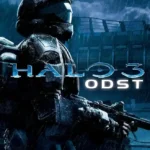
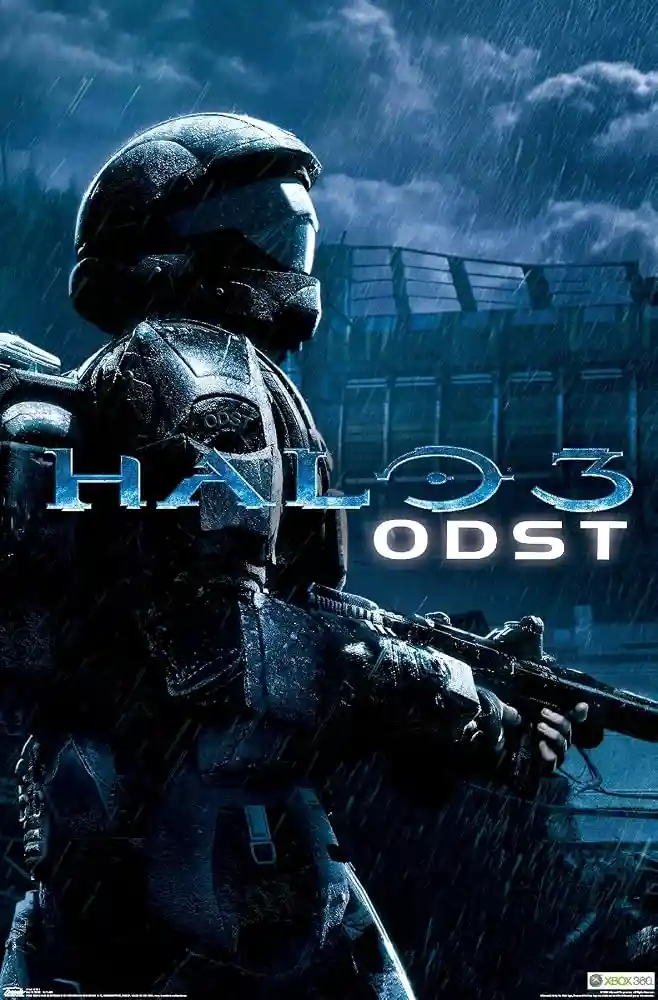
Halo 3: ODST is a 2009 first-person shooter developed by Bungie and published by Microsoft Game Studios, released September 22, 2009 for the Xbox 360. Set concurrently with Halo 3, it swaps Master Chief for an ordinary Orbital Drop Shock Trooper with no shields, no motion tracker, and no dialogue, and tells its story through a film-noir framing device rather than a straight campaign. It holds a Metacritic score of 83, sold more than 3 million copies, and remains one of the more structurally unusual entries in the entire franchise.
It’s also the game that started a genuinely useful debate in games criticism: at what point does a side story become substantial enough to justify a full retail price? ODST shipped as a standalone $60 release with a roughly six-hour campaign, and critics at the time didn’t agree on the answer.
Technical Specifications
| Attribute | Details |
|---|---|
| Developer | Bungie |
| Publisher | Microsoft Game Studios |
| Writer | Joseph Staten |
| Composers | Martin O’Donnell · Michael Salvatori |
| In-Universe Setting | Concurrent with Halo 3 (2552) |
| Release | September 22, 2009 (Xbox 360) |
| Also released on | Xbox One (campaign, 2015) · Windows and Xbox One Firefight (2020, via Halo: The Master Chief Collection) |
| Metacritic | 83 |
| Sales | 3+ million copies worldwide |
| Genre | First-person shooter |
| Mode(s) | Single-player/co-op campaign (up to 4 players) · Firefight (co-op survival, debut) · Full Halo 3 multiplayer disc |
From Halo 3: Recon to a Standalone Game
The project started small, under the working title Halo 3: Recon, originally conceived as an expanded multiplayer armor pack rather than a new campaign. As Bungie’s post-Halo 3 team worked on it between finishing that game and beginning Halo: Reach, the scope grew into a self-contained side story, and Microsoft ultimately shipped it as a standalone $60 retail release rather than a cheaper add-on. That pricing decision became the game’s most contentious talking point at launch: Official Xbox Magazine argued the campaign, Firefight, and a bundled second disc containing the entire Halo 3 multiplayer suite justified the cost outright, while IGN’s Erik Brudvig called it more than an expansion but stopped short of calling it a true sequel, recommending it mainly to players already invested in the universe.
New Mombasa at Night
The story takes place in New Mombasa, concurrent with the opening hours of Halo 3, after a Covenant slipspace jump tears the city apart and scatters a six-person ODST squad across its ruins. Playing as an unnamed trooper known only as the Rookie, knocked unconscious during the drop and waking hours after everyone else, the player explores the wrecked city at night looking for clues to what happened to the rest of the squad, with each significant find triggering a flashback mission played as one of the other troopers in the hours beforehand.
The Rookie’s Silent Investigation
Bungie described film noir as a direct influence, and it shows in almost every design choice: the Rookie never speaks, information arrives through found audio logs and environmental clues rather than exposition, and the game’s structure — a lone figure piecing together what happened in a rain-soaked, mostly empty city at night — borrows its shape from detective fiction more than military sci-fi. It’s a deliberate tonal departure from every other mainline Halo game, trading large-scale set-piece combat for something quieter and more atmospheric, at least during the New Mombasa sections themselves.
No Shields, No Motion Tracker
Mechanically, ODST strips away two things players had relied on since 2001: the Rookie has no recharging energy shield, running instead on a conventional health bar with health packs, and no motion tracker. In its place is VISR mode, a night-vision-style overlay that highlights enemies, allies, and points of interest in darkness. The combined effect, intentional on Bungie’s part, is that an ODST feels considerably more fragile and human than a Spartan — the game leans into vulnerability rather than working around it.
A Firefly Reunion in Space
The ODST squad’s cast reads like a partial Firefly reunion: Gunnery Sergeant Buck is voiced by Nathan Fillion, alongside Tricia Helfer as Captain Dare, Adam Baldwin as Dutch, and Alan Tudyk as Mickey — a casting choice fans noticed and appreciated immediately, and one that gave Buck in particular a persona not far removed from Fillion’s Firefly role, transplanted into Halo’s power armor.
Firefight
ODST introduced Firefight, a cooperative wave-survival mode pitting up to four players against escalating Covenant forces for score and survival time, using the same scoring, skulls, and achievement systems as Halo 3‘s campaign. It shipped without matchmaking at launch, limited to invite-only parties due to time constraints, but the mode itself proved popular enough that it became a recurring fixture across later Halo games. Its Halo: The Master Chief Collection version received a substantial 2022 overhaul, adding new enemy types, weapons backported from Halo 3, a round-based “Boon” bonus system, and Floodfight, a variant that reintroduces the Flood to the mode for the first time.
Reception
Critics were largely positive on atmosphere, music, and the noir structure — Martin O’Donnell and Michael Salvatori’s saxophone-driven score was singled out repeatedly as some of the best work either composer had done for the series. The recurring point of disagreement was value: reviewers who treated ODST as a full sequel sometimes found the roughly six-hour campaign thin next to a $60 asking price, while those who framed it as an ambitious expansion with a full second disc of Halo 3 multiplayer attached tended to come away satisfied. Player sentiment has aged in ODST‘s favor since — modern discussion of the game, including on communities revisiting it years later, skews toward calling it an underrated highlight of the series rather than a lesser side entry.
Legacy
ODST‘s influence shows up in small, specific ways across the rest of the franchise: Firefight became a semi-regular fixture, and the noir/found-audio storytelling approach influenced how later Halo side content handled world-building. The game found an unexpected second life in 2025, when a crossover with Helldivers 2 brought ODST weapons and armor into Arrowhead’s game as downloadable content — an unusual pairing of two very different takes on “ordinary soldier against overwhelming odds,” and a sign the game’s specific aesthetic still resonates well outside its original console generation.
Where to Play It Today
Halo 3: ODST is included in Halo: The Master Chief Collection on Xbox, PC (Steam or the Microsoft Store), and Xbox Game Pass, with the campaign available since 2015 and the revamped Firefight mode, including Floodfight, added in 2020 and expanded further in 2022.