Halo Wars
 82
★ /10
82
★ /10
 PC
PC Xbox 360
 Xbox One
 Microsoft Game Studios
Where to buy

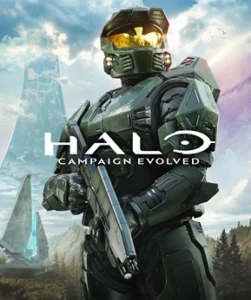
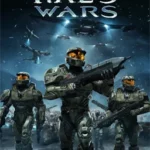
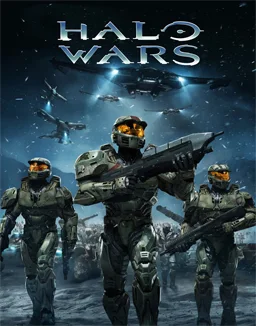
Halo Wars is a 2009 real-time strategy game developed by Ensemble Studios and published by Microsoft Game Studios, released for the Xbox 360 on March 3, 2009. Set in 2531, twenty-one years before Halo: Combat Evolved, it holds a Metacritic score of 82 based on 92 critic reviews and became the best-selling console RTS of its time, moving a million copies within its first month. This entry covers the original 2009 release; an enhanced rerelease, Halo Wars: Definitive Edition, followed in 2016–2017 and is covered near the bottom of this page, alongside its sequel, Halo Wars 2.
It’s also the last game its developer ever finished. Ensemble Studios — the team behind Age of Empires — was shut down by Microsoft in the weeks before Halo Wars shipped, closing out one of the more unusual and quietly sad footnotes in the franchise’s history.
Technical Specifications
| Attribute | Details |
|---|---|
| Developer | Ensemble Studios |
| Publisher | Microsoft Game Studios |
| Lead Designer | Dave Pottinger |
| Writer | Graeme Devine |
| Composer | Stephen Rippy |
| Cinematics | Blur Studio |
| In-Universe Setting | 2531 (21 years before Halo: Combat Evolved) |
| Original Release | February 26, 2009 (Australia/Japan) · February 27, 2009 (Europe) · March 3, 2009 (North America, Xbox 360) |
| Also released on | Windows, Xbox One (as Halo Wars: Definitive Edition, Dec 2016 / standalone April 2017) |
| Metacritic | 82 (92 critics) |
| Genre | Real-time strategy |
| Mode(s) | Single-player campaign · Multiplayer (skirmish, online) |
An Age of Empires Studio Builds a Console RTS
Ensemble Studios had spent over a decade as the industry’s reference point for PC strategy games, shipping the original Age of Empires, its sequels, and Age of Mythology. Around 2007, the studio spent twelve to eighteen months prototyping console-native real-time strategy mechanics using the Age of Mythology engine — an experiment with no Halo branding attached at first. Microsoft, wary that a console RTS could find an audience on its own, pushed Ensemble to reframe the project as a Halo game instead, reasoning that the franchise’s name would carry sales an unproven genre experiment couldn’t guarantee on its own. The decision reportedly strained the relationship between Ensemble and Bungie, who had creative ownership of the Halo universe Ensemble was now building inside. Halo Wars was officially unveiled at Microsoft’s X06 event in September 2006.
Designed for a Controller, Not a Mouse
Console RTS games had a rough track record before this one, and Ensemble built Halo Wars‘ entire control scheme around avoiding those failures rather than porting a PC-style interface onto a gamepad. Unit selection, group commands, and camera movement were mapped specifically to the Xbox 360 controller’s bumpers and analog sticks, and base-building was deliberately streamlined — fewer buildings, simpler tech trees — compared to a typical PC strategy game. It was the single most consistently praised part of the game at launch: reviewers who walked in skeptical of an RTS on a controller came away agreeing it actually worked.
The Spirit of Fire
The campaign follows the UNSC support ship Spirit of Fire, commanded by Captain James Cutter, as Sergeant John Forge and scientist Professor Ellen Anders investigate a Covenant excavation on the ruined colony world Harvest. The trail leads to a Forerunner shield world, where Covenant commander Ripa ‘Moramee is racing to activate an ancient fleet of warships. The situation escalates further when the parasitic Flood — contained inside the shield world for millennia — breaks loose and starts infecting Covenant and human forces indiscriminately. In the climax, Forge stays behind to manually detonate the Spirit of Fire‘s slipspace drive inside the shield world’s star, triggering a supernova that destroys the Forerunner fleet and most of the Flood outbreak with it, at the cost of stranding his own ship without a working slipspace drive to get home.
Three Leaders, Three Playstyles
Rather than the faction-vs-faction structure typical of the genre, Halo Wars‘ campaign lets players command through three distinct leaders, each built around a different strategic identity: Cutter favors fast infantry production and orbital MAC gun strikes, Forge leans into vehicle-heavy aggression backed by upgraded Scorpion tanks, and Anders focuses on economy and faster research. It’s a structure that gave the campaign more mechanical variety than its relatively short length would otherwise suggest.
Reception
Critics were positive but not uncritical. The control scheme, Blur Studio’s pre-rendered cinematics, and the game’s evident care in representing the Halo universe accurately were consistently singled out for praise. The most common complaint, echoed by GameSpot and USA Today among others, was that experienced PC strategy players found the actual strategic depth thin compared to genre standards — a reasonable trade-off given the controller-first design, but a real one. Campaign mode also drew criticism for offering no way to play as the Covenant, a structural choice that limited replay variety compared to Ensemble’s own PC strategy games. None of it stopped the game commercially: it sold a million units worldwide within a month of launch, making it the best-selling console RTS released up to that point.
The Studio That Made It Didn’t Survive to See It Launch
In September 2008, five months before Halo Wars shipped, Microsoft confirmed it would be closing Ensemble Studios once the game was finished, citing financial reasons unrelated to the quality of the work. Staff not directly needed to finish the game were let go immediately, while those still working on it were offered incentives to see it through. Microsoft’s own statement at the time was unusually direct in separating the decision from the game itself, calling Ensemble’s contributions to the industry “invaluable” and stating the closure reflected nothing about Halo Wars‘ quality. The studio formally shut down on January 29, 2009, five weeks before release. Much of its leadership regrouped almost immediately as Robot Entertainment, which went on to handle post-launch support and downloadable content for Halo Wars and later built its own identity with games like Orcs Must Die!.
Definitive Edition and Halo Wars 2
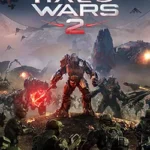
Halo Wars: Definitive Edition arrived in December 2016, bundled with the Halo Wars 2 Ultimate Edition on Xbox One and Windows before becoming a standalone $19.99 release — including a Steam version, ported by Behaviour Interactive — in April 2017. It runs at improved resolution and a smoother frame rate but is fundamentally the same 2009 campaign rather than a ground-up remake. Its sequel, Halo Wars 2, was developed by Creative Assembly working alongside 343 Industries and released in February 2017, picking the Spirit of Fire‘s story back up decades later after the ship drifts in slipspace with its crew in cryo-sleep. Reception to the sequel was more mixed than the original’s had been, with several reviewers citing technical issues and online stability problems at launch.
Where to Play It Today
Halo Wars: Definitive Edition is the only practical way to play the campaign now, available on Xbox, the Microsoft Store for Windows, and Steam. Note that the three platform versions don’t support cross-play with each other, so multiplayer matchmaking is limited to whichever one you own.