Halo 4
 87
★ /10
87
★ /10
 PC
PC Xbox 360
 Microsoft Game Studios
Where to buy

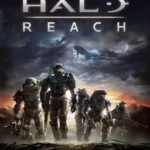
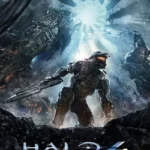
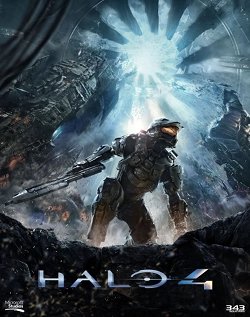
Halo 4 is a 2012 first-person shooter developed by 343 Industries and published by Microsoft Studios, released November 6, 2012 for the Xbox 360. It’s the first Halo game made without Bungie involved at all, and the first to put Master Chief back in the driver’s seat after three straight spin-offs — Halo Wars, Halo 3: ODST, and Halo: Reach — had all gone without him. It holds a Metacritic score of 87 and opened to $220 million in global sales in its first 24 hours, beating Reach‘s own $200 million record and briefly outselling that year’s biggest movie openings in the US.
It’s also the opening chapter of what 343 later branded the Reclaimer Saga — a new story arc built around Forerunner lore that the studio would spend the next several games trying to land.
Technical Specifications
| Attribute | Details |
|---|---|
| Developer | 343 Industries |
| Publisher | Microsoft Studios |
| Director | Josh Holmes |
| Writer | Christopher Schlerf |
| Composers | Neil Davidge · Kazuma Jinnouchi |
| In-Universe Setting | 2557 (four years after Halo 3) |
| Release | November 6, 2012 (Xbox 360) |
| Also released on | Xbox One, Windows (via Halo: The Master Chief Collection) |
| Metacritic | 87 |
| First-Day Sales | $220 million (record at the time, beating Halo: Reach’s $200 million) |
| Genre | First-person shooter |
| Mode(s) | Single-player/co-op campaign · War Games multiplayer · Spartan Ops (episodic co-op) |
The Studio Built to Carry Halo Forward
343 Industries was formed by Microsoft specifically to keep Halo going after Bungie’s departure, and cut its teeth on the 2011 Halo: Combat Evolved Anniversary remaster before taking on an original entry. For that first original game, the studio deliberately steered away from the Covenant-and-Flood conflict that had defined the previous six mainline releases, choosing instead to build a new story around the setting’s oldest and least-explored faction: the Forerunners. Over 350 people worked on the project, and existing characters and environments were rebuilt from the ground up using motion capture for the first time in the series’ cutscenes.
Requiem and Rampancy
The story picks up Master Chief exactly where Halo 3 left him: adrift in the wreckage of the Forward Unto Dawn, four years having passed since the ship was severed escaping the Ark. A Covenant remnant boarding party wakes him early, and the resulting crash strands him on Requiem, a Forerunner shield world hidden from the wider galaxy. What Chief finds there isn’t the war he left — it’s an ancient threat the UNSC has never encountered, and a companion who’s beginning to fall apart. Cortana, now eight years into service against a design lifespan of seven, is entering rampancy, the degenerative decline built into every “smart” AI in the Halo universe, and much of the campaign plays out against the certainty that she’s running out of time regardless of how the mission goes.
A More Human Master Chief
343 was explicit that its goal was to deepen the relationship between Chief and Cortana rather than simply escalate the action, using her decline as a way to explore Chief’s own humanity more directly than any prior game had. Contemporary reviews mostly credited the attempt while flagging its execution as uneven — several critics found the emotional beats between the two characters landed as intended, while others, along with a persistent thread of fan critique in the years since, have argued the plot’s structure buries its own best material under rushed pacing and Forerunner lore delivered mostly through exposition rather than earned reveals.
The Prometheans
Replacing the Covenant as the campaign’s primary antagonists are the Prometheans — Knights, Crawlers, and Watchers built from a Forerunner “Warrior-Servant” caste, led by an ancient entity called the Didact. Reception to the new enemy roster was the most consistently mixed part of the game: reviewers generally liked the concept and the Didact as a looming threat, but a fair number found the actual Promethean combat encounters less varied and satisfying than fighting the Covenant, a criticism 343 would keep adjusting across the rest of the Reclaimer Saga.
War Games and Spartan Ops
Multiplayer saw the series’ biggest structural shift yet: a loadout and perks system, branded as part of the in-fiction “War Games” simulation, let players customize starting weapons and abilities before a match — a design choice reviewers frequently compared to Call of Duty, for better or worse, depending on how attached they were to Halo’s traditional even-starts philosophy. Alongside it, Spartan Ops introduced episodic co-op content: ten weekly episodes of five missions each, set six months after the campaign and following a new squad of Spartan-IVs, delivered free to everyone who owned the game rather than sold separately.
Forward Unto Dawn
Halo 4‘s marketing extended into a live-action prequel web series, Halo 4: Forward Unto Dawn, following a young UNSC cadet before the events of the game. It drew more than 46 million views across its run, with the bulk of that on Machinima’s YouTube channel, and stands as one of the more substantial pieces of Halo’s live-action output prior to the later television adaptation.
Reception and Sales
Critics generally agreed 343 had cleared a difficult bar simply by making a Halo game that felt like Halo without Bungie behind it — several reviews specifically credited the studio with a confident technical relaunch of the franchise even where the story drew more mixed marks. Commercially, it was the biggest Halo launch to date: $220 million in worldwide sales in 24 hours, more than four million people playing within the first five days logging a combined 31.4 million hours, and a trajectory toward $300 million in first-week sales that made it the largest entertainment launch of 2012 in the US up to that point, ahead of Call of Duty: Black Ops II‘s release the following day.
Where This Leaves the Story
Halo 4 closes with the Didact defeated but Cortana apparently lost to full rampancy, setting up the Reclaimer Saga’s next chapters. That saga’s later direction — through Halo 5: Guardians and eventually Halo Infinite — became one of the more debated stretches of the franchise’s storytelling, with Halo 4 itself generally regarded as the strongest opening chapter of a trilogy that struggled to stay consistent from there.
Where to Play It Today
Halo 4 is included in Halo: The Master Chief Collection on Xbox, PC (Steam or the Microsoft Store), and Xbox Game Pass, with the campaign, War Games multiplayer, and Spartan Ops all available alongside the rest of the series.