Crysis 3
 76
★ /10
76
★ /10
 PC
PC PS 3
PS 3 Xbox 360
 1C-SoftClub
 Electronic Arts
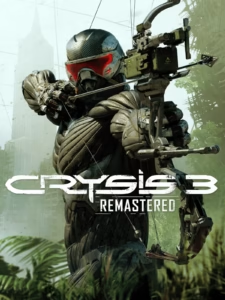
Crysis 3 is a 2013 first-person shooter developed by Crytek and published by Electronic Arts, released February 19, 2013 for Windows, PlayStation 3, and Xbox 360. The finale of the trilogy begun with Crysis and continued in Crysis 2, it holds a Metacritic score of 76 on PC and Xbox 360 and 77 on PS3 — the lowest critical average of the three, though the gap says more about familiarity than any collapse in quality. This entry covers the original 2013 release; the 2021 Crysis 3 Remastered has its own page.
It’s also, today, the hardest Crysis to actually buy on PC — a storefront oddity with roots going back to its launch, when EA made it an Origin exclusive at the height of its war with Steam. The full story is in the availability section below.
Technical Specifications
| Attribute | Details |
|---|---|
| Developer | Crytek (campaign) · Crytek UK (multiplayer) |
| Publisher | Electronic Arts |
| Director | Cevat Yerli |
| Writer | Steven Hall |
| Composers | Borislav Slavov · Peter Antovszki |
| Engine | CryEngine 3 |
| In-Universe Setting | New York City, 2047 (24 years after Crysis 2) |
| Release | February 19, 2013 (NA) · February 21–22, 2013 (AU/EU — PC via Origin, PS3, Xbox 360) |
| Steam History | Added June 4, 2020 · removed from individual sale September 7, 2023 (EA Play only since) |
| Remaster | Crysis 3 Remastered (October 2021, PC/PS4/Xbox One/Switch, single-player only) |
| Metacritic | 76 (PC, Xbox 360) · 77 (PS3) |
| Genre | First-person shooter |
| Mode(s) | Single-player · Multiplayer (effectively inactive; developed by Crytek UK) |
Closing the Trilogy
Announced in April 2012 — after EA’s own Origin store accidentally leaked its Limited Edition listing days early — Crysis 3 was positioned from the start as the trilogy’s conclusion and, implicitly, as Crytek’s answer to the loudest criticism of Crysis 2: that the urban sequel had traded away the original’s open sandbox. The solution was to merge the two identities literally. Twenty-four years after the second game, New York sits sealed under a CELL-built Nanodome, and inside it the city has been swallowed by rainforest — the Liberty Dome, marketed as seven distinct biomes called the Seven Wonders, with overgrown skyscrapers, swamplands, and grass-choked avenues deliberately fusing Crysis‘ jungle with Crysis 2‘s architecture. Filmmaker Albert Hughes was commissioned to direct a stylized short-film series around the concept, and an open multiplayer beta drew three million participants across two weeks in early 2013. A Wii U version was cancelled along the way as EA’s relationship with Nintendo soured.
Prophet’s Revenge
Set in 2047, the campaign hands control to Prophet — or rather, to what remains of him: Alcatraz’s body, now fully overwritten by Prophet’s consciousness, a transition the game addresses directly as part of its story rather than quietly retconning. Freed from CELL captivity by a heavily aged Psycho — the fan-favorite sergeant from the original game and Warhead, now stripped of his own Nanosuit — Prophet joins a rebel movement fighting CELL’s energy monopoly, before the real threat resurfaces: the Alpha Ceph, the intelligence behind the alien presence on Earth since Lingshan. The relationship between Prophet and Psycho, and the question of how much humanity either man has left, carries most of the story’s emotional weight — reviewers broadly considered it the most coherent narrative of the three games, faint as that praise sometimes read.
The Bow
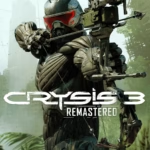
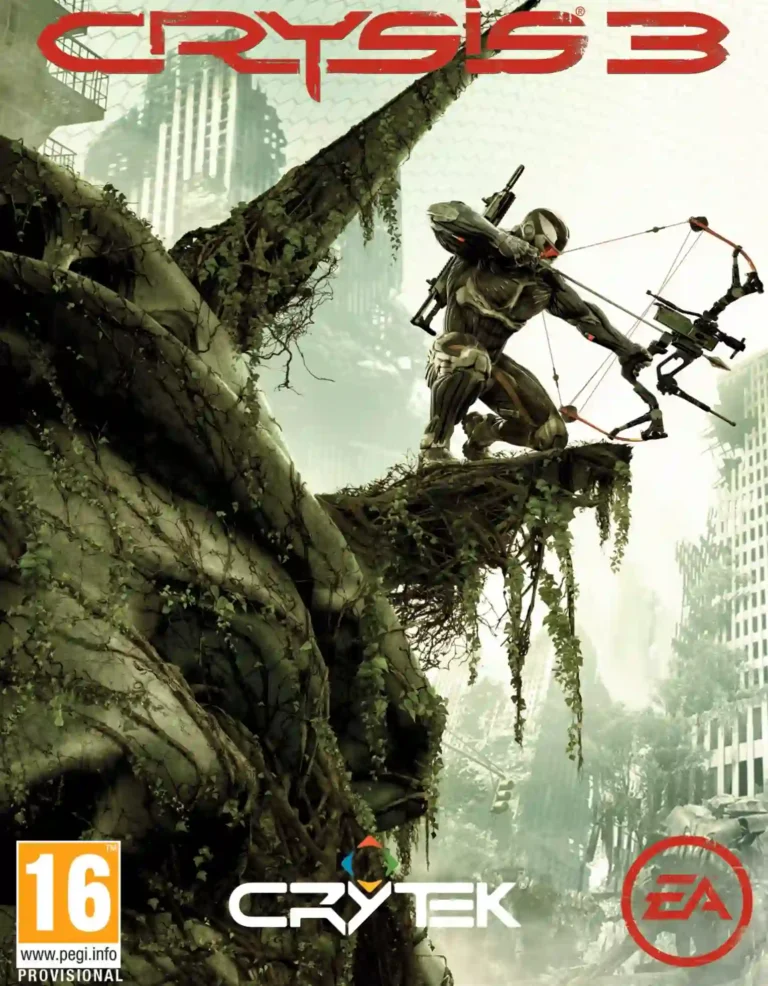
The Nanosuit returns essentially unchanged from Crysis 2, so the marquee addition is a weapon: the Predator compound bow, the one armament in the game that can be fired without breaking cloak. It reshaped how the game plays more than any suit change could have — sustained stealth became a viable full-campaign approach rather than a resource to ration — and it dominated the game’s marketing to the point of being on the box art. Alien weaponry can also be torn from Ceph corpses and turned on their owners, and the returning hacking mechanic lets Prophet subvert turrets and mines remotely.
Reception
Reviews were positive but noticeably cooler than either predecessor’s, settling around 76-77 across platforms. The consensus, captured by Edge’s much-quoted line calling it “a self-assured but largely unambitious game,” praised the visuals — routinely described as the best-looking game of its generation’s final year — alongside the bow, the campaign’s open-ended encounter design, and the strongest character work in the series, while dinging a short campaign (six to eight hours for most players), a story that assumed familiarity with two games’ worth of lore, and a general sense of refinement rather than reinvention. IGN’s 8.5 sat at the warmer end; the cooler takes found the Liberty Dome’s spectacle papering over encounter design the series had already done twice.
A Commercial Disappointment
Crysis 3 topped the UK all-formats chart at launch and still fell short of expectations: EA labeled its debut-quarter performance a disappointment, US launch-month sales came in around 205,000 units, and the game was widely reported as underperforming both its predecessor and its publisher’s targets. The follow-on effects for Crytek were serious — the studio hit a well-documented financial crisis in 2014, selling Crytek UK’s assets and refocusing away from big-budget retail releases, making Crysis 3 the last mainline entry in the series for what has now been more than a decade, with the announced next game still unreleased as of this writing.
Multiplayer’s Quiet End
Crytek UK’s multiplayer suite — including the well-liked asymmetric Hunter mode, pitting cloaked bow-wielders against a shrinking squad of CELL troopers — ran on EA’s own servers rather than GameSpy, which let it outlive the online modes of both earlier games. In practice, though, its population thinned within months (the Lost Island DLC’s Metacritic consensus already flagged empty lobbies in mid-2013), and today the mode is effectively dormant; the 2021 remaster dropped multiplayer entirely rather than attempt a revival.
The Hardest Crysis to Buy
On PC, Crysis 3 launched as an Origin exclusive — EA was two years into pulling its catalog from Steam to bootstrap its own storefront, and the trilogy’s finale never touched Valve’s store at release. It finally arrived on Steam in June 2020, only for EA to remove it from individual sale there in September 2023; since then, the Steam version exists solely inside the EA Play subscription. The original also never joined GOG, unlike the first game. The practical result: the untouched 2013 version can be bought outright only through the EA app, a narrower path than any other entry in the series — and one worth knowing about before assuming the Steam search result labeled “Crysis 3” is the original rather than the remaster.
Where to Play It Today
The original Crysis 3 is sold on the EA app (with the Digital Deluxe edition included in EA Play Pro) and is playable through the EA Play subscription on Steam and console. The Xbox 360 version remains listed on the Xbox store and runs on modern Xbox hardware via backward compatibility. Players who just want the campaign on modern platforms with a straightforward purchase are better served by Crysis 3 Remastered — standalone or in the Remastered Trilogy — which gets its own entry in our database.