CivCity: Rome
 67
★ /10
67
★ /10
 PC
PC
 Firaxis Games,
  FireFly Studios
 1C Company,
  2K Games


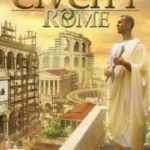
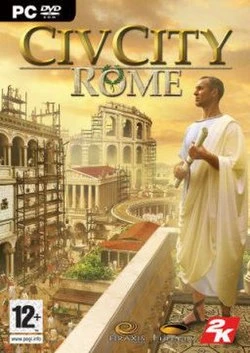
CivCity: Rome is a city-building strategy video game developed as a unique collaboration between Firefly Studios (famed for the Stronghold series) and Firaxis Games (creators of Civilization). Published by 2K Games and released in July 2006 for Microsoft Windows, the title represents an experimental crossover spinoff that attempts to merge two distinct sub-genres of strategy gaming.
The central design premise of CivCity: Rome invites players to shift their macroscopic lens away from managing a sprawling, multi-city empire across millennia and instead zoom in directly on the tactical, municipal level of the Roman Empire’s greatest urban centers.
The game heavily superimposes the structural mechanics of Sid Meier’s Civilization—most notably its iconic technology research tree and Civilopedia—onto a localized, real-time city-building foundation heavily reminiscent of Impression Games’ classic Caesar series.
Technical Specifications
| Attribute | Details |
| Developer(s) | Firefly Studios, Firaxis Games |
| Publisher | 2K Games |
| Lead Designer | Simon Bradbury |
| Composer | Robert L. Euvino |
| Engine | Custom 3D City-Simulation Engine |
| Platform | Microsoft Windows |
| Release Date | • NA: July 24, 2006 • PAL: July 28, 2006 |
| Genre(s) | City-building, Simulation, Strategy |
| Mode | Single-player |
The Tech Tree Meets the Roman Villa
The primary mechanical departure from traditional Roman city-builders (like Caesar III or Civitas) is the inclusion of a fully realized Technology Tree. Players do not initialize a mission with all economic configurations permanently unlocked.
Instead, they must construct libraries and fund academic research to progressively unlock more than 70 distinct technologies across the course of a match. This research engine grants massive passive and structural advantages to an empire’s urban development:
- Agricultural & Industrial Enhancements: Discovering advanced irrigation techniques or improved stone-quarrying methodologies drastically accelerates raw supply chains and manufacturing velocities.
- Commercial & Maritime Logistics: Researching advanced bookkeeping or naval navigation loops expands your colony’s global trade route cap, allowing you to import rare luxury resources and export surplus weapons for maximum currency generation.
- Socio-Political Buffs: Specialized governance technologies reduce internal municipal tax corruption, minimize the risk of devastating city-wide fires, or multiply public entertainment satisfaction parameters.
The Citizen Lifecycle & The Indoor Lens
CivCity: Rome overhauls neighborhoods by tracking the micro-scale progression of individual citizen families through generations. Factions manage over 115 unique building types and track the physical layout of the city through an interactive visual loop:
Housing Evolution Dynamics
Unlike titles that segment populations into strict, immutable class districts (Plebeians, Patricians, and Equites), this engine handles citizen tier tracking entirely through a house’s immediate localized access to municipal commodities.
A citizen begins by constructing a primitive hovel. As the governor pipes in basic needs—such as fresh clean well water, fresh tunic clothing from weavers, meats from butchers, and basic schooling structures—the hovel physically expands and transforms. Over time, it mutates into a luxurious, high-density patrician villa, paying significantly higher tax revenues directly back into the city treasury.
The Inside-View Innovation
One of the game’s core marketing features was its highly detailed internal building simulation. At any moment during gameplay, players can click and zoom completely past the exterior stone roofs to look directly inside major structures.
The engine models the interior live-action routines of Roman baths, gladiator training schools, temple structures, and patrician villas. This visual overlay allows you to witness citizens actively lounging inside hot water springs, undergoing training loops, or performing family rituals in real-time.
Monuments of the Empire: The 7 Wonders
To bridge the aesthetic gap between Firefly’s layout and Firaxis’ portfolio, governors can dedicate massive portions of their local workforce to construct seven unique World Wonders. These massive trophy structures require extreme investment but radiate powerful global bonuses across the entire map:
- The Colosseum: Drastically multiplies maximum public entertainment scores, permanently mitigating the threat of civilian strikes or riots.
- The Great Library: Grants an immediate, massive research velocity multiplier across all active nodes on the technology tree.
- The Circus Maximus: Provides extreme happiness injections and expands the city’s historical prestige metrics.
- The Pantheon: Deeply elevates religious satisfaction loops, keeping the populous content and spiritually fulfilled.
- The Great Lighthouse of Alexandria: Compounds sea-trade commerce, dramatically spiking the gold revenue harvested from aquatic trading lanes.
- Trajan’s Column & The Obelisk: Highly decorative political monuments that project imperial culture and fast-track your progression through administrative ranks.
Modern Digital Preservation Status (2026 Perspective)
As of May 2026, CivCity: Rome occupies a comfortable, fondly remembered position as an eccentric, experimental cult classic within retro management ecosystems. While the title received highly mixed critical reviews at launch in 2006 due to minor pathfinding bugs and optimization hiccups, it maintains a highly positive “Mostly Positive” legacy footprint among modern strategy purists.
The title is actively preserved and distributed digitally on major storefronts including Steam and GOG.com for a standard baseline retail price of $9.99.
Crucial Technical Adjustments for 2026 Architecture
Executing the game’s 2006 codebase on modern 64-bit multi-core Windows 11 environments requires checking a few technical boxes to ensure maximum stability:
- The DirectPlay Requirement: Because the original software utilizes turn-of-the-century networking and rendering framework shortcuts, modern Windows 11 users must navigate to their OS Control Panel -> Programs and Features -> Turn Windows Features On or Off, scroll down to the “Legacy Components” directory, and manually toggle on DirectPlay. Failing to activate this component can cause the application to trigger a runtime crash upon launch.
- The Resolution & UI Coordinate Bug: The game’s native graphics rendering engine was hardcoded explicitly around a traditional 4:3 desktop aspect ratio. While modern players can force widescreen resolution edits inside the game’s local configuration files, doing so frequently breaks the mouse tracking layout. The wider resolution causes your physical cursor coordinates to desynchronize from the visual icons, making clicking buttons highly difficult. To bypass this, veterans recommend executing the application inside its native resolution bounds or utilizing the optimized wrapper modifications bundled with the GOG edition.
- The “Lazy Worker” Save File Glitch: A widely documented community quirk involves a pathfinding buffer issue that can affect loaded save files. Occasionally, upon opening a long-running save, the game’s internal artificial intelligence can freeze up, causing municipal workers and cargo market deliverymen to completely halt their pathfinding logic and stand idle. If this happens, your city’s supply chain will rapidly collapse due to artificial shortages. The community-tested fix requires saving your progress, performing a complete restart of the software executable, and immediately loading the save file fresh to flush the engine’s pathfinding cache.