Civilization V
 90
★ /10
90
★ /10
 PC
PC
 Firaxis Games
 1C-SoftClub,
  2K Games,
  Aspyr Media
Where to buy

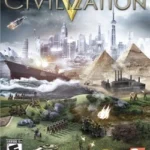
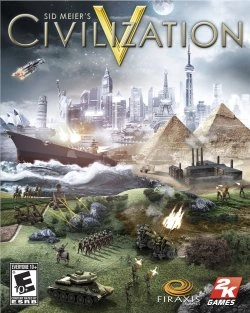
Sid Meier’s Civilization V (commonly abbreviated as Civ 5) is a turn-based strategy 4X video game developed by Firaxis Games and published by 2K Games. Released in September 2010 for Microsoft Windows, the title subsequently expanded to macOS, Linux, and mobile cloud platforms, becoming one of the most commercially successful and critically acclaimed strategy games of the 21st century.
Directed by Lead Designer Jon Shafer, Civilization V marked a radical architectural departure from its predecessors. It discarded the franchise’s traditional square map tiles in favor of a hexagonal grid and permanently banned the “stack of doom” mechanic by implementing a strict one unit per tile (1UPT) restriction.
Supported by two massive, system-rewriting expansion packs—Gods & Kings and Brave New World—the game transformed from a streamlined launch build into a towering masterclass of geopolitical simulation.
Technical Specifications
| Attribute | Details |
|---|---|
| Developer | Firaxis Games |
| Publisher | 2K Games |
| Lead Designer | Jon Shafer |
| Composer(s) | Michael Curran, Geoff Knorr |
| Engine | Proprietary Firaxis 3D Engine (Featuring native DirectX 11 multithreading) |
| Platform(s) | Microsoft Windows, macOS, Linux |
| Release Date | September 21, 2010 |
| Genre(s) | Turn-based strategy, 4X |
| Mode(s) | Single-player, Multiplayer |
The Hexagonal & 1UPT Tactical Revolution
The defining mechanical milestone of Civilization V is the complete overhaul of its combat and spatial logistics. In all prior entries, players could stack an infinite number of military units onto a single map tile, creating impenetrable “stacks of doom” that rolled over continents based on raw numerical superiority.
Tactical Realignment
Civ 5 forces a tactical layout by unstacking the military. By enforcing a strict rule of one combat unit per tile, the game plays out less like an abstract economy tracker and more like miniature tabletop wargaming. This design shift introduces critical battlefield dimensions:
- Flanking Matrices: Units receive automated combat bonuses when attacking an enemy hex that is simultaneously bordered by adjacent friendly units.
- Choke Points & Sightlines: Mountain passes, narrow river crossings, and dense jungle tiles become vital defensive fortifications where a lone, highly promoted spearman can successfully bottleneck an entire invading army.
- Ranged vs. Melee Separation: Archers, Catapults, and Artillery can fire across multiple hex coordinates without entering direct melee contact, requiring melee vanguard infantries to actively screen and protect fragile ranged assets.
Systemic Expansions: Faith, Spies, and Tourism
While the base game was critiqued at launch for stripping away complex management layers, Firaxis deployed two massive expansion packs that fully realized the game’s mechanical depth:
1. Gods & Kings (2012)
The first expansion restored and re-engineered two legacy pillars:
- The Religion Engine: Players accumulate a baseline currency called Faith to found a customized world religion. Rather than picking generic bonuses, players select distinct Pantheon and Belief traits—such as earning extra production from desert tiles or generating happiness from pagodas—tailoring their faith directly to their physical geography.
- Espionage Matrix: Upon entering the Renaissance Era, players receive automated Spies. Spies are dispatched to foreign capitals to passively siphon advanced technology blueprints, or embedded within neutral City-States to rig local elections and stage coups, flipping their diplomatic alignment.
2. Brave New World (2013)
Widely considered one of the most influential expansions in 4X history, this content pack completely rewrote the mid-to-late game loop:
- The Tourism Economy: Overhauled the Cultural Victory from a passive grid grind into an active offensive mechanism. Cultural buildings house slots for Great Works of Art, Literature, and Music. These works radiate an offensive stat called Tourism, which acts as a cultural influence vector. To win, a player’s total accumulated Tourism must aggressively overpower the baseline internal Culture score of every competing civilization.
- International Trade Routes: Cargo Ships and Caravans are physically dispatched across maps to establish real-time economic lines, ferrying gold, science, and religious pressure between nations.
- The World Congress: Restored the global voting house, enabling empires to vote on game-altering resolutions such as imposing trade embargoes on warmongers, designating a global religion, or funding the World Games.
The Social Policy & Ideology Engine
Throughout a match, empires spend accumulated Culture to unlock permanent passive advancements along the Social Policies Tree. Players navigate multiple conflicting branches—such as Tradition (tailored to maintaining a small empire with hyper-developed mega-cities) versus Liberty (optimized for rapid, high-density colonial expansion across wide maps).
Late-Game Ideological Warfare
Upon entering the Modern Era or constructing three factories, civilizations must select one of three sweeping Ideologies: Freedom, Order, or Autocracy.
Choosing an Ideology unlocks a massive tier of custom tenets, but exposes the empire to the ideological pressure of global public opinion. If a neighboring civilization outputs dominant Tourism pressure while holding an opposing Ideology, your local citizenry will experience widespread Public Dissatisfaction.
Failing to resolve this unrest causes public happiness metrics to plummet, generating violent rebel barbarian tanks next to your cities, or forcing your border metropolises to automatically secede and join a competitor’s empire completely.
Modern Legacy & Preservation Status (2026)
Following the launches of Civilization VI and the highly experimental, multi-age architecture of 2025’s Civilization VII, Civilization V has achieved a historic legendary status within the 4X community.
As of May 2026, the game is operating in its highly stable, definitive era. It is commercially active across storefronts like Steam and GOG.com under the title Civilization V: Complete Edition, which natively packages both major expansions alongside all 14 minor civilization and map packs (such as Babylon, Inca, and the Scrambled Continents layouts).
The application runs flawlessly under modern 64-bit operating systems including Windows 11 and Apple Silicon Macs, scaling natively into sharp 4K widescreen resolutions with exceptional multi-core CPU performance.
Many strategy purists continuously return to Civ 5 as their preferred modern 4X comfort zone, finding its clean interface, readable geographic map lens, and lack of Civ 6’s high-intensity district layout to represent the pure peak of turn-based management.
Backed by an immense, vibrant modding community on the Steam Workshop—anchored by the community’s legendary, total-conversion artificial intelligence and balance overhaul mod, Vox Populi—the game is firmly preserved as a timeless masterpiece.