Ghost of Yōtei
 86
★ /10
86
★ /10
 PS5
PS5
Where to buy

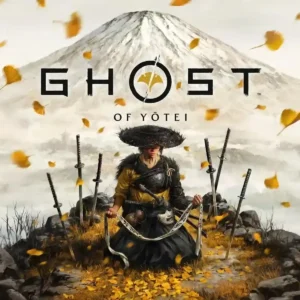
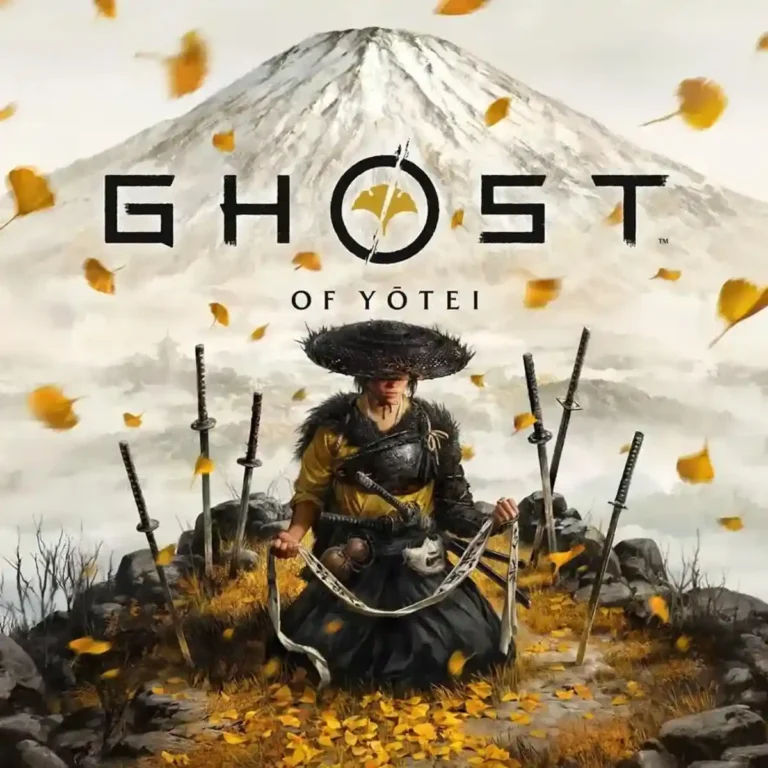
Ghost of Yōtei is a 2025 action-adventure game developed by Sucker Punch Productions and published by Sony Interactive Entertainment. Released on October 2, 2025, exclusively for PlayStation 5, it is a standalone sequel to Ghost of Tsushima (2020), set 300 years later in Ezo (historical Hokkaido) with an entirely new protagonist. It received a Metacritic score of 87 from 102 critics and 89 on OpenCritic with 94% recommendation — earning OpenCritic’s “Mighty” rating, given to fewer than 2% of all reviewed games.
The r/PS5 thread “Deeply surprised by how much I am not enjoying Ghost of Yōtei” sits in the Knowledge Panel with 25,332 monthly organic visitors — the highest-traffic Knowledge Panel community post across this entire project. The PlayStation.com product page for this game draws 110,155 monthly organic visitors — also the highest for any game we have covered. Both of those things are true simultaneously, and both say something accurate about the game.
Note: The PC port, being developed by Nixxes Software, was cancelled by Sony in early 2026. Ghost of Yōtei is currently a permanent PS5 exclusive with no announced PC release date.
Technical Specifications
| Attribute | Details |
|---|---|
| Developer | Sucker Punch Productions |
| Publisher | Sony Interactive Entertainment |
| Platform | PlayStation 5 (exclusive) |
| Release Date | October 2, 2025 |
| Metacritic | 87 (PS5, 102+ critics) |
| OpenCritic | 89 · 94% recommend · “Mighty” rating |
| Famitsu | 38/40 (highest Sucker Punch score in their history) |
| Genre | Open-world action-adventure |
| Mode(s) | Single-player · Ghost of Yōtei: Legends (free, launched March 10, 2026) |
300 Years Later: Ezo in 1603
Ghost of Tsushima was set in 1274. Ghost of Yōtei moves 329 years forward to 1603 and 1,200 kilometres north, to Ezo — the historical name for what is now Hokkaido, Japan’s northernmost main island. The change of setting is the sequel’s most immediately distinctive quality: where Tsushima was a Mediterranean-temperate island of bamboo, redwood, and coastal cliffs, Ezo is northern Japan — snow-covered mountain passes, vast wilderness, volcanic highlands, and the distinct cultural landscape of a region that remained largely independent of the Japanese mainland’s feudal structures into the early modern era.
Mount Yōtei — a dormant stratovolcano in western Hokkaido with a profile similar to Mount Fuji — gives the game its name and serves as its visual and spiritual centre. It is a real geographical feature; like the island of Tsushima, it was selected by Sucker Punch as a setting with genuine historical and cultural specificity rather than a generic feudal Japan backdrop.
The game’s setting is also the homeland of the Ainu people — the indigenous inhabitants of Hokkaido. Sucker Punch consulted with Hokkaido’s indigenous communities during development. Famitsu’s 38/40 score specifically praised the “respectful portrayal of Ainu culture,” and multiple reviews cited the cultural consultation as setting a standard for the industry. It is the same category of cultural care that the Tsushima Mayor’s honorary citizenship acknowledged in the first game, applied to a historically different and more complex cultural context.
Atsu: A Different Kind of Ghost
Atsu is not a samurai lord. She is a wandering mercenary with no house, no title, and no social standing — the product of a life built in the aftermath of trauma. Sixteen years before the game opens, on what survivors call the “Night of the Burning Tree,” a renegade samurai lord named Saitō and his band of outlaws — the Yōtei Six — slaughtered Atsu’s family at their ancestral home.
She has been wandering since. She has not forgotten.
Atsu is voiced by Erika Ishii, who won Outstanding Achievement in Character at the 29th Annual D.I.C.E. Awards (February 12, 2026) for the performance. The character was described by multiple critics as more emotionally complex and morally ambiguous than Jin Sakai — a protagonist who begins with a clear purpose (revenge) and whose journey complicates that purpose rather than resolving it cleanly. GamesRadar+ called her “one of the greatest protagonists in gaming,” and reviewers consistently compared her character arc favourably to Ellie’s in The Last of Us Part II in terms of moral weight and internal conflict.
The contrast with Jin Sakai is explicit in the game’s design: Jin’s conflict was between two kinds of honour. Atsu’s conflict is between vengeance and the life she discovers she might still build. They are different emotional registers, and the game earns the comparison rather than inviting it superficially.
The Yōtei Six: Hunt Structure
The game’s primary objective structure is built around hunting the Yōtei Six — the six members of Saitō’s gang who participated in the Night of the Burning Tree. Atsu can pursue them in any order, each representing a chapter with its own location, environment, and encounter. The non-linear hunting structure gives the game a player-directed pacing that differs from Tsushima’s more sequential progression.
Each target is a substantive character with their own backstory, their own relationship to what happened sixteen years ago, and their own arc that complicates the simple revenge narrative the opening establishes. The game’s flashback system — allowing Atsu to revisit memories of her family in their home — adds emotional texture to each confrontation.
Combat: Multiple Weapons Over Stances
The most significant mechanical change from Ghost of Tsushima is the replacement of the four-stance sword system with a multi-weapon inventory. Where Jin Sakai carried one katana and switched between four stances optimised against different enemy types, Atsu carries multiple weapons:
Katana — the baseline sword, fast and precise. Nodachi (great sword) — slower, crowd-controlling, devastating against groups. Yari (spear) — range and control, effective against heavily armoured opponents. Dual weapons — speed and pressure at the cost of individual power.
Each weapon type excels against specific enemy configurations. The weapon-switching system produces a more visually diverse combat experience than the original’s stance system while maintaining the same core principle: read the enemy composition, select the appropriate tool. XDA Developers called it “the best combat ever seen in a samurai game.”
Additional new mechanics include an expanded stealth sandbox, a disarming system (stripping enemies of their weapons rather than killing them), and contextual environmental interactions. The Guiding Wind navigation returns unchanged.
Ghost of Yōtei: Legends
Ghost of Yōtei: Legends, a free cooperative online mode, launched on March 10, 2026 — not at the game’s October 2025 launch, but as a separate release five months later. The PlayStation Legends page for the game draws 1,978 monthly organic visitors, indicating an active player base. Details of the mode’s content relative to Tsushima’s Legends mode have expanded over its release period.
The Controversies
Two controversies surrounded the game’s launch window that are documented in the SERP and in the critical coverage:
The Drew Harrison incident: In September 2025, a Sucker Punch developer posted a politically charged joke on Bluesky that went viral. Co-founder Brian Fleming publicly condemned it; Sony confirmed Harrison had left the studio. The incident triggered coordinated review-bombing threats in the weeks before release.
The female protagonist backlash: A subset of online critics objected to a female lead protagonist and to voice actress Erika Ishii’s social media history, generating further review-bombing campaigns.
The result is visible on Metacritic: the 87 critic average contrasts sharply with deflated user scores. The r/PS5 “deeply surprised by how much I am not enjoying” thread — 25,332 monthly organic visitors — reflects both: genuine player disappointment from those who found the game less compelling than Tsushima, and the concentrated negativity of coordinated campaigns. These two populations produce overlapping signals that are difficult to separate by traffic measurement alone.
The honest critical reading, separated from the noise: a 87/89 Metacritic/OpenCritic score from 102+ professional critics is an extremely strong result. The Famitsu 38/40 is the highest Sucker Punch has received from the Japanese publication. Both reflect genuine quality.
Awards
Ghost of Yōtei won three awards at the 29th Annual D.I.C.E. Awards (February 12, 2026): Adventure Game of the Year, Outstanding Achievement in Character (Atsu / Erika Ishii), and Outstanding Achievement in Original Music Composition. It was nominated for eight D.I.C.E. awards total — tied with Clair Obscur: Expedition 33 for most nominations — and lost Game of the Year to Clair Obscur.
The PC Cancellation
Bloomberg reported in early 2026 that Sony cancelled the PC port of Ghost of Yōtei, which Nixxes Software (the studio that had ported Ghost of Tsushima Director’s Cut to PC in May 2024) had been developing. The cancellation was attributed to a Sony strategy shift. No PC release is currently planned, and Ghost of Yōtei remains a permanent PS5 exclusive at this writing.
Reception
Ghost of Yōtei holds a Metacritic score of 87 and an OpenCritic score of 89 (94% recommend). The critical consensus: a refined, polished sequel that improves on Tsushima‘s mechanical foundations, delivers a more emotionally complex protagonist, and provides a visually distinct northern Japanese setting — while playing it safe in terms of open-world structural ambition.
The specific criticism most coherently lodged — by Skill Up, among others — is that the game’s safe design choices, lack of dramatic narrative set-pieces, and familiar open-world structure position it as “more of the same, but better” rather than an ambitious creative step forward. In a 2025 release calendar that included Clair Obscur: Expedition 33, this relative conservatism was more visible than it might have been in another year.
For players who want more Ghost of Tsushima with a new setting and a better protagonist, the game delivers exactly that.
Trailer
View on Videos