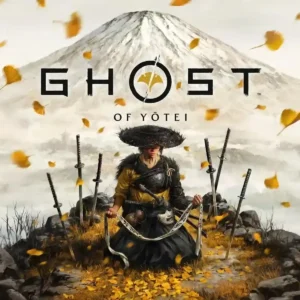
Ghost of Tsushima
 83
★ /10
83
★ /10
 PC
PC PS4
PS4 PS5
PS5Where to buy



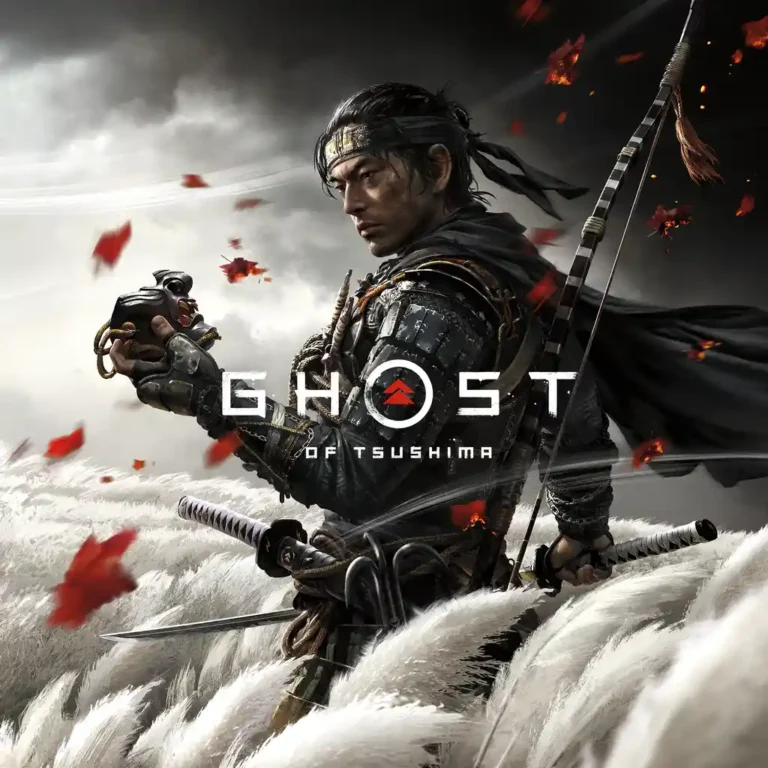
Ghost of Tsushima is a 2020 action-adventure game developed by Sucker Punch Productions and published by Sony Interactive Entertainment. Originally released for PlayStation 4 on July 17, 2020, the Director’s Cut (including the Iki Island expansion) followed on August 20, 2021 for PS4 and PS5. A PC release via Steam arrived on May 16, 2024. It received Metacritic scores of 83 on PS4, 87 on PS5 Director’s Cut, and 86 on PC.
The game is set during the First Mongol Invasion of Japan in 1274 CE, follows Jin Sakai — the last samurai standing after the initial battle for Tsushima Island — and asks whether one man’s honour is worth more than the lives of the people he is failing to protect by insisting on it. It is the most successful game Sucker Punch has ever made, and the Mayor of Tsushima Island gave the development team honorary citizenship.
Technical Specifications
| Attribute | Details |
|---|---|
| Developer | Sucker Punch Productions |
| Publisher | Sony Interactive Entertainment |
| Director | Nate Fox |
| Art Director | Jason Connell |
| Composers | Shigeru Umebayashi · Ilan Eshkeri |
| Platform(s) | PS4 (Jul 17, 2020) · PS5 Director’s Cut (Aug 20, 2021) · PC (May 16, 2024) |
| Metacritic | 83 (PS4) · 87 (PS5 DC) · 86 (PC) |
| Genre | Action-adventure, Open world |
| Mode(s) | Single-player · Legends (online co-op, free addition) |
The First Mongol Invasion of Japan, 1274
In November 1274, a Mongol fleet assembled by the forces of Kublai Khan landed on Tsushima Island — a small island between Japan and Korea — as the opening stage of an attempted invasion of Japan. The samurai forces defending the island were outnumbered, outgunned, and unprepared for the Mongol army’s tactics. The historical record of the Tsushima campaign is limited; what is known is that the island was overwhelmed before the main Mongol force was eventually repelled from the Japanese mainland.
Ghost of Tsushima takes the island’s fall as its starting point. Jin Sakai, a samurai lord, is one of the very few survivors of the initial battle that leaves most of the samurai forces dead or captured — including his uncle, Lord Shimura, who is taken by the Mongol commander Khotun Khan as a strategic prisoner. Jin wakes up alone on a beach with a destroyed army and an occupied island.
The game’s story from this point is fiction built into a historical setting: who Jin is, what he chooses to become, and at what cost.
Jin Sakai: Samurai to Ghost
The narrative tension of Ghost of Tsushima is not primarily about defeating the Mongols — it is about what Jin is willing to become in order to do it. The samurai code (bushido) demands honourable combat: open confrontation, announced challenge, the willingness to die facing your enemy. It is a code built for a specific kind of opponent who respects the same rules.
Khotun Khan does not respect those rules. His forces have numbers, cavalry, and gunpowder. Honourable direct combat produces dead samurai. Something else is required.
The “Ghost” approach involves deception, stealth, fear, and tactics that the samurai code specifically prohibits. Jin learns them anyway, and the game tracks the moral weight of each departure: the reactions of allies, the responses of enemies who begin to fear something they cannot see, and the deteriorating relationship with Lord Shimura as the man he raised becomes something he does not recognise. The central conflict is not military — it is between a man and the identity his culture built for him.
Combat: Sword, Stance, and the Standoff
The game’s combat system is built around several interlocking elements:
The parry and deflect system: Sword combat rewards precise timing for parrying enemy attacks. Successfully deflecting a strike creates counterattack opportunities; failing to parry — or dodging when a parry was available — is more costly. The precision requirement gives combat a deliberate quality closer to Sekiro: Shadows Die Twice than to more forgiving action games.
The four stances: As Jin encounters and defeats specific Mongol commanders, he learns new sword stances — each specifically effective against one enemy type (Stone for swordsmen, Water for shield bearers, Wind for spear users, Moon for heavy fighters). Switching between stances in combat to match the current opponent adds a tactical layer that rewards attention to enemy variety. The stances are among the game’s most distinctive mechanical contributions.
The Standoff mechanic: Jin can challenge a group of enemies to a standoff — standing before them as they approach, timing a single draw-and-cut attack to eliminate the first attacker. Successful standoffs can eliminate multiple enemies and build toward fear mechanics. The system channels samurai cinema’s iconic frozen-moment-before-combat.
Ghost Weapons: Smoke bombs, kunai (thrown in rapid succession), sticky bombs (attaching to surfaces), and other tools allow Jin to control crowds, break formation, and create openings that pure sword fighting does not allow. Ghost Weapon use is the game’s stealth dimension applied to open combat.
Kurosawa Mode
Ghost of Tsushima can be played entirely in Kurosawa Mode: a black-and-white visual filter with added film grain, a Japanese audio track, and subtle effects that evoke the visual language of Akira Kurosawa‘s samurai films — Seven Samurai, Rashomon, Yojimbo, Sanjuro. The mode is activated in the options and can be toggled at any point.
Kurosawa Mode is not a novelty. It is a complete aesthetic choice that changes the experience of playing the game: the landscapes that are stunning in colour are differently beautiful in high-contrast black and white; the combat that is spectacularly choreographed in full colour is cinematically austere without it. The composition of the game’s environments — designed simultaneously for both versions — holds in both.
Sucker Punch specifically sought and received permission from the Kurosawa estate before using the director’s name.
Tsushima Island and Iki Island
The main game’s open world is Tsushima Island — divided into three regions that Jin moves through in sequence, each occupied to different degrees by the Mongols and recoverable through a combination of liberation missions, side quests, and main story progression. The island’s environments cover bamboo forests, coastal cliffs, mountain terrain, hot springs, and the specific quality of a Japanese landscape in the thirteenth century rendered through Sucker Punch’s engine with close attention to plant life, seasonal weather, and the movement of grass and foliage.
Navigation in the default mode is guided by wind rather than a minimap: Jin can call the wind toward his current objective, and the direction of the moving grass and leaves guides his path. Players who want a HUD can activate it; players who want to navigate by environment read the landscape.
The Director’s Cut adds Iki Island as a substantial second open-world area with a separate story arc. On Iki, Jin confronts memories of his father — a military failure that shaped his childhood understanding of honour — while dealing with a different Mongol faction and new enemy types. Iki Island is approximately one-third to one-half the size of Tsushima and is consistently praised as one of the better story expansions in recent PlayStation releases.
Legends: The Free Multiplayer Addition
Legends is a four-player online cooperative multiplayer mode added to the game as a free update after launch. It offers:
Four character classes — Samurai, Hunter, Ronin, and Assassin — each with distinct abilities and playstyles.
Three content types: story missions (shorter narrative scenarios), survival mode (wave-based defence), and nightmare difficulty variants of each.
Legends has its own dedicated PlayStation page drawing 1,428 monthly organic visitors — a signal that the mode has a persistent player base distinct from the main game’s audience. It remains available and free to all Ghost of Tsushima owners.
Cultural Reception in Japan
Ghost of Tsushima was made by an American studio (based in Seattle) and depicts feudal Japanese culture and history. The question of whether a non-Japanese development team could do this respectfully was raised in critical discussion before and after release.
The Japanese response was unambiguous. Japanese players voted the game the winner of Sony’s PlayStation Players’ Choice Award — a title that requires Japanese player participation. The Mayor of Tsushima Island granted the development team honorary citizenship of the real Tsushima, citing the game’s role in raising international awareness of the island’s history and culture. The game is credited with measurably increasing tourism to Tsushima Island in the years following its release.
The score was composed by Shigeru Umebayashi — best known for scoring Wong Kar-wai’s films In the Mood for Love (2000) and 2046 (2004) — alongside Western composer Ilan Eshkeri. The collaboration between a Japanese film composer and a Western one, for a game about Japan made by Americans, produced a score that both Japanese players and Western critics described as among the finest in the franchise’s era.
Sucker Punch and the PC Release
Sucker Punch Productions is a Seattle studio previously known for the Sly Cooper series and the Infamous series. Ghost of Tsushima represents a significant departure from those properties in setting, tone, and ambition, and is by any measure the studio’s most accomplished and successful work.
The PC Director’s Cut (May 16, 2024) on Steam brought the game to new audiences with PC graphics options — ultrawide support, uncapped framerates, and scalable settings — and maintained all Director’s Cut content including Iki Island and Legends.
Reception
Ghost of Tsushima received a Metacritic score of 83 on PS4 — consistent positive reception with specific criticisms about open-world structure (some critics found the side content formula repetitive) and praise for combat, atmosphere, and the specific quality of moving through the world. The PS5 Director’s Cut scored 87. The PC release scored 86.
The game has sold over 13 million copies across all platforms. The Short Video in the current SERP from r/ghostoftsushima — “combat this smooth is satisfying to play and watch” — reflects the community’s sustained engagement with the game’s presentation five years after release. The CNET commentary piece “Ghost of Tsushima is the escape I didn’t know I needed” reflects the experience many players describe: not just a good game, but the specific relief of being somewhere visually and atmospherically beautiful for twenty to thirty hours.