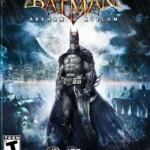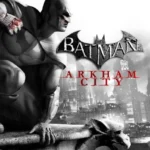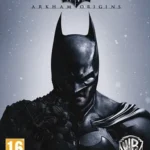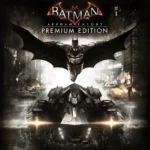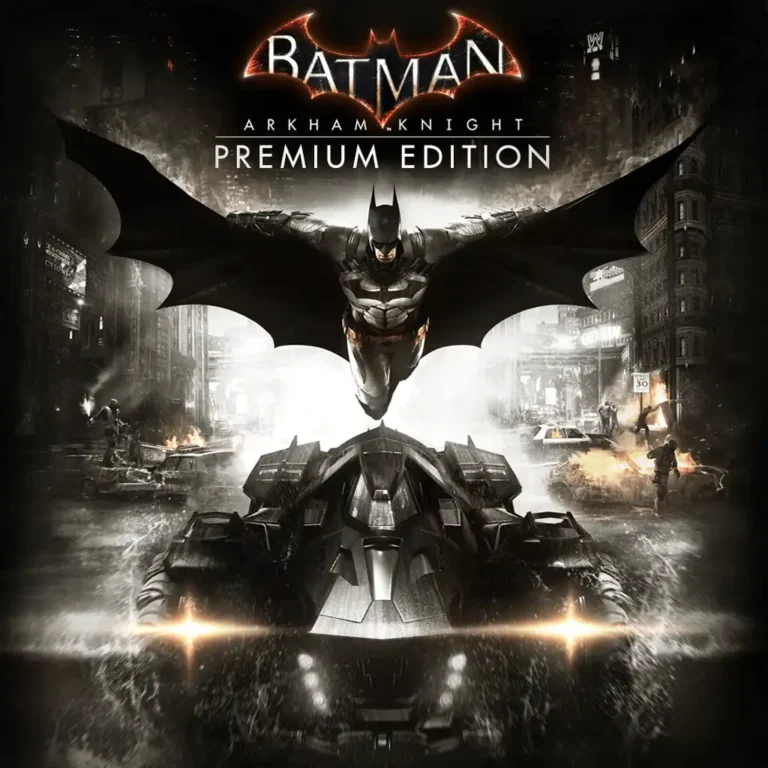
Batman: Arkham Knight
 87
★ /10
87
★ /10
 Nintendo Switch,
  PC,
PC,  PS4,
PS4,  Xbox One
 1C-SoftClub, Warner Bros. Interactive
Where to buy





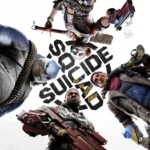
Batman: Arkham Knight is a 2015 action-adventure game developed by Rocksteady Studios and published by Warner Bros. Interactive Entertainment. Released for PlayStation 4 and Xbox One on June 23, 2015, and for PC on the same date — though the PC version was pulled from sale two days later and did not return for four months — it is the third and final entry in Rocksteady’s Batman: Arkham trilogy and the studio’s last game until Suicide Squad: Kill the Justice League (2024).
The game received a Metacritic score of 87 on PS4, introduced the driveable Batmobile to the franchise for the first time, features the largest open-world Gotham of any Arkham game, and is widely considered a technically and narratively strong conclusion to the trilogy that is undercut specifically by how many times it makes you drive a tank.
Technical Specifications
| Attribute | Details |
|---|---|
| Developer | Rocksteady Studios |
| Publisher | Warner Bros. Interactive Entertainment |
| Director | Sefton Hill |
| Composers | Nick Arundel · David Buckley |
| Engine | Unreal Engine 3 (modified) |
| Platform(s) | PS4 · Xbox One · PC · Nintendo Switch (Oct 13, 2023) |
| Release Date | June 23, 2015 (PS4, Xbox One, PC) |
| Genre | Action-adventure, Stealth |
| Mode | Single-player |
Gotham Evacuated: One Night, The Whole City
Arkham Knight takes place across the entirety of Gotham City — an open-world map substantially larger than any previous Arkham game’s playable area. It is set on a single night, beginning with Scarecrow’s announcement that he has developed a more potent strain of his fear toxin and intends to unleash it on Gotham. The city is evacuated of civilians before the game begins. What remains are the city’s criminals, the Gotham City Police Department holding a handful of positions, and Batman.
The evacuated setting serves two purposes: it justifies the open world’s relative emptiness compared to a populated city (useful for console hardware of 2015), and it creates an atmosphere of siege and finality that suits the game’s position as a trilogy conclusion. The villains have known for some time that this night is coming. The game’s opening establishes that Scarecrow has united virtually every significant Batman adversary — Penguin, Two-Face, Riddler, Harley Quinn, Poison Ivy — in a coordinated effort to destroy Batman once and for all.
Scarecrow, the Arkham Knight, and the Villains’ Alliance
The game has two primary antagonists operating in parallel. Scarecrow provides the overarching threat: the fear toxin, the alliance, the plan to expose Batman’s identity and use his psychological destruction as proof that hope is an illusion. He is the strategic intelligence behind the night’s events.
The Arkham Knight is a new figure — a military commander in an armoured suit who leads a professional mercenary army occupying sections of Gotham and pursuing Batman specifically. He is familiar with Batman’s tactics, movements, and psychology in ways that suggest prior personal knowledge. Who he is constitutes the game’s central mystery.
The Arkham Knight is Jason Todd — the second Robin, who was captured and tortured by the Joker in events referenced through the Arkham franchise’s history, and whom Batman believed dead. The Joker did not kill him. Jason survived, came to believe Batman had abandoned him rather than rescued him, and built a new identity out of that grievance. The reveal is the game’s most narratively significant moment. His eventual return to aid Batman — choosing to appear as the Red Hood rather than remain the Arkham Knight — is the storyline’s resolution.
The Batmobile
The Batmobile appears in earlier Arkham games as a static vehicle. In Arkham Knight, it is driveable for the first time in the franchise, and Rocksteady built the Gotham map specifically to accommodate it: wide roads, long straightaways for speed, ramps for launching onto rooftops.
The vehicle has two modes. Standard mode is a fast ground vehicle for traversal. Battle Mode transforms the Batmobile into a low-profile tank chassis for combat against the Arkham Knight’s unmanned Cobra military drones, which are armoured and require specific approaches to destroy. Switching between modes is instantaneous.
The Batmobile is the game’s most contentious element. The traversal use is broadly praised — driving through Gotham at speed, using it to reach new areas, winching it up building faces with the remote deployment feature, and staging pursuits involving the vehicle are enjoyable. The tank combat is not. The number of mandatory Cobra drone sequences is high, the sequences themselves are mechanically repetitive, and they interrupt the rhythm of what is otherwise an investigation/stealth/combat action game to insert a different genre entirely. GameSpot’s review called the vehicle sections “the most obvious and least appealing weak point of the experience.” IGN, which scored the game 9.8/10, was more forgiving — but the Batmobile complaint is the single most consistent observation across every review.
The Joker Returns
The Joker died at the end of Arkham City. He is present throughout Arkham Knight as a hallucination.
Batman was infected with the Joker’s blood during Arkham City, a fact that has been quietly deteriorating his psyche. Scarecrow’s fear toxin, administered early in this game, activates and amplifies that infection. The Joker — voiced again by Mark Hamill — appears to Batman as a vivid manifestation of his psychological deterioration: present, commentating, mocking, and increasingly integrated into Batman’s perception of the world around him. The Joker hallucination sequences are regarded as among the game’s most effective storytelling — Hamill delivers a performance that is simultaneously comedic and genuinely threatening in its psychological reach, and the game uses the conceit to stage moments that break with the action game’s normal visual register.
The game’s climax involves Batman confronting this internal Joker directly, and the resolution of that struggle is handled with more care than the game’s external conflicts.
Combat: The Freeflow Finale
Arkham Knight inherits and refines the FreeFlow Combat system established in Arkham Asylum (2009) and expanded through Arkham City (2011). The system operates on the principle of a maintained combo: attacking, countering incoming strikes, dodging aerial attacks, and using gadgets fluidly without interrupting the combo flow maintains a multiplier that scales damage and experience output. Breaking the combo — by being hit — resets the multiplier.
The third game layers the most options over this framework: a wider gadget range, dual-play mechanics that allow switching between Batman and a partner character (Catwoman, Robin, Nightwing depending on mission) in real time during combat with coordination moves, and a greater variety of enemy types requiring specific counters. The result is a combat system that rewards players who have developed fluency across the trilogy.
Predator mode — the stealth system, in which Batman systematically eliminates enemies from cover and vantage points — similarly receives its most elaborate maps in this entry, with multi-level environments, enemies who actively communicate about Batman’s potential position, and drone supports that require specific approaches.
The Knightfall Protocol
The game’s ending requires completing a significant portion of the game’s side missions. In the standard ending, Batman is publicly unmasked — Scarecrow forces him to reveal himself as Bruce Wayne to the world, in front of cameras, while injected with fear toxin. With his identity exposed and the Joker finally purged from his psyche through confronting and overcoming the hallucination, Bruce activates the Knightfall Protocol: Wayne Manor explodes as he and Alfred enter. Their fates are left ambiguous.
The complete ending, triggered by finishing additional content, shows a more explicit coda: a figure resembling Batman confronting criminals in Gotham, the shadows around him taking shapes, suggesting that the legend continues even if the man is gone. What this means for Bruce Wayne is deliberately left open.
The PC Disaster
Arkham Knight‘s PC version launched alongside the console versions on June 23, 2015, developed by Iron Galaxy Studios rather than Rocksteady. It launched with a mandatory 30fps cap, severe framerate drops below that cap during certain sections, and persistent crash bugs. Warner Bros. pulled the PC version from Steam on June 25 — two days after release — and did not return it until October 28, 2015.
The patched version addressed many issues but the PC port’s reputation never fully recovered. Digital Foundry later described the original Nintendo Switch port (2023) as “the worst performing software” they had ever reviewed — and noted that the Switch version inherited characteristics of the troubled PC build.
The Nintendo Switch Arc
The Batman: Arkham Trilogy — all three Rocksteady games plus their DLC — arrived on Nintendo Switch on October 13, 2023, ported by Turn Me Up Games. Arkham Knight‘s Switch version ran at unstable framerates significantly below 30fps, making it effectively unplayable for extended sessions. Multiple large patches addressed some issues without fully resolving the performance problems on original Switch hardware.
Nintendo Switch 2, launched in 2026, improved the situation materially: Digital Foundry confirmed that the Arkham Trilogy, running through Switch 2’s backward compatibility with the November 2025 patch applied, delivers a consistent 30fps in handheld mode — the first time the Switch version of Arkham Knight has been considered acceptable to play. A launch-window Switch 2 bundle offered all three games for €19.99.
DLC
The Complete Edition includes a substantial DLC package:
Story DLC: Batgirl: A Matter of Family, Harley Quinn Story Pack, Red Hood Story Pack, A Flip of a Coin (Robin), Season of Infamy (four missions featuring Killer Croc, Ra’s al Ghul, the Mad Hatter, and Mr. Freeze in significant encounters left unresolved in the main game). The Season of Infamy content in particular is widely regarded as among the best writing in the entire game.
Batman skin packs covering designs from the 1966 TV series, Tim Burton’s 1989 film, Noel’s comic run, Batman Beyond, and others.
Batmobile racing content and additional challenge maps.
Reception and Legacy
Batman: Arkham Knight holds an 87 on PS4 Metacritic and is broadly regarded as a technically accomplished, visually stunning conclusion to the Arkham trilogy that overextends the Batmobile mechanic at the expense of its own strengths. IGN’s 9.8/10 represents the enthusiastic end; the more measured critical consensus lands closer to 7.5–8.5.
The subreddit r/batman contains an active thread titled “nothing will ever top this Batman video game” — a sentiment that persists in 2026, a decade after release and significantly aided by contrast with Suicide Squad: Kill the Justice League (2024), Rocksteady’s follow-up, which received a Metacritic score of 53 and ended its live service support. The Arkham trilogy represents a sustained creative achievement in superhero game design that the studio has not yet equalled in the decade since.