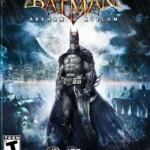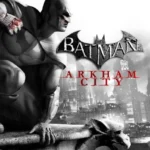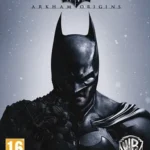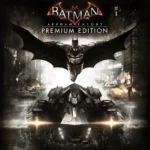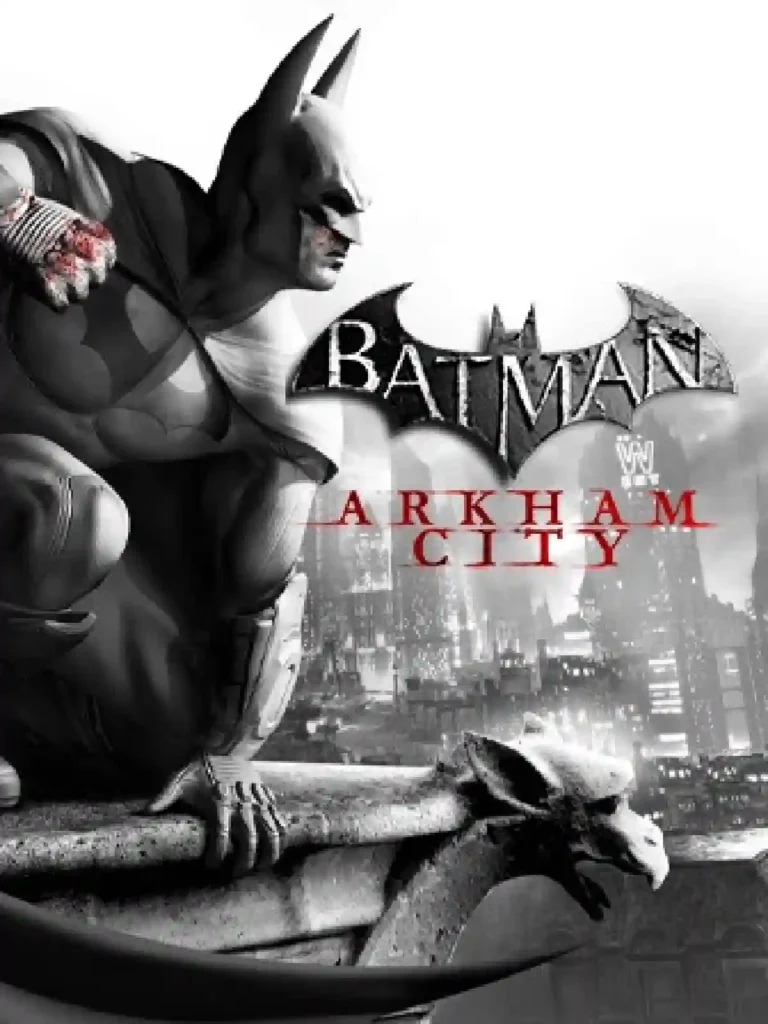
Batman: Arkham City
 94
★ /10
94
★ /10
 Nintendo Switch
 PC
PC PS 3
PS 3 PS4
PS4 Wii U
Wii U Xbox 360
 Xbox One
 1C-SoftClub, Warner Bros. Interactive
Where to buy




Batman: Arkham City is a 2011 action-adventure game developed by Rocksteady Studios and published by Warner Bros. Interactive Entertainment. Originally released for PlayStation 3 and Xbox 360 on October 18, 2011 — with PC and Wii U versions following — it holds a Metacritic score of 96 on PS3, one of the highest scores recorded for any game of its generation. It won Game of the Year at multiple awards shows in 2011 and 2012, including the BAFTAs.
The game was written by Paul Dini, who also wrote Arkham Asylum (2009) and is best known for his work on Batman: The Animated Series. Its story concludes with one of the most surprising and genuinely affecting endings in any superhero game.
Technical Specifications
| Attribute | Details |
|---|---|
| Developer | Rocksteady Studios |
| Publisher | Warner Bros. Interactive Entertainment |
| Director | Sefton Hill |
| Writer | Paul Dini |
| Composer | Nick Arundel |
| Engine | Unreal Engine 3 |
| Original Platforms | PS3 · Xbox 360 · PC · Wii U |
| Original Release | October 18, 2011 (NA) |
| Remaster | Return to Arkham: Arkham City (PS4, Xbox One · October 18, 2016) |
| Switch | October 13, 2023 (Batman: Arkham Trilogy) |
| Genre | Action-adventure, Stealth |
Arkham City: The Open-Air Prison
One year after the events of Arkham Asylum, Gotham City’s political machinery — driven by the psychiatrist Hugo Strange and enabled by a political figure named Mayor Sharp — has approved the “Arkham City” project: a massive walled-off district of Gotham’s slums, converted into an open-air maximum security facility. All prisoners from Blackgate Penitentiary and Arkham Asylum have been relocated inside its walls. The gangs of Joker and Penguin run their own territories. Two-Face stakes his claim. The law exists only at the perimeter.
Bruce Wayne is imprisoned in Arkham City after publicly condemning the project at a press conference. Within minutes of entering, he has escaped, found a way to access the Batsuit, and is operating as Batman inside the facility he was trying to shut down from the outside.
The game’s opening movement — imprisoned as Bruce, the transformation, the first glide across the rooftops of Arkham City — sets the visual and tonal register: this is the largest Batman playground Rocksteady had built, and the expansion from Asylum‘s contained Arkham Island to an entire urban district is immediately apparent.
The Story: Protocol 10 and the Joker’s Last Act
Arkham City runs two primary narratives in parallel.
The first: Hugo Strange is operating Arkham City according to a secret directive called Protocol 10, which Batman must uncover. Strange is not acting alone; Ra’s al Ghul — the centuries-old head of the League of Shadows, whose Lazarus Pit regenerates him from death — is the power behind the project. What Protocol 10 actually entails, and what Ra’s al Ghul intends to do with it, constitutes the main quest’s climactic revelation.
The second: The Joker is dying. The Titan formula he injected himself with in Arkham Asylum is destroying him from within. He is confined to his territory in Arkham City’s Sionis Steel Mill, pale and weakening, but still the most dangerous intelligence inside the walls. He has injected his poisoned blood into Gotham’s hospitals through infected blood donations, and the only man who can synthesise a cure is Mr. Freeze — currently a prisoner of the Penguin. Batman needs Freeze. Freeze needs his wife Nora freed from Joker’s possession. Everyone needs something, and none of it is simple.
The game ends with Batman finding the cure, reaching the Joker, and the Joker — in a moment entirely consistent with his character and entirely unexpected in its placement — accidentally destroying the cure and dying of his disease before Batman can administer it. Batman carries the Joker’s body out of Arkham City. The image is wordless. It is the best-realised ending in the franchise.
The Villain Roster
Arkham City uses its setting — a district where every significant Batman villain has been confined together — to deploy the widest villain roster in the series. Beyond Hugo Strange and Ra’s al Ghul, the game gives meaningful roles to:
Mr. Freeze: Held captive by Penguin and forced to work on a weapon system, Freeze is one of the game’s emotional high points — a character whose tragedy (his wife Nora is frozen and dying, and he cannot stop working on her cure) is given genuine weight. His boss fight is the most celebrated in the game.
The Penguin: Controls the Museum district, has subdued and weaponised the GCPD officers captured inside Arkham City, and is using Freeze as a scientific resource.
Two-Face: Attempting to consolidate power in the early game; his role connects to the Catwoman storyline.
The Riddler: Absent from direct confrontation but present in hundreds of collectible trophies, riddles, and trapped victims scattered across every location in Arkham City. Rescuing his ten hostages completes his questline.
Calendar Man: Imprisoned in a specific cell in the courthouse. He will only offer new dialogue when visited on specific calendar dates — holidays, particularly dark historical anniversaries. On December 13, 2004 (Rocksteady’s founding date), he gives a unique speech about the beginning of the end. He is the game’s most elaborate Easter egg.
Deadshot, Mad Hatter, Hush, and Black Mask all receive optional questlines of varying length that add density to the world without requiring engagement.
Mr. Freeze: The Gold Standard Boss Fight
The Mr. Freeze boss fight is considered by much of the community — and by game design analysis writing — as one of the finest constructed boss encounters in action gaming. The mechanic is simple and genuinely inspired: Freeze adapts. Whatever technique defeats him in a given encounter cannot be used again. If Batman knocked him down from above, the ceiling is now monitored. If he was beaten with a specific gadget, that gadget is now countered. The fight tracks every approach used and closes them off.
What this produces is a battle that requires players to use every skill and tool the game has taught them, in creative combination, with no single reliable strategy. Players who have been developing bad habits across the game discover them here. Players who have been engaging fully discover that the game has been preparing them for exactly this encounter.
Arkham City uses a large multi-level environment for the fight, and the environmental options — vantage points, entry routes, floor panels, explosive tanks — are all functional and all eventually compromised if used. The encounter scales to the player’s creativity in a way that few games outside of dedicated puzzle genres achieve.
Catwoman
Catwoman is a secondary playable character whose four sections are interspersed throughout the main campaign. She moves differently from Batman — faster, more agile, climbing and swinging with her whip in contrast to his grapnel — and has her own combat system. Her sections provide an alternative perspective on events happening concurrently with Batman’s campaign.
The Catwoman content was DLC at original launch (requiring an online pass, since discontinued) and is included in all current versions. Her sections are brief but well-integrated; the interaction between her plot and Batman’s produces the main story’s opening hook.
Mark Hamill’s Final Joker
Mark Hamill voiced the Joker in Arkham Asylum, Arkham City, and — after announcing his retirement from the role following City — in Arkham Knight. When Arkham City was released, it was understood to be Hamill’s last performance as the character. He had stated publicly that the Joker’s death in the game gave him the narrative closure he needed to step away.
The performance across Arkham City reflects this finality. The Joker’s arc — from threatening menace to a figure visibly diminished by illness, still performing, still dangerous, still committed to his particular vision of the relationship with Batman — is written with more care than any prior iteration of the character in the franchise, and Hamill delivers it at the level the writing warrants. His scenes with Kevin Conroy’s Batman carry the accumulated weight of three decades of voicing the same pairing in animated media.
Paul Dini and the Animated Series Connection
Paul Dini wrote the stories for both Arkham Asylum and Arkham City, and his authorship is the clearest explanation for why these two games feel more like extensions of the Batman: The Animated Series mythology than the third game in the franchise. Dini’s approach to the characters — the Joker’s relationship with Batman, Mr. Freeze’s tragedy, the texture of Gotham’s criminal underworld — draws on the same understanding of those characters that informed the animated series in the 1990s. Arkham City is populated by characters treated with the depth the animated series established as the default for Batman storytelling.
Dini did not write Arkham Origins (WB Games Montréal had their own writing team) or Arkham Knight (Rocksteady’s in-house writers). The games he wrote have Metacritic scores of 91 and 96. The games he didn’t have scores of 74 and 87. This is correlational, but the correlation is notable.
Return to Arkham
Batman: Return to Arkham: Arkham City, released October 18, 2016 (the game’s fifth anniversary), is a remaster developed by Virtuos for PS4 and Xbox One, updating textures, character models, and lighting while preserving the original game’s content and structure. It is the version available on PlayStation Store and Xbox digital storefronts, and it is how most players who came to the series on current-generation hardware experienced the game.
Virtuos, notably, is the same studio that later co-developed Oblivion Remastered (2025) with Bethesda and Metal Gear Solid Δ: Snake Eater (2025) with Konami — establishing a pattern of high-profile remaster work from a single external studio.
Reception and Legacy
Batman: Arkham City holds Metacritic scores of 96 (PS3), 94 (Xbox 360), and 91 (PC). It was the best-reviewed game of 2011 by aggregate across platforms, won the BAFTA for Best Game in 2012, and established Rocksteady as one of the most respected action game studios working.
The r/patientgamers thread “Batman Arkham City — thoughts” currently appears in both the SERP’s Things to Know block and at position four in organic results, with nearly 2,800 monthly visitors. The game is being actively discovered and discussed in 2026, fifteen years after release. The IMDB page draws more than 2,000 monthly organic visitors from a “Batman Arkham City” search — a figure indicating the game’s cinematic identity registers distinctly even when measured by a metric normally applied to films.
Batman: Arkham City is the game in the franchise that is most often cited when the question is which Arkham game to play first, which is best, or which is the safest recommendation to a new player. The answer to all three of those questions is frequently the same, and it is this one.