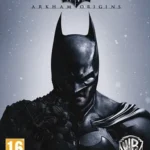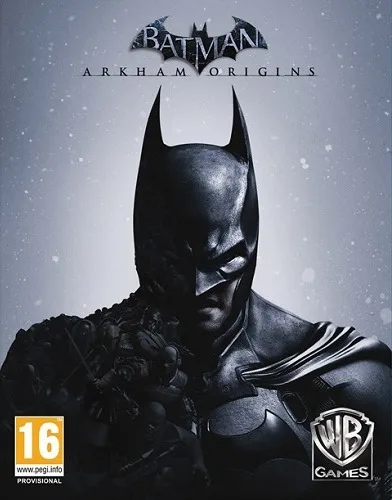
Batman: Arkham Origins
 74
★ /10
74
★ /10
 PC
PC PS 3
PS 3 Wii U
Wii U Xbox 360
 1C-SoftClub, Warner Bros. Interactive


Batman: Arkham Origins is a 2013 action-adventure game developed by WB Games Montréal and published by Warner Bros. Interactive Entertainment. Released for PC, PlayStation 3, Xbox 360, and Wii U on October 25, 2013, it is a prequel to the Rocksteady Arkham trilogy — set before Arkham Asylum (2009) in the early years of Batman’s career — and the only mainline Arkham game not developed by Rocksteady Studios.
The game received Metacritic scores of 74–75 across platforms, making it the lowest-rated entry in the series. The Reddit post currently in its Knowledge Panel from r/DCcomics asks “Why is Batman: Arkham Origins the most underrated Arkham game?” — a framing the community has been arguing for over a decade.
Technical Specifications
| Attribute | Details |
|---|---|
| Developer | WB Games Montréal |
| Publisher | Warner Bros. Interactive Entertainment |
| Director | Eric Holmes |
| Composer | Christopher Drake |
| Engine | Unreal Engine 3 |
| Platform(s) | PC · PlayStation 3 · Xbox 360 · Wii U |
| Release Date | October 25, 2013 (NA) |
| Genre | Action-adventure, Stealth |
| Mode(s) | Single-player · Online multiplayer (defunct) |
| Note | Not available on PS4, Xbox One, or Nintendo Switch |
WB Games Montréal and the Non-Rocksteady Arkham
WB Games Montréal is a Canadian development studio — not Rocksteady, who made Arkham Asylum, Arkham City, and Arkham Knight. This distinction is the source of much of the game’s critical underperformance relative to those entries, and it is also somewhat unfair: Arkham Origins is a competent, well-crafted game that uses the same engine and combat framework as Arkham City with thoughtful additions.
WB Montréal subsequently developed Gotham Knights (2022), an entirely different superhero game set in its own continuity that received poor reviews. Arkham Origins remains their most positively regarded project.
The Batman: Arkham Trilogy released on Nintendo Switch in October 2023 — as the Switch product page and contemporary articles confirm — explicitly excluded Arkham Origins. The Switch collection was a Rocksteady package; WB Montréal’s game was not included.
Gotham on Christmas Eve: Setting
Arkham Origins takes place on Christmas Eve, approximately two years into Bruce Wayne’s career as Batman. Gotham is under snow, decorated for the holiday, and going about its cold December evening when the game’s central event occurs. The festive aesthetic — a city at once recognisably Christmassy and recognisably dangerous — distinguishes the visual tone from the other Arkham games and is one of the entry’s most consistently praised qualities.
The game uses an open-world Gotham similar in structure to Arkham City, though the city has not yet been walled off as a criminal prison. It is simply Gotham: functional, populated at the edges, and gradually revealed as the night progresses.
The Assassins, Black Mask, and the Bounty
The inciting event: Black Mask, the Gotham crime lord, has issued a $50 million contract on Batman’s life. Eight professional killers converge on Gotham to claim it. They are:
Deathstroke — a master combatant and former special forces operative, considered the most dangerous of the assassins and the one most likely to succeed through pure skill.
Deadshot — a long-range specialist and the world’s greatest marksman, less invested in the challenge than the paycheque.
Firefly — a pyromaniac with a jetpack and a grudge, responsible for infrastructure attacks designed to isolate Batman.
Lady Shiva — the most skilled martial artist the game introduces, whose interest in Batman is as much philosophical as commercial.
Copperhead — a contortionist assassin using paralytic toxins, providing one of the game’s more disturbing encounters.
Killer Croc — physical power over technique, encountered in the sewers.
Electrocutioner — the least threatening of the eight, whose scenes provide comic relief before the boss fight disposes of him quickly.
Shrike — a former teacher of Batman’s who has taken on a student in the game’s secondary plotline.
The structure sends Batman across Gotham dealing with these threats while working to understand who hired Black Mask and why this is happening tonight.
What the Joker Is Actually Doing
Arkham Origins is a prequel to the Joker-Batman relationship that defines the rest of the franchise, and the game is interested in establishing how that relationship began. The Black Mask running the assassin scheme for much of the game is revealed, at the appropriate story beat, to be the Joker — who has been using the Black Mask identity as a disguise and has orchestrated the entire night specifically to engineer a serious confrontation with Batman.
The Joker’s logic: Batman needs to be pushed to his limits by genuine professional threats before the Joker can fully understand what he is. The assassin contract is an experiment in what Batman becomes under extreme pressure.
The game ends with a version of the Batman-Joker dynamic that the subsequent Rocksteady games take as established — and with the Joker leaving Batman a “Christmas present” that the ending frames as the beginning of their peculiar mutual acknowledgment. Troy Baker voices the Joker, replacing Mark Hamill who voiced the character in Asylum, City, and Knight. Baker’s performance has been broadly praised as distinct — his own interpretation of the character rather than an imitation — and is commonly cited as the best element of the voice cast.
Roger Craig Smith voices Batman, replacing Kevin Conroy (who voiced the character in the Rocksteady trilogy). Smith’s Batman is notably younger and less settled in tone, which suits the prequel premise.
Deathstroke
The Deathstroke boss fight is the game’s most consistently celebrated sequence and one of the most praised individual encounters in the Arkham franchise as a whole.
It is an extended one-on-one duel with a combatant who knows how to counter every technique Batman uses — not because Deathstroke fights dirty, but because he is simply better. The encounter tests the player’s complete mastery of the freeflow combat system: every offensive and defensive option matters, pacing and timing are strict, and the fight’s escalation communicates exactly the kind of threat Deathstroke is meant to represent. Players who have been button-mashing through earlier encounters discover here that the combat system requires more precision than they have been exercising.
The Deathstroke fight is frequently cited as the game’s argument for playing Arkham Origins even by players who consider the rest of the game a lesser entry in the franchise.
The Freeflow System and What Origins Adds
Arkham Origins builds on Arkham City‘s combat without fundamentally changing it. The additions include the remote claw (a gadget that connects two points with a cable, used for environmental manipulation and as an improvised zipline), glue grenades, and the Shock Gloves (temporarily adding electrical damage to unarmed strikes). None of these are as significant as the additions between Asylum and City, but they extend the gadget vocabulary without disrupting the familiar combat loop.
The crime scene investigation system introduced in Origins allows Batman to reconstruct past events by examining evidence — a mechanic that would be expanded in Arkham Knight and that Origins uses to establish several backstory elements of the world.
Cold, Cold Heart
The best DLC in the game and a case frequently made for Arkham Origins as a package is Cold, Cold Heart, a standalone story expansion that functions as a prequel to the main game and centres on Victor Fries — a scientist whose wife Nora has been terminally ill, who turns to Ferris Boyle (the CEO of GothCorp) for help, and who is betrayed in a way that produces Mr. Freeze. The origin story follows the comics’ precedent (specifically the Heart of Ice episode of Batman: The Animated Series) and handles it with more care than most Arkham DLC content.
Batman has access to the Thermal Suit throughout the DLC, enabling confrontations with Freeze-related enemies. The DLC’s Mister Freeze boss fight is a contained, well-designed encounter that pays respect to the character without the scale of Arkham City‘s version.
The Multiplayer and the Bug Controversy
Arkham Origins launched with an online multiplayer mode called Invisible Predator Online, in which a team of Batman and Robin faced off against gangs controlled by Joker and Bane. The mode is now offline and defunct, and it was not well received during the period it was active.
More damaging to the game’s reputation at launch was WB Games Montréal’s response to bug complaints. The game shipped with a number of significant bugs, particularly on PS3, and when players requested patches, the studio indicated that its “focus had shifted to DLC” rather than fixes. This response — widely quoted and criticised at the time — damaged the studio’s relationship with the player base and is part of why the game’s launch-era reception was cooler than its actual quality warranted.
Reception and Current Availability
Arkham Origins is available on PC via Steam and GOG, and in physical form on PS3, Xbox 360, and Wii U. It is not available on PS4, Xbox One, Xbox Series, PS5, or Nintendo Switch. Physical Xbox 360 copies are available through GameStop and eBay for low prices; the Steam and GOG versions are the practical current option for most players.
The game’s Metacritic scores (74–75) sit noticeably below Arkham Asylum (91) and Arkham City (96), reflecting the dual impact of not-Rocksteady expectations and the bug controversy. The decade-plus of community reassessment has been more charitable: the game’s story, the Joker/Batman origin, Troy Baker’s performance, the Christmas aesthetic, and the Deathstroke fight have all appreciated in standing as the Rocksteady trilogy has had time to be evaluated as a complete package.
Whether Arkham Origins is the most underrated entry in the franchise — the specific question the r/DCcomics thread poses — is a matter of definition. It is the entry most affected by external factors (developer comparison, launch bugs, the absence from the Switch collection) relative to its actual content quality. Players who approach it without those expectations in place tend to find more than its scores suggest.