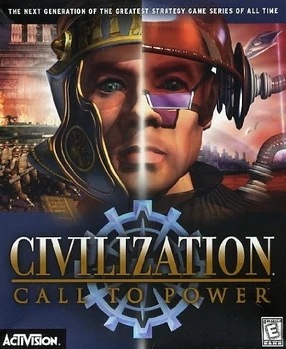
Civilization: Call to Power
 PC
PC
 Activision, MacSoft
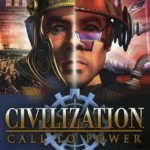
Civilization: Call to Power (commonly abbreviated as Civ: CtP or CtP) is a turn-based strategy 4X video game developed and published by Activision. Released in April 1999 for Microsoft Windows, the game was subsequently ported to Linux by Loki Software—marking the first major, commercial triple-A video game natively released for the Linux platform—and to Mac OS and BeOS.
Call to Power occupies an unorthodox and fascinating position in strategy gaming history. Born out of a turbulent, multi-studio legal battle over the “Civilization” trademark in the late 1990s, this title is the only mainline Civilization game developed entirely without the involvement of series founder Sid Meier, lead designer Brian Reynolds, or Firaxis Games.
Despite its contentious origin story, the game is highly regarded by 4X historians for its visionary willingness to push the boundaries of the classic historical sandbox. It extended the timeline straight into the 31st century, implemented layered orbital and sub-oceanic maps, designed non-military unconventional warfare units, and introduced an automated infrastructure mechanic that modern 4X titles still emulate.
Technical Specifications
| Attribute | Details |
| Developer | Activision (Linux port: Loki Software / Mac port: Westlake Interactive) |
| Publisher | Activision (Mac OS port: MacSoft) |
| Director / Producer | Cecilia Barajas (Director), Mark Lamia (Producer) |
| Lead Designer | William Westwater |
| Engine | Proprietary 2D Isometric Engine |
| Platform(s) | Microsoft Windows, Linux, Mac OS, BeOS |
| Release Date | April 5, 1999 |
| Genre(s) | Turn-based strategy, 4X |
| Mode(s) | Single-player, Multiplayer (TCP/IP, Hotseat, Play-by-Email) |
The Great Trademark War of 1999
The existence of Call to Power was entirely shaped by a massive intellectual property loophole. In 1996, Sid Meier and Brian Reynolds departed their legacy home at MicroProse to found Firaxis Games. While Firaxis held the creative talent, MicroProse retained the computer software rights to the Civilization name.
However, board game manufacturer Avalon Hill held the original, foundational 1980 commercial trademark for the name Civilization. Activision strategically bypassed MicroProse entirely, directly acquiring a license from Avalon Hill to publish an upcoming, in-development historical 4X strategy title under the official prefix banner of Civilization: Call to Power.
A chaotic web of out-of-court lawsuits and corporate counter-sues immediately erupted between Avalon Hill, Activision, and MicroProse over copyright infringement. By the time the dust settled, Hasbro Interactive acquired both Avalon Hill and MicroProse, consolidating the name before Infogrames (Atari) and eventually Take-Two Interactive permanently bought the IP.
Take-Two reunited the license with Firaxis to develop Civilization III and IV. Activision lost the right to use the Civilization prefix name entirely, forcing them to brand their subsequent 2000 sequel simply as Call to Power II.
Gameplay Architecture: Chronology and The 5 Epochs
While traditional Civilization entries historically conclude their matches during the dawn of the 21st century or mid-stage interstellar colonization, Call to Power forces the timeline to march aggressively forward to the year 3000. Progression is partitioned across five distinct historical and future Epochs, each introducing unique resource systems, city architectures, and geo-political paradigms:
- The Ancient Age: Tracks early humanity from the stone age through antiquity, prioritizing basic agriculture, bronze smithing, and primitive territorial consolidation.
- The Renaissance Age: Covers the global exploration boom, scientific enlightenment, the discovery of gunpowder, and early industrial manufacturing lines.
- The Modern Age: Replicates the 20th century, introducing advanced conventional armor warfare, nuclear capabilities, and global mass media systems.
- The Genetic Age: The game’s first speculative future era. Cities transition into high-tech, bio-luminescent hubs driven by genetic modification, cloning facilities, and advanced cybernetic networking loops.
- The Diamond Age: The ultimate near-future era. Civilizations master nanotechnology, anti-matter energy generation, force-field defensive grids, and cosmic engineering frameworks.
Layered Maps & Ocean Colonization
To accommodate these future eras, Call to Power radically broke down the flat map limitations of traditional 4X games, implementing a multi-layered geographical map grid.
Sub-Oceanic Bio-Domes
Upon researching advanced deep-sea engineering, players can submerge their urban planning straight off the shorelines. Workers drop deep-sea colonies directly onto ocean floor tiles, generating fully sealed underwater cities. These bio-domes harvest massive energy and food parameters from hydrothermal vents and underwater trenches, expanding an empire’s sovereignty across the 70% of the planet’s surface that was traditionally locked away as useless water hexes.
The Orbital Space Grid
Advancing into the Space Age unlocks the ability to launch colonies and space stations directly into Earth’s orbit. The game engine renders a vertical upper-map layer where space habitats can be settled. Factions build anti-matter interceptors and orbital beam weapons to actively control the skies, raining down precise kinetic bombardments onto terrestrial cities below or forcefully blocking enemy nuclear launches before they can impact ground coordinates.
The Public Works Automation Engine
Addressing one of the most tedious mid-to-late game micromanagement complaints of Civilization II—where players were forced to manually manage dozens of physical Settler and Worker units shuffling across tiles to slowly build roads and farms—Activision entirely pioneered the Public Works System.
The game completely eliminates physical, movable civilian Workers from the overworld map. Instead, players allocate a continuous percentage slider of their national production empire-wide directly into a global, liquid Public Works Fund.
When a player wants to upgrade their infrastructure, they simply open the Public Works UI lens, select their desired improvement (such as a farm, a trans-continental mag-lev railroad, or a coastal defense grid), and click directly onto an eligible map hex.
The improvement is instantly commissioned and automatically constructs itself over a fixed number of turns, drawing the manufacturing cost straight out of the global Public Works tax pool. This streamlined infrastructure system allowed players to remain completely focused on macro-scale military tactics and grand diplomatic strategies.
Shadow Warfare & Unconventional Units
The military component of Call to Power is highly celebrated for introducing complex, non-lethal Asymmetric Unconventional Warfare Units. Factions are not restricted to simply marching tanks and infantries across borders to declare war; they can deploy invisible shadow units to systematically destabilize a competitor’s society from within during official times of peace:
- Slavers & Abolitionists: Slavers infiltrate primitive foreign borders to forcefully abduct enemy citizens, instantly transporting them back to your home capital to act as free labor. Conversely, players can train Abolitionists to cross borders and spark massive slave revolts, instantly shutting down an opponent’s industrial production.
- Televangelists: Stationed outside foreign city walls to aggressively broadcast religious propaganda. A successful evangelical operation converts a percentage of the host city’s tax revenue, siphoning it straight back into your state treasury.
- Corporate Branch Managers: Infiltrate foreign metropolises to establish franchise nodes, extracting massive economic commerce gold from a rival’s domestic market lines.
- Lawyers: Highly disruptive late-game units dispatched to systematically shut down foreign industry. A Lawyer can target an opponent’s corporate branch manager to issue an immediate legal injunction, completely freezing a city’s trade routes and production loops without triggering an official declaration of war.
- Eco-Terrorists: Deep future saboteurs who target heavily polluted industrial cities, forcefully detonating biological charges that forcefully erase modern factories to restore the landscape back to pristine, un-improved green grasslands.