Incunabula
 PC
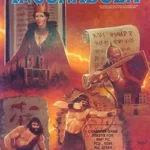
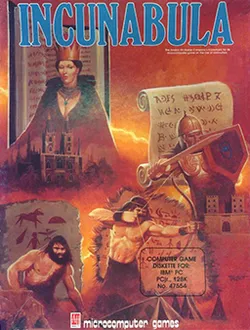
PCIncunabula is a foundational turn-based strategy video game designed by Steve Estvanik and published by the legendary board game house Avalon Hill. Released in 1984 for IBM PC compatibles running MS-DOS, it stands as a historic milestone in strategy gaming: the first official computerized adaptation of Francis Tresham’s acclaimed 1980 Civilization board game.
Predating Sid Meier’s landmark 1991 Civilization by seven years, Incunabula laid down early strategic parameters for what would eventually be codified as the 4X genre, synthesizing resource trading, tech acquisition, and sociological progression into a unified digital ecosystem.
Technical Specifications
| Attribute | Details |
| Developer | Avalon Hill |
| Publisher | Avalon Hill |
| Designer | Steve Estvanik |
| Engine | Text-and-Symbol Grid Layout (CGA Graphics) |
| Platform | IBM PC / MS-DOS |
| Release Date | 1984 |
| Genre(s) | Turn-based strategy, Simulation, 4X Prototype |
| Mode(s) | Single-player, Multiplayer (1 to 3 players) |
The Three Game Scenarios
Rather than dropping players into an endless sandbox, the game engine partitions matches across three distinct gameplay scenarios that alter the core mechanical complexity and winning parameters:
- Incunabula: The definitive core mode. It mirrors Tresham’s original board game architecture closest, tracking tribal expansion, global resource bartering, and baseline sociological evolution.
- Imperium: Shifts structural focus away from trade to prioritize aggressive geographical expansion, tactical border posturing, and high-intensity militaristic pacification.
- Traders: An economically driven simulation that heavily penalizes military actions, forcing players to focus entirely on optimizing cross-border trade loops, luxury deals, and market dominance.
Dynamic Laws and Archetypal Personalities
Incunabula allows 1 to 3 human players to square off, filling remaining slots with computer-controlled AI empires. To make AI play highly dynamic despite early computing bottlenecks, the game introduced a matrix where computer opponents are explicitly assigned a combination of a Basis of Law and a psychological Personality.
The Four Personality Humors
Directly channeling ancient Greek medical philosophy, the AI’s diplomatic and tactical aggression parameters are governed by the four classic temperaments:
- Choleric: Relentlessly aggressive, expansionist, and highly prone to launching unprovoked surprise border raids.
- Sanguine: Outgoing and cooperative, heavily favoring balanced trade agreements and peaceful co-existence.
- Phlegmatic: Highly defensive and isolationist; rarely initiates international conflicts but fiercely protects its border tiles.
- Melancholic: Erratic, deeply suspicious, and prone to breaking non-aggression treaties if it perceives any scientific or territorial asymmetry.
The Four Bases of Law
An empire’s government style heavily modifies its economic yields, combat pricing, and city stability parameters:
- Theocracy: Spikes cultural cohesion and religious devotion, mitigating the threat of internal riots.
- Oligarchy: Optimizes commercial trade revenues and liquid capital accumulation loops.
- Khanate: Drastically reduces the industrial manufacturing cost of breeding new military units.
- Utopia: Multiplies domestic population growth rates and citizen happiness milestones.
Sociological Progression: Arcana and Faction Tiers
Matches strictly execute on a single, static historical overworld map tracking early cradle-of-civilization real estate. Factions initialize as loose collections of primitive Clans. By managing resources and establishing population hubs, players organically guide their societies through structural developmental phases—evolving from basic Clans to structured Tribes, and eventually commanding global Empires.
The primary gameplay currency is accumulated through collecting and bartering trade goods. Instead of a visual linear tech tree, players spend trade wealth to acquire 18 unique technologies called “Arcana”. Accumulating Arcana represents your civilization’s structural mastery over human knowledge, granting powerful systemic advantages.
Crucially, following the unyielding rules of the original board game, combat in Incunabula is completely devoid of randomized dice rolls or independent hit point tracking. Combat is resolved as a strict, unyielding 1-for-1 unit attrition calculation; marching a token army into an opponent’s square removes one unit from both sides instantly, forcing military campaigns to be calculated as precise, mathematically expensive wars of raw material attrition.
Historical Reception & Solitaire Limitations
Upon its launch, Incunabula received highly positive feedback from early PC gaming icons. Renowned science-fiction author and computing columnist Jerry Pournelle reported in a 1985 column for BYTE Magazine that Incunabula “snaffled off more of my time than I could afford,” praising its deeply addictive quality.
Concurrently, Computer Gaming World celebrated the title’s robust multiplayer diplomacy and trading loops, though they openly wondered why Avalon Hill didn’t simply name the software Computer Civilization to capitalize on their own board game IP.
However, critics also issued a stark structural warning: because the game engine features only one unalterable static map layout and difficulty can only be tweaked by adjusting the randomized frequency of natural disasters, they accurately predicted that the game’s solitaire replayability would be severely limited once a player mastered the optimal geometric settlement routes.
Modern Preservation Status
As of May 2026, Incunabula stands safely preserved as a rare, highly fascinating evolutionary link in the history of grand strategy game design. Because its primitive 1984 machine code is hardcoded around early 16-bit IBM architectures, running the software directly on modern 64-bit multi-core Windows 11 operating systems is entirely impossible.
To experience this grandfather of 4X gaming today, digital historians rely on open-source emulation packages. The complete 1984 game is fully preserved on classic abandonware databases and can be executed via DOSBox.
When properly configured inside an emulation container with CGA graphics processing enabled, contemporary players can experience the precise ASCII/symbolic map layouts, rigid 1-for-1 board game combat math, and classic personality humors of Incunabula with absolute historical fidelity.