Millennia
 69
★ /10
69
★ /10
 PC
PCWhere to buy

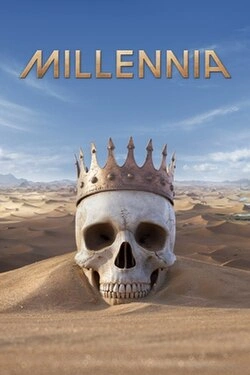
Millennia is a turn-based historical grand strategy 4X video game developed by C Prompt Games and published by Paradox Interactive. Released on March 26, 2024, for Microsoft Windows, the game was designed as a direct structural competitor to the Sid Meier’s Civilization franchise.
Millennia distinguished itself by breaking away from static, linear timelines. Instead, it introduced a dynamic alternate-history engine where player decisions can steer the timeline into specialized timeline deviations, catastrophic dark ages, or unique early victory windows. Combined with a deep, itemized commodity production chain economy and an adaptive “National Spirit” civic system, the title prioritized mechanical experimentation over historical rigidity.
Technical Specifications
| Attribute | Details |
| Developer | C Prompt Games |
| Publisher | Paradox Interactive |
| Engine | Proprietary 3D Strategic Landscape & 2D Combat Viewer |
| Platform | Microsoft Windows (64-bit native configuration) |
| Release Date | March 26, 2024 |
| Genre(s) | Turn-based strategy, Historical 4X Grand Strategy |
| Mode(s) | Single-player, Multiplayer |
| Active Lifecycle Status | Content-complete; official support concluded as of October 2025 |
The Core Innovation: Shifting Timeline Ages
The defining mechanical blueprint of Millennia is its execution of time progression, mapping out 10 distinct evolutionary Eras across a 10,000-year sandbox. Rather than advancing down a fixed historical track, the actions, achievements, or systemic failures of the global leader when moving between eras dictate the rules of the subsequent age for every nation in the match. The timeline splits into four distinct environmental categories:
1. Standard Historical Ages
The baseline, predictable human timeline—such as the Age of Bronze, Age of Iron, or the Age of Discovery. These eras follow standard scientific progression parameters and establish balanced economic loops.
2. Variant Ages (Alternate History)
Unlocked when an empire achieves specific, extraordinary cultural or technological milestones prior to an era shift. For example, mastering unique physical concepts can pull the universe into the Age of Aether, transforming the industrial era into a steampunk steampunk paradise filled with floating cloud estates. Alternatively, players can unlock the Age of Utopia, taking civilization deep beneath the oceans to construct advanced, self-sustaining underwater cities.
3. Crisis Ages (Dark Timelines)
Plunging your empire into high civil unrest, heavy military casualties, or un-checked epidemics can trigger a catastrophic global bottleneck. If a match is forcefully dragged into the Age of Blood, international diplomacy breaks down completely as the map erupts into endless global warfare. Other crises include the Age of Sickness (widespread plagues) or the Age of Ignorance (stagnating scientific data output).
4. Victory Ages (Early Match Terminals)
Toward the later stages of a campaign (or earlier if a strategy is executed perfectly), a dominant nation can steer the match into a specialized Victory Age (such as a Renaissance victory condition). This immediately dictates the final winning rules for the entire game. The rest of the world must desperately scramble to achieve the victory parameters before the timer expires, or forcefully overthrow the leader to push the timeline forward into the modern era.
National Spirits & Domain Powers
To bypass the predictable nature of picking a static historical nation template at the main menu, Millennia implements a highly flexible, modular civic forge based on National Spirits. Over the course of a match, players periodically choose specialized cultural archetypes that dynamically overlay new traits onto their citizens based on immediate sandbox needs.
Concurrently, empire-wide macro actions are fueled by a dedicated Domain System. Civil actions are partitioned into discrete governance fields: Exploration, Government, Warfare, Diplomacy, Engineering, and Arts.
As your empire operates, it generates specialized Domain Points for those sectors. Rather than spending points on a simple passive tech tree, players spend accumulated points directly to activate immediate Domain Powers—allowing you to instantly spawn emergency defender militias inside a besieged city, forcefully annex independent frontier territory, or invoke culture bombs to pacify civil unrest.
The Chain-Based Production Economy
The domestic infrastructure of Millennia rejects generic “production hammers” to implement a highly tactile commodity logistics network heavily inspired by management simulators. Cities do not simply collect gold; they mine raw, primitive global assets that must be systematically routed through specialized manufacturing pipelines:
- Raw Materials: Mining extraction nodes yield base materials like crude Iron Ore, Lumber, or raw Gold nuggets.
- Refined Commodities: By building physical workshop improvements across regional provinces, players actively convert raw assets into high-value luxury goods. Workers process iron ore into Tools or Weapons, turn raw timber into Paper, and smelt gold into Coinage or Fine Jewelry.
- Logistical Redistribution: Refined goods can be systematically shipped away from your industrial heartlands to feed far-flung border colonies. Higher-tier refined assets dramatically multiply localized population growth, supercharge structural building speeds, and yield elevated luxury taxes to bankroll massive standing militas.
The Complete Expansion Pass
Over its active development timeline, the strategic sandbox was expanded through two focused DLC content drops included in the game’s premium lifecycle:
Ancient Worlds
This expansion added deep prehistoric options, letting players control their people before their very first permanent settlement. It introduced a nomadic starting phase where tribes wander the fog of war foraging for resources, alongside the Mound Builders National Spirit and unique starting bonuses.
Atomic Ambitions
The definitive modern-era expansion focused heavily on nuclear mechanics. It introduced two entirely new timelines—the Age of Atom (harnessing clean nuclear power) and the Age of Fallout (a horrific wasteland crisis age triggered by nuclear irresponsibility)—alongside atomic-themed National Spirits and deep nuclear deterrent additions for the Strategic Warfare ledger.
Sunset & Preservation Status (2026 Perspective)
Following a mixed critical and user reception at launch—where strategy enthusiasts praised the alternate age system but heavily critiqued the outdated, sterile automated battle viewer and limited diplomacy mechanics—Paradox Interactive and C Prompt Games officially brought development to an end. On October 3, 2025, the studio deployed Update 8 (v1.0.26357.F), officially signing off as the game’s final structural content patch.
Because C Prompt Games natively architected the game’s core framework around modern 64-bit multi-threaded programming parameters and DirectX 11 native configurations, the compiled client executes flawlessly out-of-the-box under modern Windows 11 desktop environments.
No external emulators or graphics wrappers are required. While Paradox has stepped away from active community platforms, the complete, content-complete edition remains permanently available on Steam for a standard baseline price of $39.99 (frequently discounted by 50% during seasonal strategy sales)—allowing grand strategy grognards to experience the unique variant age paths, deep production chains, and alternate historical timelines with absolute technical stability.