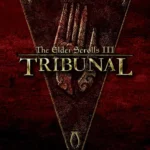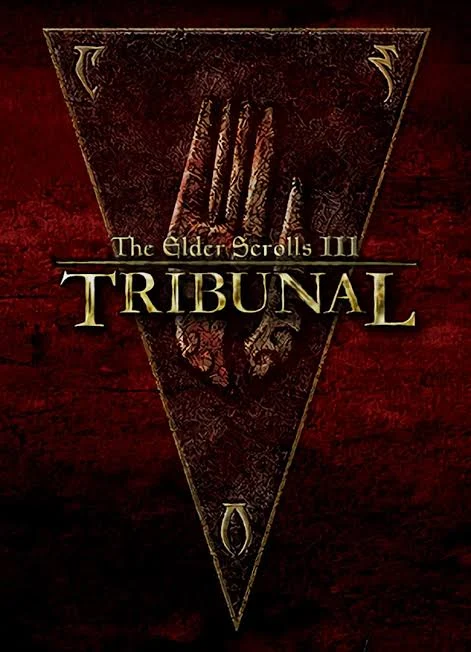
The Elder Scrolls III: Tribunal
Expansion of The Elder Scrolls III: Morrowind 80
★ /10
80
★ /10
 PC
PC Xbox
Xbox 1C Company
 Bethesda Softworks


The Elder Scrolls III: Tribunal is the first expansion pack for The Elder Scrolls III: Morrowind, developed by Bethesda Game Studios and published by Bethesda Softworks. Released for Windows on November 8, 2002 — six months after the base game — it takes the player off the island of Vvardenfell and into Mournhold, the capital city of Morrowind, to continue the consequences of the Nerevarine prophecy through one of the Tribunal god-kings’ unravelling minds.
It received a Metacritic score of 83 on PC and is the less-discussed of the two Morrowind expansions. The question most associated with it in current search results is whether it is actually good. The answer is: partially, and for specific reasons.
Technical Specifications
| Attribute | Details |
|---|---|
| Developer | Bethesda Game Studios |
| Publisher | Bethesda Softworks |
| Producer | Ashley Cheng |
| Lead Designer | Ken Rolston |
| Writers | Gavin Carter, Brian Chapin, Mark E. Nelson |
| Engine | Gamebryo |
| Platform(s) | Microsoft Windows (standalone) · Xbox (GOTY Edition only) |
| Release Date | NA: Nov 8, 2002 · UK: Nov 29, 2002 |
| Genre | Action role-playing |
| Mode | Single-player |
A Curious Origin: The Name
Tribunal was originally the working title for The Elder Scrolls III itself — at a point in 1996 when the game was planned to take place on the Summerset Isles rather than Vvardenfell. Bruce Nesmith commissioned concept art under that title; when the setting shifted to Morrowind, the name was reassigned. It became available for the first expansion because it had been vacated by the main game.
Mournhold: The City That Floats
Tribunal takes place entirely in Mournhold, the capital of the Morrowind province proper — a city on the mainland, geographically nowhere near Vvardenfell. Because the two regions are not contiguous in the game world, Mournhold is accessed through a teleportation service rather than by walking there; the expansion is self-contained and sealed off from the rest of the map.
The sealing has a visible mechanical explanation: Mournhold is not an exterior zone but an interior one with a painted sky ceiling. Levitation magic is disabled within the city, explained in-game as a prohibition against offending Almalexia — who rules Mournhold and whose temple dominates its centre — but functioning in practice because levitating above the rooftops would reveal the ceiling. Players who breach the city walls by other means find Mournhold floating in an endless ocean with nothing beyond it.
Within those walls, the city is architecturally grand and culturally specific in ways Vvardenfell rarely was: heavy stonework, Dunmer religious iconography, fountains, plazas, and the Temple at the centre. Below it is an extensive network of sewers, ancient ruins, and underground passages that constitute most of the dungeon content. The sewers in particular attracted sustained criticism — long, repetitive, and not visually distinctive enough to sustain the time spent in them.
Story: An Assassin, a Mad Goddess
Tribunal begins when the player goes to sleep anywhere in the world and is attacked by a Dark Brotherhood assassin. Investigation into who sent them leads to Mournhold, where two opposing powers are in play.
King Hlaalu Helseth is the newly crowned king of Morrowind, whose ascension was controversial: he allegedly arranged the death of the previous king — his own stepfather — to take the throne, and Queen Barenziah (his mother, a significant figure from earlier Elder Scrolls lore) is present in Mournhold as part of the political background. Helseth wants the Nerevarine’s assistance in consolidating his authority.
Almalexia is one of the three god-kings of the Tribunal — Morrowind’s living deities — whose divine power derived from the Heart of Lorkhan. The events of Morrowind‘s main quest destroyed that connection. Almalexia is losing her divinity and has been losing it since, and the process has not been kind to her psychological state. She presents herself as the expansion’s patron, directing the Nerevarine’s investigation.
As the expansion develops, it becomes clear that Almalexia engineered the assassination attempts herself — to draw the Nerevarine to Mournhold, where she could use them. The main quest culminates in a journey to the Clockwork City, and in the revelation that she has already killed the third member of the Tribunal, Sotha Sil, before the player arrives. The confrontation with Almalexia is the expansion’s final boss. Afterwards, the Daedric Prince Azura appears to confirm what the encounter implied: mortals cannot hold divine power without consequence, and the Heart of Lorkhan drove Almalexia to ruin.
The Clockwork City
Sotha Sil’s Clockwork City is the expansion’s most inventive location and the reward for pushing through the Mournhold sewers. Sotha Sil, the third Tribunal god-king, spent centuries in voluntary isolation building a mechanical simulation of Tamriel — a brass-and-copper city populated entirely by automata: Fabricants (organic-mechanical hybrids), Spider Centurions, and Steam Centurions of various grades. The architecture is entirely unlike anything else in the game: gears, pistons, copper pipes, vaulted ceilings of interlocking machinery.
The city’s construction reflects Sotha Sil’s philosophy — he withdrew from mortal affairs to pursue a private understanding of Tamriel’s reality through its mechanical recreation. By the time the Nerevarine arrives, Sotha Sil has been dead for some time, and Almalexia has been maintaining the pretence of his presence. The Clockwork City as a dungeon is largely combat-based, with lever puzzles as connective tissue. Critics found the puzzles shallow; the visual design attracted considerably more praise.
Gaenor
Among Tribunal‘s optional encounters, Gaenor is the most famous and the most abused. He is a destitute Dunmer man who approaches the player outside the Mournhold Great Bazaar asking for money. Refusing him multiple times, or giving insufficiently, causes him to escalate — over several interactions — until he eventually attacks the player as Lucky Gaenor, a fully armed combatant with a Luck attribute so high that almost every attack against him misses and almost every attack he makes lands. He wears a full set of Daedric armour.
Gaenor exists because the expansion designers wanted an NPC who demonstrated that ignoring someone’s problems could have unpredictable consequences. He became a community touchstone — a test of patience, a source of Daedric gear for players who figure out his mechanics, and a recurring reference in discussions of Morrowind‘s design philosophy.
New Features: Journal and Museum
Tribunal introduced two quality-of-life additions that carried relevance beyond the expansion itself. The sorted journal system — allowing players to organise entries by quest rather than by reverse chronology — addressed one of the base game’s most practical frustrations. The original Morrowind journal could become an unwieldy scroll of hundreds of entries; Tribunal’s addition made active quest tracking genuinely usable.
The Museum of Artifacts in Mournhold gives the player an option to sell rare artifacts at above-market prices (up to 30,000 gold, more than any merchant could otherwise offer), with each sold artifact placed on display in the museum. The mechanic encourages a completionist sweep of rare items and provides a visually trackable record of what has been collected.
Reception: Tribunal vs Bloodmoon
Tribunal received a Metacritic score of 83 — lower than the base game’s 89 — with critics consistently praising the Almalexia storyline and the Clockwork City while criticising the Mournhold sewers, the relative smallness of the city, and the absence of outdoor exploration. The transition from Vvardenfell’s alien open landscape to a sealed urban environment was the primary structural complaint.
The comparison with Bloodmoon — a debate that has persisted in forums and appears in the expansion’s People Also Ask — generally favours the second expansion. Bloodmoon offers an exterior island, werewolf mechanics, and a different structural approach; most players who have completed both rank it higher. Tribunal has its advocates, particularly among players who engaged with the political story and the Almalexia arc, but the consensus treats it as the lesser of the two. Its reception was direct enough that Bethesda described it as influencing the design choices made for Bloodmoon.
Both expansions are included in the Morrowind Game of the Year Edition, available on Steam and GOG.