An Elder Scrolls Legend: Battlespire
 PC
PC Bethesda Softworks

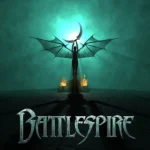
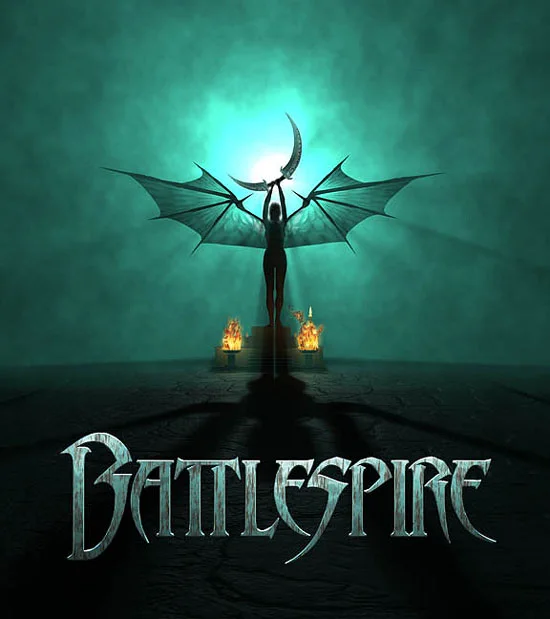
An Elder Scrolls Legend: Battlespire is a 1997 action role-playing game developed and published by Bethesda Softworks for MS-DOS. Released in late November and early December 1997, it is the first spin-off entry in The Elder Scrolls franchise — a deliberate departure from the open-world format of Arena (1994) and Daggerfall (1996) into a contained, linear dungeon crawl across seven planes of Oblivion.
It began development as an expansion pack for Daggerfall and was released as a standalone product. It is the last game Julian LeFay, the man widely credited as the father of The Elder Scrolls, led to completion. He died on July 22, 2025, aged 59.
Technical Specifications
| Attribute | Details |
|---|---|
| Developer | Bethesda Softworks |
| Publisher | Bethesda Softworks |
| Lead Programmer | Julian LeFay |
| Lead Designer | Ted Peterson |
| Engine | XnGine (updated from Daggerfall) |
| Platform | MS-DOS |
| Release Date | NA: December 4, 1997 · EU: 1997 |
| Genre | Action role-playing, Dungeon crawler |
| Mode(s) | Single-player, Multiplayer |
From Expansion to Spin-off
Battlespire began development under the working title Dungeon of Daggerfall: Battlespire as an add-on for The Elder Scrolls II: Daggerfall. As scope expanded and the title evolved into a standalone product, Bethesda introduced the “An Elder Scrolls Legend” subtitle — a new branding label intended for spin-off titles operating outside the main numbered series. Only one game ever carried this label. Battlespire was followed in 1998 by The Elder Scrolls Adventures: Redguard, a separate spin-off under a separate subtitle, before the franchise returned to its mainline format with The Elder Scrolls III: Morrowind in 2002.
The Battlespire: Setting and Story
The Battlespire is a training academy and proving ground for the Shadow Legion — the elite Battlemages who serve the Imperial military — suspended in a realm between Mundus (the mortal world) and Oblivion. On the day of the player character’s final examination, the facility has been invaded by the forces of Mehrunes Dagon, the Daedric Prince of Destruction, through an act of treachery within the Legion itself. Nearly every mage and soldier inside has been killed. The player’s partner — an apprentice of the opposite gender — has been taken captive by Mehrunes Dagon himself.
The player, designated only as The Apprentice, must fight their way through all seven levels of the Battlespire — each corresponding to a different plane of Oblivion associated with Dagon’s forces — to reach the Daedric Prince, defeat him, and find a way back to Tamriel. There are two distinct ending cinematics based on the player’s choice of gender.
Mehrunes Dagon would later serve as the primary antagonist of The Elder Scrolls IV: Oblivion (2006), making Battlespire the earliest canonical Elder Scrolls appearance of one of the setting’s most significant figures. The Battlespire itself is referenced in later games as having been destroyed during these events.
An Elder Scrolls Without the World
The defining characteristic of Battlespire — and the source of most of its contemporary criticism — is what it removes compared to its predecessors. There is no overworld. There are no towns. There are no merchants, no economy, no gold. The player character’s attributes are set at the start; no levelling occurs during the game. All weapons, armour, and supplies are found on the bodies of enemies or the floors of the dungeon. The only forward motion is through the Battlespire’s seven levels, each larger and more hostile than the last.
The RPG systems inherited from Daggerfall remain present underneath this structure — attributes, skills, spell crafting — but they operate in a much smaller space. The design philosophy was closer to Ultima Underworld than to Arena or Daggerfall: a single, detailed, fully realised environment in place of a procedurally generated continent. The game is considerably harder than either of its mainline predecessors, and its difficulty curve was singled out in almost every contemporary review.
What the game delivers within these constraints is a dense atmosphere. The seven planes of Oblivion — each visually and thematically distinct, each populated by a different faction of Daedra with their own relationships and dialogue — gave Battlespire a lore depth that reviewers noted even when dismissing the gameplay. Conversations with Daedra enemies, some of whom can be bargained with or manipulated rather than killed, provided early examples of the faction-based world-building that would define later Elder Scrolls entries.
Multiplayer: A First for the Series
Battlespire was the first Elder Scrolls game to include a multiplayer component. Two modes were available: a cooperative mode allowing two players to proceed through the single-player campaign together over LAN or modem, and a competitive versus mode in which players fought each other using the same mechanics and map geometry as the main game. Neither mode attracted significant coverage at the time, and multiplayer has not appeared in any subsequent mainline Elder Scrolls title.
Julian LeFay
Julian LeFay — born Benni Jensen on October 30, 1965, in Denmark — is credited as the lead programmer on Arena, the project lead on Daggerfall, and the driving technical force behind Battlespire. He joined Bethesda shortly after the company’s formation and spent most of the 1990s building the technical foundation of The Elder Scrolls. His influence was significant enough that Bethesda named a deity in the series’ theology after him: Julianos, the god of logic and philosophy, appears in Daggerfall, Morrowind, and subsequent entries. The Unofficial Elder Scrolls Pages (UESP), the franchise’s most comprehensive fan wiki, dedicated its site to his memory after his death.
LeFay left Bethesda in 1998, shortly after Battlespire and Redguard both underperformed commercially. He worked briefly as a contractor on Morrowind and then largely disappeared from the games industry, working at Sega for a period and on other smaller projects. For more than two decades, he gave no public interviews and was rarely mentioned in coverage of the franchise he helped create.
In 2019, he was tracked down by a YouTuber named Ian Phoenix, who had become curious about LeFay’s whereabouts while researching The Elder Scrolls history. Their recorded conversation — eventually running over three hours — marked LeFay’s first public interview in more than twenty years. Both expressed frustration at the absence of a true successor to Daggerfall‘s scale and design philosophy. The conversation led to a collaboration: LeFay, Phoenix, Ted Peterson (who had written Arena, Daggerfall, Morrowind, and Oblivion), and Vijay Lakshman co-founded OnceLost Games in 2019 to develop The Wayward Realms — a spiritual successor to Daggerfall built on the same principles of scale, player agency, and procedural world simulation.
In May 2024, OnceLost launched a Kickstarter campaign for The Wayward Realms, raising over $800,000. On July 16, 2025, the studio announced that LeFay had been battling cancer for several years and had stepped back from the project as his health declined. He spent his final days with his family. Julian LeFay died on July 22, 2025, aged 59.
OnceLost Games continues development of The Wayward Realms, having documented LeFay’s vision in detail before his death. In December 2025, the studio announced a switch from Unreal Engine to a proprietary engine, moving the planned early access release to June 2026.
Canon and the “Legend” Subtitle
The events of Battlespire are considered canonical within The Elder Scrolls lore, though the game receives few direct references in later titles. The Battlespire’s destruction is acknowledged in later Elder Scrolls media, and Mehrunes Dagon’s characterisation in the game is consistent with how he appears in Oblivion. The “An Elder Scrolls Legend” subtitle was not continued after this release; Bethesda chose not to develop the spin-off label further, and the franchise’s next entries — Redguard and then Morrowind — used different approaches to the question of what an Elder Scrolls title could be.
A recurring question in contemporary discussions is whether Battlespire is required or recommended context for understanding later games. It is not: the story is self-contained, and its events are not referenced in ways that require prior knowledge. It is, however, the earliest extended appearance of Mehrunes Dagon, and the Daedric political structures established in its seven planes carry forward into lore that later games expand.
Reception and Where to Play
Battlespire received mixed reviews upon release. Critics broadly acknowledged the atmospheric dungeon design and praised the lore contribution while criticising the departure from open-world exploration, the difficulty, and the reduced RPG scope relative to Daggerfall. The game was commercially unsuccessful. When Bethesda released The Elder Scrolls Anthology boxed set in 2013 — collecting all mainline entries from Arena to Skyrim — Battlespire and Redguard were not included, a notable omission that the studio has never formally explained.
The game is currently available on Steam, GOG, and the Xbox store. The original MS-DOS version is freely available to play in-browser or download at Archive.org. In April 2026 it appeared in a Humble Bundle, making it newly accessible to a wider audience. Community guides for installation and compatibility patches on the Steam and GOG versions are available via UESP.