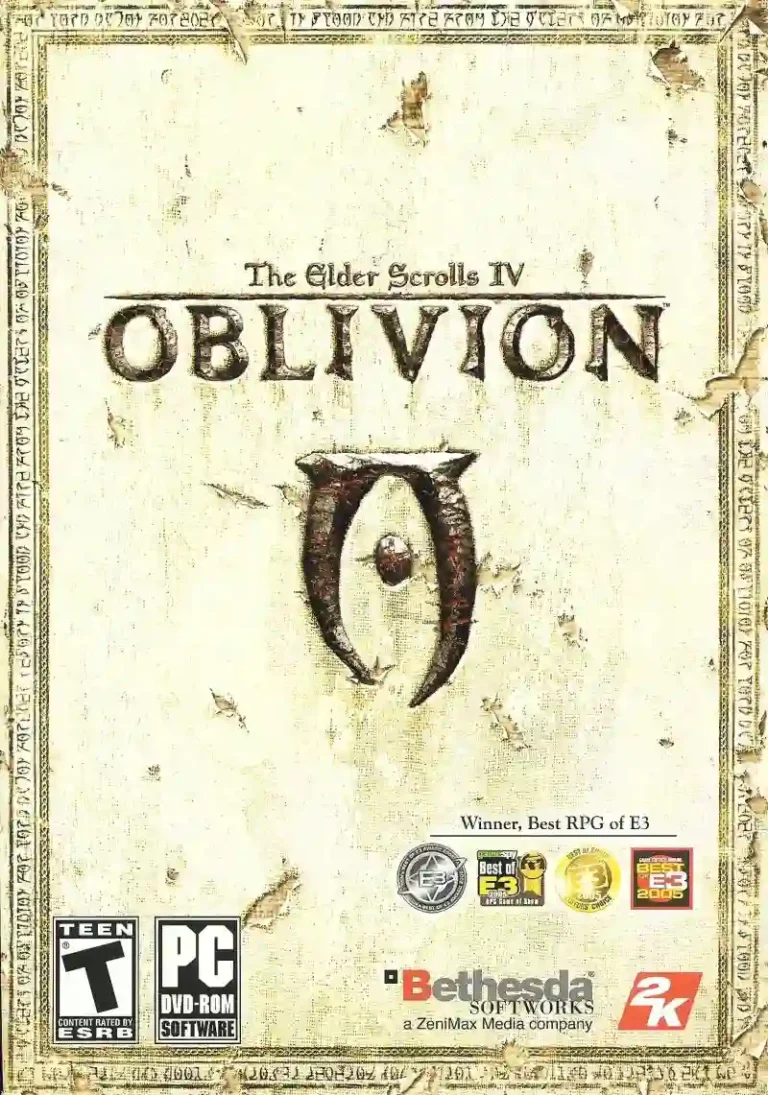
The Elder Scrolls IV: Oblivion
 94
★ /10
94
★ /10
 PC
PC PS 3
PS 3 Xbox 360
 1C-SoftClub,
  2K Games,
  Bethesda Softworks,
  Ubisoft



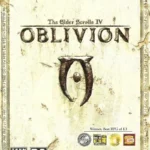
The Elder Scrolls IV: Oblivion is a 2006 action role-playing game developed by Bethesda Game Studios and published by Bethesda Softworks. Released for Xbox 360 and PC on March 20, 2006, and for PlayStation 3 in 2007, it is the fourth mainline entry in The Elder Scrolls series, set in Cyrodiil — the Imperial heartland of Tamriel — and lead designer Ken Rolston’s final Elder Scrolls game before his retirement from Bethesda.
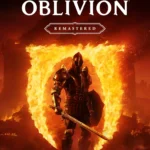
The game received a Metacritic score of 94 on Xbox 360 and PC, won multiple Game of the Year awards for 2006, and introduced the paid cosmetic DLC model to mainstream gaming via a piece of decorative horse armour. On April 22, 2025, Bethesda shadow-dropped The Elder Scrolls IV: Oblivion Remastered — announced and released on the same day — rebuilt in Unreal Engine 5 by Virtuos. It attracted 4 million players in its first week.
Technical Specifications
| Attribute | Details |
|---|---|
| Developer | Bethesda Game Studios |
| Publisher | Bethesda Softworks |
| Director | Todd Howard |
| Lead Designer | Ken Rolston |
| Composer | Jeremy Soule |
| Engine | Gamebryo |
| Platform(s) | Xbox 360 · PC (Mar 20, 2006) · PS3 (Mar 2007) |
| Release Date | March 20, 2006 (Xbox 360 / PC) |
| Genre | Action role-playing |
| Mode | Single-player |
Cyrodiil: The Imperial Heartland
Where Morrowind‘s Vvardenfell was aggressively alien — volcanic, fungal, culturally strange — Oblivion‘s Cyrodiil was a deliberate course correction toward accessibility. The province is the seat of the Septim Empire, and its landscape reflects Imperial cultural dominance: rolling green hills, dense forests, Roman-influenced stone cities, medieval-style villages, and a road network that connects them all. The White-Gold Tower at the centre of the Imperial City, rising over Lake Rumare, is Tamriel’s seat of power and the game’s geographical anchor.
It is, by design, the most approachable version of Tamriel that Bethesda had produced — a fantasy world you can read at a glance, without the cultural learning curve that Dunmer society required. This accessibility was both the game’s greatest commercial strength and the most frequent criticism from players who preferred the strangeness of its predecessor.
Opening: Emperor, Amulet, and the Heir No One Knows About
Oblivion opens in an Imperial prison cell. Before the player has established a character, Emperor Uriel Septim VII — voiced by Patrick Stewart in what may be the most celebrated single performance in video game opening sequences — walks through, escorted by his Blades guard and pursued by assassins. He pauses at the cell. He has dreamed of this moment. He says the player is the one he has been waiting for. Then he is killed.
The assassins are members of the Mythic Dawn, a cult devoted to Mehrunes Dagon, the Daedric Prince of Destruction, whose plan is to open the gates between the mortal world and the realm of Oblivion and flood Cyrodiil with his forces. With the Emperor dead and his legitimate heirs already murdered, the gates are beginning to open — vast red portals crackling with energy, pouring out Daedra into the countryside. The only thing that can seal them permanently is the Amulet of Kings, worn by those with Septim blood, used in a ritual invoking Akatosh, the Dragon God of Time.
Before he died, Uriel gave you the Amulet and told you to find Jauffre, grandmaster of the Blades. Jauffre knows about Martin Septim — Uriel’s illegitimate son, living as an obscure priest in the city of Kvatch. Find Martin. Protect him. The Septim line is not entirely extinguished.
Patrick Stewart and Sean Bean
Oblivion‘s vocal cast is largely the product of approximately eight voice actors covering the entirety of the NPC population by race and gender, a constraint that produced the famous homogeneity of Oblivion’s background characters. Two roles departed from this entirely.
Patrick Stewart’s performance as Uriel Septim spans the prison sequence and a short in-medias-res opening monologue. He is dead within the game’s first twenty minutes. The impact is disproportionate to the screen time: the weight of Stewart’s delivery — measured, regal, haunted by prophecy — establishes the stakes of everything that follows, and his death is one of the most effective inciting incidents the franchise has produced.
Sean Bean voices Martin Septim across the entire main quest. He is, crucially, still alive at the end — unusual for Sean Bean — until he isn’t. Martin’s final sequence involves taking the Amulet of Kings, speaking the words of the ritual, and transforming into an avatar of Akatosh himself: a Divine Dragon that battles Mehrunes Dagon’s physical manifestation in the plaza outside the Imperial Palace. The Dragon defeats Dagon and turns to stone. Martin is dead. The Septim bloodline is ended. The Oblivion Crisis is over.
The consequences of this are still being processed in Skyrim, set 200 years later: with no Septim emperor and the Amulet of Kings destroyed, the ancient ritual that bound Akatosh’s power to the Imperial line cannot be performed again, and the world is considerably less protected than it was.
Major Factions: The Dark Brotherhood
Oblivion‘s questlines for its major joinable factions — the Fighters Guild, Mages Guild, Thieves Guild, Arena, and Blades — constitute a substantial portion of the game’s authored content and are generally strong. The one consistently cited above the others, above the main quest, and among the finest designed sequences in RPG history, is the Dark Brotherhood questline.
The Dark Brotherhood is an assassination guild with a religious component: they worship the Dread Father Sithis through a series of contracts on mortal lives. Entry requires the player to have committed murder; the questline begins with a clandestine approach from the broker Lucien Lachance. What follows is a series of contracts that escalate in moral and narrative complexity — varied targets, increasingly elaborate staging, a sanctuary full of characters who develop across the arc — until a betrayal and conspiracy within the Brotherhood itself rewrites the terms of everything that came before.
The questline’s writing is significantly darker and more novelistic than the faction content around it, and its reputation has grown rather than diminished with time. Players who play Oblivion for the first time after a decade of Skyrim consistently report the Dark Brotherhood as the most surprising and affecting part of the experience.
Level Scaling: The Great Design Controversy
Oblivion‘s level scaling system is among the most debated design decisions in the franchise’s history. Enemies, ambient wildlife, and loot tables all scaled to the player character’s current level, with the intent of ensuring the game remained challenging throughout. In practice, the system produced outcomes that made no narrative or logical sense: road bandits wearing full Daedric armour (the most powerful equipment in the game), mudcrabs and rats persisting as threats at high levels, and a world where becoming more powerful made the environment commensurately more hostile rather than more manageable.
The system particularly penalised players who invested in non-combat skills — Alchemy, Speechcraft, Mercantile — because levelling up those skills raised the character’s level (and thus enemy difficulty) without improving combat effectiveness. A character who tried to be a social or economic specialist could find the game’s enemies becoming essentially unkillable.
The scaling was modded away in virtually every comprehensive PC overhaul of the game, and became the primary design change Bethesda made when developing Skyrim. It was adjusted (though not removed) in the Remastered version.
Horse Armour: The DLC That Changed Gaming
In April 2006, six weeks after Oblivion‘s launch, Bethesda released the Horse Armor Pack on the Xbox Marketplace: two decorative armour sets for your horse, priced at 200 Microsoft Points (approximately $2.50). The armour provided no gameplay benefit. It was purely cosmetic.
The response was widespread derision. The term “microtransaction” was not yet in common use; the community simply called it “bad DLC” and mocked it extensively. Bethesda did not withdraw it and did not apologise. The Horse Armor Pack remained on sale, and the market signal it sent — that players would pay for cosmetic items even while complaining — propagated through the industry over the following decade into the ubiquitous paid cosmetic ecosystem that defines most large-scale game monetisation in 2026.
Bethesda acknowledged the legacy by including paid Horse Armour DLC in Oblivion Remastered (2025). The price had inflated considerably.
Oblivion Remastered (2025)
On April 22, 2025, Bethesda shadow-dropped — announced and released on the same day, with no prior marketing campaign — The Elder Scrolls IV: Oblivion Remastered. The simultaneous announcement and release was itself the news: the game simply appeared on PS5, Xbox Series X/S, and PC, available immediately on Game Pass.
Oblivion Remastered was developed by Virtuos (a Shanghai-based studio with extensive co-development credits) in collaboration with Bethesda Game Studios. The technical approach: the original Gamebryo engine handles all gameplay logic — movement, AI, physics, quest systems, the entirety of how the game functions — while Unreal Engine 5 runs on top for rendering, producing entirely new visuals without touching the underlying simulation. This preserved original-Oblivion behaviour (including known bugs, the Dupe Item Glitch, and the characteristic NPC face geometry) while replacing every visual asset.
What changed: fully rebuilt lighting via UE5’s Lumen system, new geometry and textures, new character models with per-race customisation, improved level scaling (enemy levels are now partially decoupled from the player’s), additional autosave points, new third-person animations, and expanded accessibility options. All DLC including Knights of the Nine and Shivering Isles is included. The original Patrick Stewart and Sean Bean recordings were retained; no new voice work was recorded.
Oblivion Remastered reached 4 million players in its first week and peaked at 190,000 concurrent users on Steam — the highest for any Elder Scrolls title. It received a Metacritic score of approximately 82, with critics praising the visual transformation and the renewed access to the original game’s content, while noting performance issues at launch and the persistence of 2006-era design decisions. A Nintendo Switch 2 version is scheduled for 2026.
Official mod support was not announced at launch, which attracted criticism given Bethesda’s mod-supportive history. The modding community responded by building tools independently; Nexus Mods’ Oblivion Remastered page accumulated over 33,000 monthly visits within months of launch.
Skyblivion: The Fan Remake That Survived
Skyblivion (skyblivion.com), developed by the TESRenewal volunteer team — the same group behind the still-in-progress Skywind — is a total conversion rebuilding Oblivion in the Skyrim Special Edition engine. Unlike the official Remaster, Skyblivion is a ground-up recreation with new geometry, animations, and gameplay systems matching Skyrim’s conventions rather than Gamebryo’s.
When Oblivion Remastered launched in April 2025, the Skyblivion team acknowledged that the commercial release had “changed the landscape” significantly. Their original 2025 target was described internally as no longer achievable given the circumstances. Development continues regardless, with the team noting that Skyblivion offers a fundamentally different experience from the Remaster: a reimagining rather than a preservation.
Editions Note
This page covers the base game. Separate entries exist for The Elder Scrolls IV: Knights of the Nine and The Elder Scrolls IV: Shivering Isles. Both expansions are included in the Game of the Year Edition (2009, available on Steam) and in Oblivion Remastered (2025).