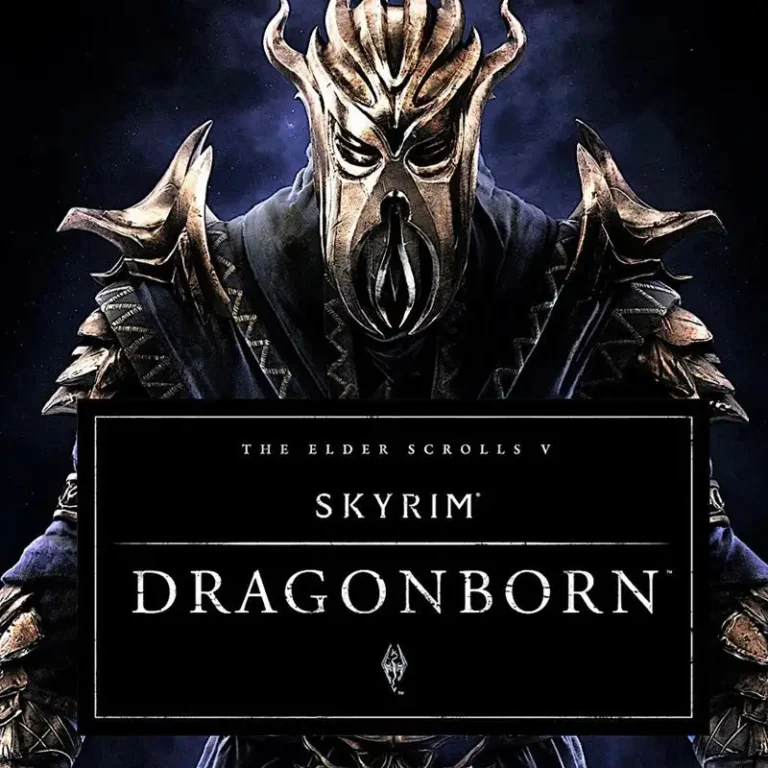
The Elder Scrolls V: Skyrim – Dragonborn
Expansion of The Elder Scrolls V: Skyrim 82
★ /10
82
★ /10
 Nintendo Switch,
  Nintendo Switch 2,
  PC,
PC,  PS 3,
PS 3,  PS4,
PS4,  PS5,
PS5,  Xbox 360,
  Xbox One,
  Xbox Series X/S
 1C-SoftClub,
  Bethesda Softworks
Where to buy





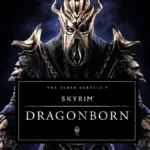
The Elder Scrolls V: Skyrim – Dragonborn is the third and final major expansion for The Elder Scrolls V: Skyrim, developed and published by Bethesda Game Studios. Released for Xbox 360 on December 4, 2012, for PC on February 5, 2013, and for PS3 on February 12, 2013, it sends the Dragonborn to Solstheim — an island that appeared first in The Elder Scrolls III: Morrowind‘s Bloodmoon expansion nine years earlier — to confront the original Dragonborn: Miraak.
It received a Metacritic score of 88 on Xbox 360 — the highest of the three Skyrim expansions — and is broadly considered the definitive post-launch addition to Skyrim: a self-contained adventure with its own map, its own antagonist, and the long-awaited ability to ride dragons.
Technical Specifications
| Attribute | Details |
|---|---|
| Developer | Bethesda Game Studios |
| Publisher | Bethesda Softworks |
| Engine | Creation Engine |
| Platform(s) | Xbox 360 (Dec 4, 2012) · PC (Feb 5, 2013) · PS3 (Feb 12, 2013) |
| Price at Launch | 1,600 Microsoft Points (~$19.99) |
| Genre | Action role-playing |
| Mode | Single-player |
Solstheim: The Long Return
The island of Solstheim sits northwest of Vvardenfell and northeast of Skyrim. It appeared first in The Elder Scrolls III: Morrowind – Bloodmoon (2003), where the player helped establish Raven Rock as an East Empire Company ebony mining settlement. Bloodmoon was set in 3E 427. Dragonborn is set in 4E 201, roughly two hundred years later — and the island that greets returning players is substantially transformed.
Red Mountain, the volcano at the centre of Vvardenfell, erupted catastrophically in 4E 5 — an event known as the Red Year. The eruption destroyed much of Morrowind’s mainland and sent waves of Dunmer refugees northward. Many settled on Solstheim. House Redoran took administrative control of Raven Rock, transforming the tiny mining camp into a full Dunmer city. The southern half of the island is now blanketed in volcanic ash; the Red Mountain is visible on the southern horizon, still venting. The Dunmer architecture of Raven Rock — stone, angular, dark — sits against the ashen wastes in a way that feels genuinely foreign after Skyrim’s Nordic stone.
The northern part of the island retains the snow and pine forests of the Bloodmoon era. The Skaal, the indigenous Nord tribe who appeared in Bloodmoon, still occupy their village there, their traditions and All-Maker stones intact. Fort Frostmoth, the Imperial garrison that served as Bloodmoon‘s starting point, is now a ruin. For players who remember founding Raven Rock in Bloodmoon, the sight of it as a functioning city is one of the more quietly affecting pieces of continuity in TES history.
Miraak: The First Dragonborn
The expansion begins without preamble. The Dragonborn travels to any major city in Skyrim and is immediately attacked by cultists — masked, silent, carrying a note that identifies them as servants of Miraak and the Dragonborn as a “false” pretender. The message is the invitation.
Miraak is the first person in recorded history to have been born with the blood of a dragon — predating the Last Dragonborn by millennia. He lived during the Merethic Era, when dragons ruled Tamriel and were worshipped as gods. He rose through the Dragon Cult to become a Dragon Priest stationed on Solstheim — one of the most powerful and trusted servants of the dragon overlords. Then, at an undocumented moment, he turned against them.
He used the Way of the Voice against the dragons. He was eventually defeated by another Dragon Priest — Vahlok the Jailer, appointed as Solstheim’s new custodian specifically to imprison Miraak’s memory — but did not die in the conventional sense. Instead, he made a pact with Hermaeus Mora, the Daedric Prince of forbidden knowledge, and retreated into Mora’s realm of Apocrypha. He has been there, accumulating power, ever since.
Now, with Alduin defeated and the Last Dragonborn established, Miraak has begun reaching outward again. He corrupts Solstheim’s All-Maker Stones — sacred Skaal standing sites — channelling their energy to enthrall the island’s population. People across Solstheim build structures for him in their sleep, compelled without knowing why. His cultists travel to Skyrim. He begins stealing dragon souls.
Apocrypha and Hermaeus Mora
Hermaeus Mora is the Daedric Prince of Knowledge, Fate, and Memory — of things known and things better left unknown. His physical form is a vast mass of tentacles and watching eyes. His realm, Apocrypha, is an infinite library of forbidden texts: dark water extending in all directions to no horizon, bookshelves and reading lecterns rising from it, swirling green light from no visible source, and creatures called Seekers (floating, robed, vaguely humanoid) and Lurkers (enormous things that rise from the water when disturbed) as its ambient inhabitants.
Apocrypha is one of the most distinctive realm designs in the series. Previous Oblivion planes — the Shivering Isles, Coldharbour, the Soul Cairn — had distinct aesthetics; Apocrypha’s is genuinely unsettling in a way that doesn’t resolve into a simple evil. It is a place of knowledge that has gone too far, accumulated without judgement, and the architecture — infinitely stacked bookshelves disappearing into darkness above and below — communicates this more efficiently than any dialogue.
Mora plays both sides. He is technically Miraak’s master. He is also the one who will give the Last Dragonborn the knowledge needed to defeat Miraak — in exchange for becoming Mora’s new champion. His motivation is consistent: he wants the most capable person available in service of his collection.
Black Books
Scattered across Solstheim are Black Books — Daedric artifacts of Hermaeus Mora that function as portals. Reading one transports the player directly into a section of Apocrypha, where a distinct maze of chambers must be navigated to reach the book’s core. At the centre of each is a power or ability unique to that book, selectable from a set of three options.
The six Black Books found on Solstheim — plus one in Skyrim’s Dwemer ruins — provide abilities ranging from passive skill bonuses to situational powers to unique Shout upgrades. Each can be re-read after completion to switch between the options at the book’s core, allowing some customisation as character builds change.
Dragon Riding: The Feature That Took Until the Third DLC
Skyrim‘s base game allowed players to fight dragons but never to ride them. Dragonborn finally delivered the feature through the Bend Will Shout — a three-word Thu’um that, at its third and most powerful word, allows the Dragonborn to tame and mount a living dragon.
Calling a dragon with the completed Bend Will shout summons a tamed dragon to the player’s location. The Dragonborn mounts it and takes flight. Control is partial: the dragon flies where it will, but the player can direct it toward targets, order it to breathe fire or frost, and use Shouts from dragonback. The sensation of riding a dragon across Solstheim’s ash wastes, or across Skyrim’s holds after unlocking the ability, represents the most direct fulfilment of the game’s central premise that the entire base game had only implied.
The Miraak Soul Theft Problem
Until the Dragonborn progresses far enough into the main quest to weaken Miraak’s connection to the mortal plane, Miraak can steal dragon souls. After the player kills a dragon and the soul absorption begins, Miraak materialises, takes the soul, and departs. This is both narratively clever — establishing that Miraak is powerful enough to interrupt a fundamental aspect of Dragonborn nature — and mechanically frustrating, as dragon souls are required to unlock Shout words and players who need them will find a percentage simply taken.
The problem resolves as the main quest progresses. Miraak loses the ability as he is weakened. Some players found it an interesting source of tension; most found it irritating in proportion to how many dragon souls they were trying to accumulate at the time.
New Content: Stalhrim, Rieklings, and Ash
Dragonborn adds several categories of new content beyond its main quest:
Stalhrim — an ancient Nordic forging material found in ice deposits — can be mined and crafted into armour and weapons with unique enchantment bonuses, particularly to frost and slow effects. It represents a distinct new crafting tier alongside ebony and daedric.
Ash spells — a new school of offensive magic using volcanic material — includes spells like Ash Shell (encasing enemies in stone) and Ash Rune (a trap variant), with a sensibility suited to the Dunmer-influenced island environment.
Rieklings — the small blue humanoid creatures who appeared in Bloodmoon — return as enemies and, unusually, potential followers. One Riekling encountered in a specific quest will join the Dragonborn’s household and follow them around, serving as a notably small and enthusiastic battle companion.
The Dragon Aspect Shout, obtained at the end of the main quest, channels the power of the Dragonborn’s full nature into a temporary combat enhancement with unique visual effects. The Deathbrand armour set — obtained through a standalone treasure-hunt quest — is among the most powerful light armour sets in the base game and expansions combined.
Reception: The Best Skyrim Expansion
Dragonborn received the highest Metacritic scores of the three Skyrim expansions: 88 on Xbox 360 and 80 on PC. Critics consistently praised the scale of Solstheim as a new area, Miraak as the most compelling antagonist of any Skyrim expansion, dragon riding, and the Apocrypha sequences as an environment unlike anything else in Skyrim. The Bloodmoon connection was singled out by Morrowind-familiar critics as a particularly rewarding piece of long-term world-building.
Minor criticisms clustered around the main quest’s length (completable in roughly eight hours, shorter than the island suggests), Miraak’s somewhat limited presence as an active character (most of his characterisation comes from logs and backstory texts rather than direct scenes), and the Miraak soul-theft mechanic.
The Reddit thread asking for the “general consensus” on the Dragonborn DLC reflects a community position that has remained stable: it is the expansion that felt most like a full-scale addition to Skyrim rather than a content pack, and the one most players recommend doing last among the three. The standard advice — Dawnguard first, Hearthfire at any time, Dragonborn as the finale — treats it as the appropriate conclusion to the Dragonborn’s story beyond the base game’s main quest.
All three expansions are included in the Legendary Edition, Special Edition, and Anniversary Edition.