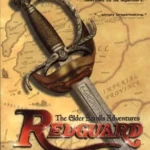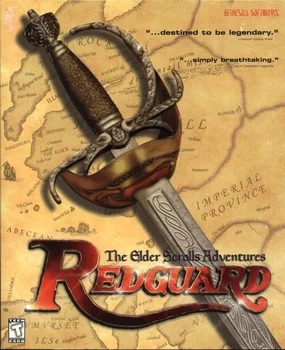
The Elder Scrolls Adventures: Redguard
 PC
PC Bethesda Softworks

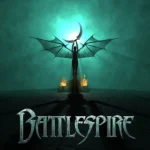
The Elder Scrolls Adventures: Redguard is a 1998 action-adventure game developed and published by Bethesda Softworks for MS-DOS, released on October 31, 1998. It is the second and final spin-off in The Elder Scrolls franchise’s experimental mid-period — following Battlespire (1997) and preceding The Elder Scrolls III: Morrowind (2002) — and the first Elder Scrolls game directed by Todd Howard.
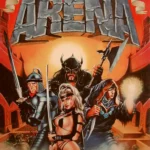
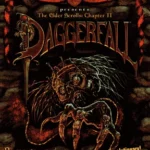
Unlike Arena, Daggerfall, or any subsequent mainline entry, Redguard is not a role-playing game. It is a fixed-protagonist, third-person action-adventure with a named hero, a linear story, and no character creation. It is set roughly 400 years before Arena, during the Tiber Wars — the period when the future first Emperor was still in the process of conquering Tamriel — and it is the most historically grounded Elder Scrolls title ever made.
Technical Specifications
| Attribute | Details |
|---|---|
| Developer | Bethesda Softworks |
| Publisher | Bethesda Softworks |
| Director | Todd Howard |
| Designers / Writers | Todd Howard, Michael Kirkbride, Kurt Kuhlmann |
| Composers | Chip Ellinghaus, Grant Slawson |
| Engine | XnGine (heavily modified for third-person) |
| Platform | MS-DOS |
| Release Date | NA: Oct 31, 1998 · EU: Mar 26, 1999 |
| Genre | Action-adventure |
| Mode | Single-player |
2E 864: The Tiber Wars and Stros M’Kai
The game is set in 2E 864 — the Second Era, year 864 — approximately 400 years before the events of Arena and the rest of the numbered series. Tiber Septim, the man who would found the Third Empire and eventually be deified as a god, is mid-campaign: he has just conquered Hammerfell, the homeland of the Redguard people.
The conquest was not a clean one. Hammerfell’s political factions — the Crowns, traditionalist Redguard aristocracy loyal to their own king, and the Forebears, Redguards who accepted Imperial integration — had been fighting a civil war. Tiber Septim sided with the Forebears and crushed the Crowns at the Battle of Hunding Bay, where Crown Prince A’tor was struck down by a poisoned arrow fired by a Dunmer assassin named Dram. In the aftermath, Septim installed his Admiral Lord Richton as Provisional Governor of Stros M’Kai, the ancestral island seat of the Crowns. Richton’s governance has not been kind.
Into this enters Cyrus: a Redguard mercenary who exiled himself from Hammerfell a decade earlier after killing his sister’s husband, and who cannot bring himself to return even as Hammerfell falls under occupation. He receives word that his sister Iszara has gone missing on Stros M’Kai, and that is the reason he finally goes back. What he finds on the island involves the Restless League (a Redguard pirate resistance), a Sload necromancer named N’Gasta who has struck a bargain with the Daedric Prince Clavicus Vile, and a dragon named Nafaalilargus serving the Empire — a creature whose appearance would be quietly retconned into the Skyrim-era dragon framework decades later under the name Nahfahlaar.
Cyrus: The Only Named Elder Scrolls Protagonist
Cyrus is, to date, the only protagonist in the Elder Scrolls franchise with a name, a fixed identity, and a voice. From Morrowind through Skyrim and beyond, the player character is a blank slate the player authors; Cyrus is someone Bethesda wrote.
He is voiced by Michael Mack, who brings the character a quality of weary, wry self-awareness — a man who knows exactly what kind of person he is, doesn’t always approve, and is going to do what he does anyway. Mack’s performance was widely praised even in reviews that were otherwise ambivalent about the game, and the voice work was notable enough that Bethesda brought him back to voice all male Redguard NPCs in Morrowind and Oblivion, giving Cyrus’s cadence a quiet persistence across the franchise. UESP has noted that Cyrus remains the only fully voiced TES protagonist in the series’ history — the player character in Oblivion and Skyrim speaks, but never in a way that establishes personal identity.
Todd Howard described Cyrus’s backstory in a 1998 interview: the killing of his brother-in-law was not something Cyrus regrets in itself — the man “had it coming” — but he deeply regrets having run rather than facing the consequences. Redguard takes place ten years after that departure.
Action-Adventure, Not an RPG
The design brief for Redguard was explicit: it was built with Tomb Raider, Prince of Persia, and the Ultima series as models, not Daggerfall. There is no character creation, no attribute allocation, no inventory management of the kind the mainline series required. Cyrus has a fixed skill set centred on swordfighting — the game’s combat is entirely real-time melee — and players progress through Stros M’Kai by exploring its town and dungeons, collecting items to solve puzzles, and navigating dialogue with NPCs through keyword selection.
The island itself is small enough to be handcrafted in detail, which was the deliberate trade: where Daggerfall had procedurally generated thousands of dungeons spread across a continent, Redguard had one meticulously built environment. The XnGine was modified substantially from Battlespire‘s implementation to handle a full third-person perspective and real-time outdoor navigation, making it more comparable to the action-adventure engines of its contemporaries than to the first-person dungeon crawler it was derived from.
Critics recognised this as competent. They were divided on whether an Elder Scrolls game should be doing it.
Todd Howard and Michael Kirkbride
Redguard was Todd Howard‘s first directorial credit at Bethesda. Howard had joined the company in 1994 as a producer and worked increasingly prominent roles on subsequent projects; Redguard was where he first held the project director role. From Morrowind forward, he would direct every mainline Elder Scrolls title. The interview Bethesda gave in 1998 positioning Redguard within the larger history of Tamriel — and specifically its relationship to Morrowind, then already in development — is readable today as an early articulation of the world-building priorities Howard would carry into the next decade.
Michael Kirkbride, who co-designed and co-wrote the game alongside Howard and Kurt Kuhlmann, has become a near-mythological figure in the Elder Scrolls community. His contributions to the franchise’s more esoteric, philosophically dense lore — particularly in Morrowind — are extensive, and much of what the community considers the deepest layer of TES mythology traces back to his writing. His involvement in Redguard, and specifically in the writing team that produced the game’s first major lore document (described below), placed him at the foundation of what the series would become.
A Pocket Guide to the Empire
Early copies of Redguard shipped with a comic book depicting the events leading up to the game’s opening. More significantly, the game’s manual included A Pocket Guide to the Empire — the first major world-building sourcebook for the Elder Scrolls franchise, written by Howard, Kirkbride, and Kuhlmann, which established the peoples, places, political structures, and governing themes of Tamriel as a coherent whole.
The Pocket Guide laid down the foundations that Morrowind, Oblivion, and Skyrim would build on: the racial geography of the continent, the Imperial political system, the structure of the Mages Guild and Fighters Guild, and the high-level historical framing of events like the Tiber Wars that Redguard depicts. It has since been updated and expanded in subsequent editions for later games. The version bundled with Redguard in 1998 was the first document to treat Tamriel as a complete world rather than a backdrop.
Lore Legacy
Redguard‘s influence on the franchise’s canonical history is disproportionate to its commercial footprint. The political division between Crowns and Forebears — Redguard factions whose enmity the game dramatises — appears throughout later TES media and is central to Hammerfell’s characterisation in Skyrim‘s political context (the Redguard refusal to sign the White-Gold Concordat is directly rooted in the independence the Crowns eventually won). Stros M’Kai itself appears as a major location in The Elder Scrolls Online (2014), set earlier in the timeline, with the island’s geography and history informed by Redguard‘s depiction. Cyrus is referenced in in-game books across the series.
The game was also the first extended canonical treatment of Tiber Septim as a figure — a conqueror in motion rather than a historical god — and the first to dramatise what the founding of the Empire actually looked like from the perspective of those being annexed.
The Skirt Mystery
A PC Gamer article published in 2026 — under the headline “Almost 28 years later, the mystery of what’s under women’s skirts in Elder Scrolls spin-off Redguard has finally been solved” — brought the game brief renewed attention by documenting a technical curiosity: the 3D models of female NPCs in Redguard have no lower-body geometry beneath their skirts, a performance and engine limitation that went unexamined in any public discussion for nearly three decades. The article is the kind of gaming archaeology piece that surfaces periodically for games at the edge of mainstream memory, and it briefly made Redguard visible to audiences who had never heard of it.
Reception and Where to Play
Redguard received warmer reviews than Battlespire — IGN gave it 7.0, GameSpot 7.4, and IMDB users give it 7.6 — with critics generally appreciating the story, voice acting, and lore ambition while noting the departure from the RPG format as a limitation for existing Elder Scrolls fans. Like Battlespire, it underperformed commercially, and both spin-offs’ failures contributed to Bethesda’s decision to consolidate resources around the numbered mainline series. Neither title was included in The Elder Scrolls Anthology boxed collection in 2013.
The game is available on Steam, GOG, and the Xbox store. The original MS-DOS version is freely accessible at Archive.org. There is an active speedrunning community at speedrun.com, and a small modding presence at Nexus Mods, making Redguard somewhat more actively maintained at the community level than its obscurity might suggest.