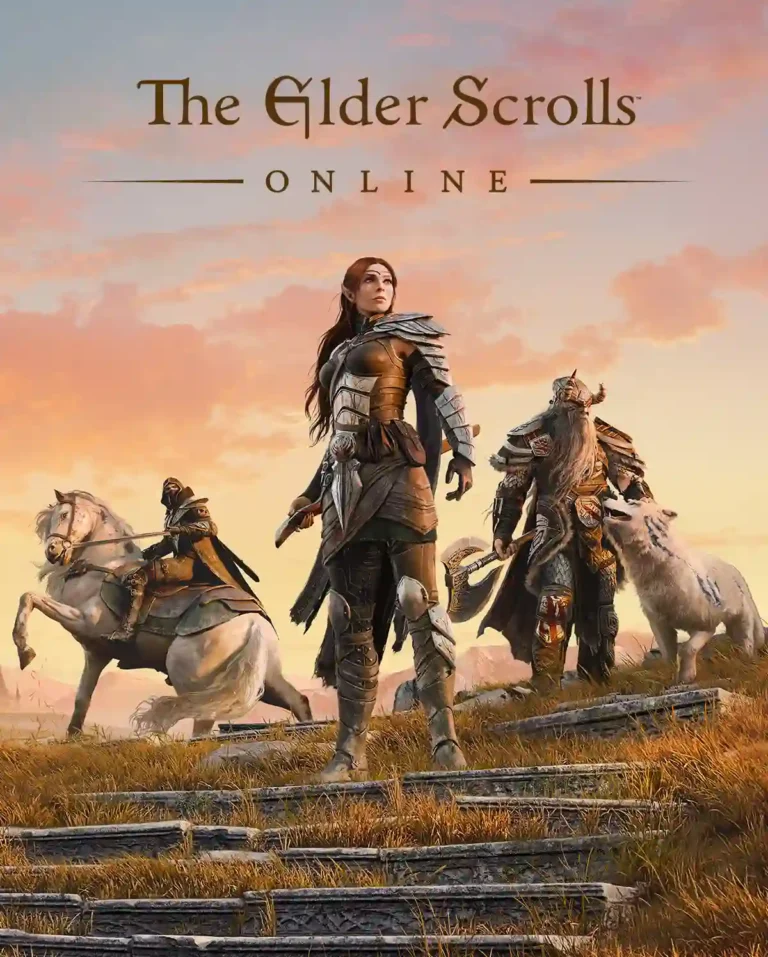
The Elder Scrolls Online
 71
★ /10
71
★ /10
 PC,
PC,  PS4,
PS4,  PS5,
PS5,  Xbox One,
  Xbox Series X/S
 Bethesda Softworks,
  Xbox Game Studios
Where to buy



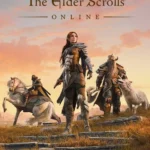
The Elder Scrolls Online (ESO) is a massively multiplayer online role-playing game developed by ZeniMax Online Studios and published by Bethesda Softworks, originally released for PC and Mac on April 4, 2014, with console versions following in June 2015 and current-generation updates in June 2021. It is the only MMORPG in The Elder Scrolls franchise, and one of the most commercially successful in the genre’s history.
As of April 2025, the game has accumulated 26 million registered players and over $2 billion in lifetime revenue since launch. It has been in continuous development for twelve years and receives content updates on a regular cadence. The question of whether the base game is worth playing is one of the most-searched queries about the title, and the answer is more complicated than for most games in the series.
Technical Specifications
| Attribute | Details |
|---|---|
| Developer | ZeniMax Online Studios |
| Publisher | Bethesda Softworks / Xbox Game Studios |
| Director | Matt Firor |
| Composer | Brad Derrick |
| Engine | Hero Engine (heavily modified) |
| Platform(s) | Windows · macOS · PlayStation 4 · Xbox One · PlayStation 5 · Xbox Series X/S |
| Launch | PC/Mac: April 4, 2014 · Console: June 9, 2015 · Current-gen: June 15, 2021 |
| Genre | MMORPG |
| Mode | Online multiplayer (can be played solo) |
Second Era Tamriel: Setting and Story
The Elder Scrolls Online is set approximately 1,000 years before The Elder Scrolls V: Skyrim — in the Second Era, around 2E 583 — during a period of political fragmentation across Tamriel. Three factions vie for control of the Imperial throne: the Aldmeri Dominion (High Elves, Wood Elves, Khajiit), the Daggerfall Covenant (Bretons, Redguards, Orcs), and the Ebonheart Pact (Nords, Dark Elves, Argonians). Into this three-way conflict, the Daedric Prince Molag Bal is attempting to drag all of Tamriel into his realm of Coldharbour through a process called the Planemeld — and has already succeeded in stealing the player character’s soul at the game’s opening.
The main questline, shared across all factions, follows the Vestige (the player character, a mortal stripped of their soul and therefore able to be killed and resurrected) in an attempt to stop the Planemeld and reclaim what Molag Bal has taken. The faction storylines — each covering a different region of Tamriel — run in parallel, providing tens of hours of additional narrative for each alliance the player aligns with.
The setting is recognisably the same Tamriel as the mainline games but at a significantly earlier historical moment: Vvardenfell is here, but Tribunal hasn’t happened. The Blade of Alinor already exists. Stros M’Kai — the island from Redguard — is a starter zone. Figures who appear as long-dead historical footnotes in Skyrim are alive and playable characters.
An MMO in the Elder Scrolls Universe
ESO is the closest Elder Scrolls has come to producing a traditional MMORPG, with everything that implies — persistent shared world, server-based play, character progression, crafting, guilds, group dungeons, and large-scale player-versus-player combat — but it deliberately departed from MMO conventions in several ways that matter to players coming from the single-player franchise.
Combat is action-based, not tab-targeting. Attacks land in real time, blocking requires a button press, and dodging is a mechanic with stamina implications. It plays closer to Skyrim‘s combat feel than to World of Warcraft‘s, though it has its own distinct identity: six hotbar slots (five active abilities plus an ultimate), two swappable weapon sets each with their own ability line, and light-attack weaving as an intentional high-skill expression of the system. Characters build toward specific archetypes through their class choice, weapon skills, armor type, and a Guild skill-line system that adds layers across all builds.
Most content in the game is fully voiced. The original launch involved a production described at the time as one of the largest voice acting projects in gaming history, featuring Michael Gambon, Kate Beckinsale, Bill Nighy, Alfred Molina, Lynda Carter, Malcolm McDowell, and dozens of other professional actors across thousands of NPCs. Subsequent chapters maintained this approach, adding John Cleese as Sheogorath in Summerset and continuing to cast notable talent throughout the game’s run.
The Subscription Controversy and the B2P Pivot
ESO launched as a subscription-based MMO at $14.99 per month, directly competing with World of Warcraft at its peak influence. It received a mixed-to-negative initial reception: critics noted that the action combat felt more compelling than most MMOs, but also that performance was inconsistent, quest design was uneven, and the game lacked the features players expected from a 2014 MMORPG. Within months of launch, the player base had declined significantly from its peak of approximately 1.2 million subscribers.
On March 17, 2015, ZeniMax dropped the monthly subscription requirement and renamed the game The Elder Scrolls Online: Tamriel Unlimited. The base game became buy-to-play: purchase it once, no ongoing fee required. An optional premium subscription — ESO Plus — was introduced at $15/month, providing access to most existing and future DLC content, a monthly currency stipend, and critically, access to the Crafting Bag (unlimited storage for crafting materials, which becomes functionally essential in the late game).
This was the decision that saved the game. Player numbers recovered, the community stabilised, and the foundation was laid for a sustained run of expansions.
One Tamriel: The Update That Defined Modern ESO
The second transformative moment came in October 2016 with the One Tamriel update. Before this patch, ESO worked like a traditional MMO: your faction and level determined where you could go and what content you could do, locking new players into specific zones and requiring progression before they could access others. One Tamriel removed these restrictions entirely.
Under One Tamriel, all zones and all content automatically scale to the player’s level. A new player can go anywhere on the map from their first session. Two players of any level can adventure together regardless of their respective progression. Alliance restrictions on exploration were lifted — you could visit enemy faction territory without waiting for endgame. The update redefined ESO as a game where the world is open from the beginning rather than gated by progression, which is functionally unusual for the genre and particularly suited to players arriving from the solo Elder Scrolls tradition.
What’s In the Base Game
The base game covers the content available at original launch and in the years of free updates since: the main storyline across all three alliance zones and the main Coldharbour questline, the Alliance War PvP system in Cyrodiil (a large open zone based on the province from Oblivion), four starting character classes (Dragonknight, Nightblade, Sorcerer, Templar), ten playable races, the base crafting systems for blacksmithing, clothing, woodworking, alchemy, enchanting, and provisioning, and access to public dungeons, group dungeons, world bosses, and daily quests across all base zones.
The base game represents somewhere between 300 and 500 hours of content for a player engaging with most of it, depending on pace and how much crafting, exploration, and repeatable PvP content they pursue. It is the foundation on top of which all expansions and chapters are added; the base game is never “completed” in the mainline Elder Scrolls sense, because the world continues receiving updates, events, and new story content indefinitely.
Expansions, Chapters, and ESO Plus
ESO‘s content model has three tiers. Chapters are the major annual expansions (sold separately, each adding a new zone and often a new class): Morrowind (2017), Summerset (2018), Elsweyr (2019), Greymoor (2020), Blackwood (2021), High Isle (2022), Necrom (2023), and Gold Road (2024). Each chapter is typically priced around $40 at launch. DLC packs are smaller content additions released between chapters, unlockable via ESO Plus or purchased individually. Free updates apply to all players regardless of subscription status and include system overhauls, quality-of-life improvements, and game-wide balance changes.
ESO Plus subscribers receive access to most DLC content (everything except the latest chapter), a monthly stipend of 1,650 Crowns (the in-game premium currency), and the Crafting Bag — the storage system that serious players consider nearly mandatory. ESO Plus does not include the most recent chapter at any given time; new chapters transition into the ESO Plus library when the next chapter releases.
The 2026 Season Model
Beginning with Season Zero: Dawn and Dusk on April 2, 2026, ZeniMax restructured how content is delivered. The annual chapter system was replaced with a seasonal model: core seasonal content is now free for all players, while a new battle pass system called Tomes of Tamriel offers optional premium rewards tracks (similar to Fortnite or Call of Duty‘s seasonal passes). A new cosmetic shop, the Gold Coast Bazaar, was introduced alongside it. All content now launches simultaneously on PC and consoles, addressing a longtime complaint that console players received updates weeks after PC.
Player Numbers and Current State
As of June 2026, ESO has approximately 26 million registered accounts across its twelve-year run. Concurrent player estimates for the current period show around 140,000 active players across all platforms, with Steam-specific concurrent peaks between 9,000 and 14,000. Monthly revenue is estimated at approximately $15 million, and the game’s lifetime earnings exceed $2 billion.
The SERP landscape reflects sustained engagement: the game’s official site draws the highest organic search traffic of any Elder Scrolls property, and the subreddit r/elderscrollsonline is one of the most active MMO communities. The question “is ESO worth playing” — or variants of it — appears in multiple high-traffic Reddit threads, reflecting an ongoing stream of new players evaluating whether to start rather than a settled consensus from a static community.
Is the Base Game Worth Playing in 2026?
The honest answer depends on what the player is looking for. If the question is is there enough content in the base game alone to justify the current price — which is frequently under $10 and routinely made free — the answer is yes, by a significant margin. The base game offers a complete, massive open world with hundreds of hours of voiced questlines, combat that functions differently from any other MMORPG, and a PvP zone (Cyrodiil) unlike anything in the mainline franchise.
The caveat is that the game’s best version of itself — the version with all zones accessible, all chapter content available, and the Crafting Bag unlocked — requires either years of accumulated purchases or an active ESO Plus subscription. New players start with a game that is already very large; what ESO Plus and the chapters add is more of that same world, not access to content the base game promises and withholds.