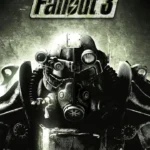
Fallout 3
 93
★ /10
93
★ /10
 PC
PC PS 3
PS 3 Xbox 360
 1C-SoftClub
 Bethesda Softworks


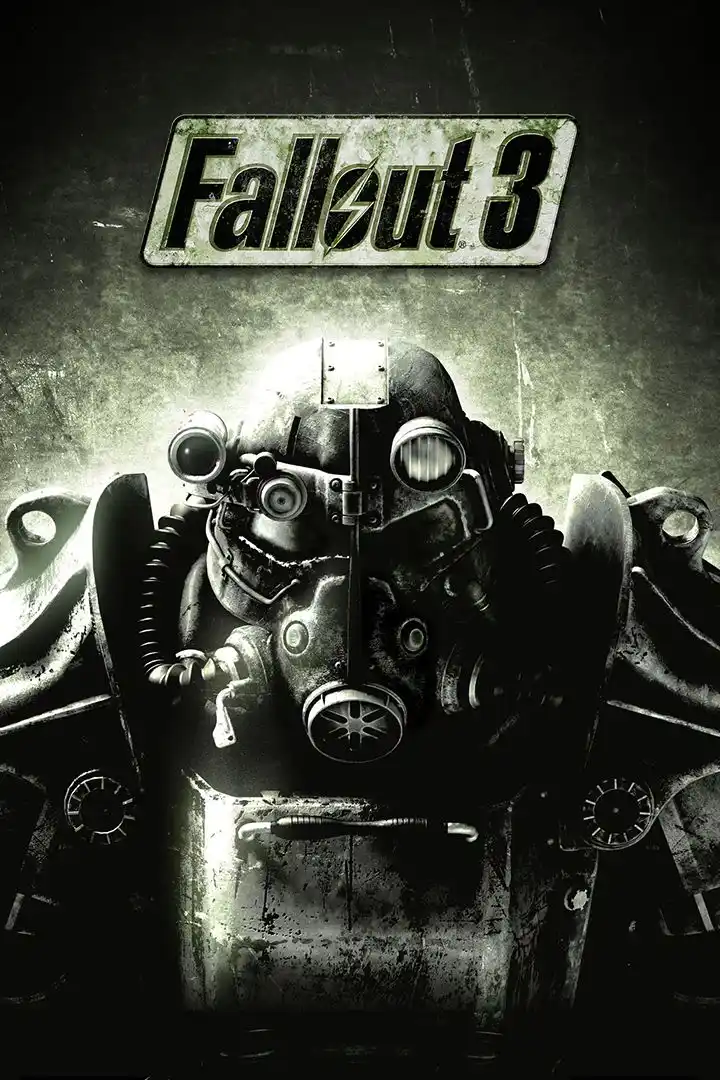
Fallout 3 is a 2008 action role-playing game developed by Bethesda Game Studios and published by Bethesda Softworks. Released for PC, PlayStation 3, and Xbox 360 on October 28, 2008, it is the first Fallout game produced by Bethesda following their acquisition of the franchise from Interplay in 2004, and the first entry in the series to abandon the isometric turn-based format of Fallout (1997) and Fallout 2 (1998) in favour of a real-time first-person and third-person perspective.
The game received Metacritic scores of 91 on PC, 93 on Xbox 360, and 90 on PS3. It introduced the Fallout franchise to a mainstream console audience of tens of millions and established the visual and tonal vocabulary that the series has used in every subsequent Bethesda-developed entry. It is also, depending on which part of the community is speaking, either the best Fallout game or one of the most disappointing entries in a franchise it fundamentally changed. The Reddit thread “Fallout 3 is the best Fallout, change my mind” currently sits in the Knowledge Panel for this game’s search with over 6,500 monthly visitors.
Technical Specifications
| Attribute | Details |
|---|---|
| Developer | Bethesda Game Studios |
| Publisher | Bethesda Softworks |
| Director | Todd Howard |
| Lead Writer | Emil Pagliarulo |
| Composer | Inon Zur |
| Engine | Gamebryo |
| Platform(s) | PC · PlayStation 3 · Xbox 360 |
| Release Date | October 28, 2008 (NA) |
| Genre | Action RPG, Open world |
| Mode | Single-player |
The Capital Wasteland
Fallout 3 takes place in the Capital Wasteland — the bombed-out remains of Washington D.C. and its surrounding Maryland and Virginia suburbs, two hundred years after the nuclear war. The National Mall is a dead zone of irradiated craters. The Lincoln Memorial is occupied by escaped slaves. The Washington Monument serves as a radio relay. The Jefferson Memorial is the site of the game’s central conflict. The ruined monuments of American democracy, repurposed or abandoned by the people trying to survive within their shadows, give the setting an immediate visual identity that distinguishes it from the California wastelands of the original games.
The atmosphere the game constructs is anchored in a specific aesthetic: nuclear-era 1950s Americana rendered in post-apocalyptic decay. The pre-war advertisements, the Nuka-Cola machines, the Pip-Boy interface, the architecture of the vaults — all draw from a retrofuturist vision of what America imagined the future would look like in 1955, now collapsed into ash. The dissonance between the cheerful corporate imagery and the devastation surrounding it was always part of Fallout‘s design language; Fallout 3 extended it into a fully three-dimensional world for the first time and committed to it with complete tonal conviction.
Vault 101 and the Lone Wanderer
The game opens inside Vault 101, a sealed underground shelter that has been the player character’s entire world since birth — one of the game’s most effective structural decisions. The tutorial presents itself as the Lone Wanderer’s life: birth, toddlerhood, adolescence, the GOAT examination at age sixteen, a nineteenth birthday, and then the event that drives the entire game. The father — James, voiced by Liam Neeson — has escaped the vault. The player follows, encountering a wasteland for the first time alongside their character.
James is a scientist pursuing Project Purity, an attempt to purify the Potomac River and provide clean drinking water to the wasteland. The Enclave — the remnants of the pre-war U.S. federal government, now operating as a fascist military force — wants Project Purity for their own purposes. The main quest runs from the Lone Wanderer’s search for their father through the resolution of the Purity conflict, with the game offering a final sacrifice choice whose moral weight the original ending handled poorly (it required the player to die in a situation where their radiation-immune companions could have performed the same action without consequence — a widely criticised plot hole that the Broken Steel DLC retroactively fixed by extending the game and making survival possible).
Galaxy News Radio and the Atmosphere
Galaxy News Radio broadcasts across the Capital Wasteland, delivered by Three Dog — a DJ who plays pre-war music, reports on Enclave activity, and tracks the Lone Wanderer’s progress through the wasteland. The station’s playlist of 1940s and 1950s songs — “Butcher Pete,” “I Don’t Want to Set the World on Fire,” “Anything Goes” — creates the tonal dissonance the game lives in: cheerful pop music underscoring radiation, scarcity, and survival.
Three Dog became the game’s most recognisable supporting character and one of the most-cited elements when players describe their emotional memory of the game. The radio functions as an ambient world-building device — the music is both period-appropriate in-universe and deeply inappropriate against what’s onscreen — and its persistence across the entire game gives the playthrough a sonic continuity that replacement or silence would lack.
VATS
The Vault-Tec Assisted Targeting System (VATS) pauses combat, displays each available target’s body parts with percentage hit chances, allows the player to queue up a series of targeted attacks using Action Points (AP), and then plays out all queued actions in a cinematic sequence showing hits, misses, and critical effects with slowed or frozen presentation. It is the combat system most associated with Bethesda’s Fallout games and persists across Fallout 4 and Fallout 76.
VATS was designed to bridge the gap between the turn-based tactical combat of the original isometric Fallout games and the real-time gunplay that a first-person 3D game requires. Players accustomed to tactical approaches could queue shots methodically; players who preferred reactive shooting could ignore VATS entirely. The system’s slow-motion body part targeting — and the resulting explosive critical hits — became the game’s most-shared gameplay clip type and one of the most imitated mechanical ideas in the genre.
The DLCs
Five expansions were released for Fallout 3, all included in the Game of the Year Edition (the current standard version on most storefronts):
Operation: Anchorage is a simulation of the pre-war Battle of Anchorage, Alaska — a World War II-style combat sequence accessed through virtual reality hardware, focused on action over exploration. It is the most linear and the least representative of the base game’s design.
The Pitt takes the Lone Wanderer to the ruins of Pittsburgh, now an industrial slaver city powered by steel mills and populated with feral ghouls and a morally complex slave uprising. It is the DLC most praised for its writing and its willingness to present a genuine moral dilemma with no clear answer.
Broken Steel is the DLC that most directly affects the base game, raising the level cap from 20 to 30, extending the main story past what was originally the forced ending, and adding the Enclave’s continued operations as post-game content. It also retroactively changes the ending to allow the Lone Wanderer to survive.
Point Lookout opens a Maryland bayou region with a distinct gothic-horror atmosphere, the most visually distinctive of the expansions and the one most often cited as the DLC equivalent of FO3’s atmosphere at its best.
Mothership Zeta takes the Lone Wanderer onto an alien spacecraft. It is the most polarising expansion and the one most often criticised for feeling tonally inconsistent with the rest of the game — though it was also, at the time, novel.
PC Compatibility
Fallout 3 is famously difficult to run on modern Windows systems without modification. The game was built for Windows XP and uses the Games for Windows Live service that has since been discontinued. Running it on Windows 10 or 11 requires a series of compatibility adjustments and community-produced fixes: the 4GB Patch to address memory limitations, the Games for Windows Live removal or bypass, and configuration changes documented comprehensively on PCGamingWiki. The system requirements page on systemrequirementslab.com appears in the Things to Know block for this game’s searches, reflecting ongoing demand for technical guidance.
The Steam Game of the Year Edition is the most accessible current version, with community guides available for the compatibility process. Players without patience for the setup process may find the Xbox backward-compatible version more straightforward.
Fallout 3 in the Franchise Debate
Fallout 3 occupies a specific position in the Fallout community that differs from any other entry. For players whose first Fallout was this game — a category that includes millions of people who came of age in the late 2000s — it is the definitional Fallout experience: the Capital Wasteland, Three Dog, the vaults, the Pip-Boy. For players of the original isometric games, it represented a fundamental redesign toward accessibility at the cost of the series’ tactical depth and narrative complexity.
This split is real and unresolved. The Yahoo article at position #20 in the game’s current search results is titled “Fallout 3 Is Objectively the 5th Best Fallout Game” — meaning it ranks behind Fallout 1, Fallout 2, New Vegas, and at least one other entry. The Reddit thread at the Knowledge Panel position argues the opposite with equal conviction. The r/patientgamers 15th anniversary review, posted in October 2023, reflects a third position: coming to the game late, without prior series investment, and evaluating it on its own terms.
The honest position is that both assessments are accurate in different dimensions. Fallout 3 is a weaker RPG than Fallout: New Vegas by almost any design metric — fewer faction consequences, simpler moral choices, less dialogue depth. It is a stronger first-time experience of a post-apocalyptic open world: atmospheric, visually coherent, and built around discovery in a way that delivers immediate satisfaction without requiring deep engagement with its systems. Which of those things matters more depends on what the player was looking for.
Reception
Fallout 3 received a Metacritic score of 93 on Xbox 360 — the platform it was most actively reviewed on at launch — placing it among the highest-rated games of 2008. Critics praised the atmosphere, the Capital Wasteland setting, the VATS system, and the sense of freedom in an open nuclear wasteland. Criticisms at the time focused on the original ending (pre-Broken Steel), occasional quest design, and the relative simplicity of the choice mechanics compared to the Fallout 1 and 2 legacy.
The Fallout television series on Amazon Prime Video (first season April 2024, second season in production) set against the backdrop of Bethesda’s canonical Fallout universe has returned substantial renewed interest to the franchise, and Fallout 3 specifically benefits from being the entry most thematically aligned with what the show presents: a bombed-out American landscape reconstructed through the lens of pre-war corporate culture, with the Enclave, the Brotherhood of Steel, and the Super Mutant Behemoths that the show drew on for its design vocabulary.