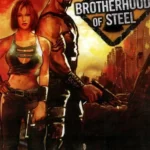
Fallout Tactics: Brotherhood of Steel
 82
★ /10
82
★ /10
 PC
PC
 1C-SoftClub,
  Interplay Entertainment



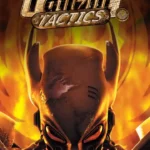
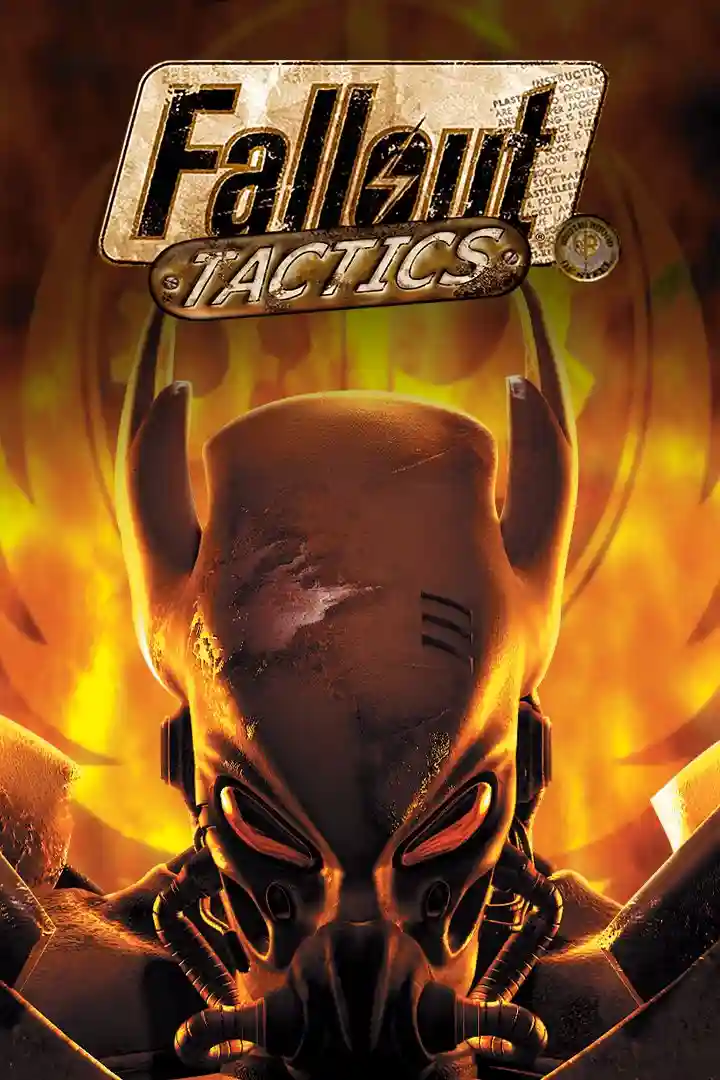
Fallout Tactics: Brotherhood of Steel is a 2001 tactical role-playing game developed by Micro Forté (an Australian studio) and published by Interplay Entertainment in North America and 14 Degrees East in Europe. Released for PC on March 15, 2001, it is the third game set in the Fallout universe and the first to depart entirely from the mainline series’ structure — abandoning open-world exploration, NPC dialogue, and story-driven role-playing in favour of a tactical combat game built around squad management and mission-based structure.
It holds a Metacritic score of 82, sold over 300,000 copies, and is available on Steam, GOG, and Epic. Its narrator is Ron Perlman. Its primary antagonist is voiced by R. Lee Ermey.
Technical Specifications
| Attribute | Details |
|---|---|
| Developer | Micro Forté |
| Publisher | Interplay Entertainment (NA) · 14 Degrees East (EU) |
| Producer | Tony Oakden |
| Designer | Ed Orman |
| Composer | Inon Zur |
| Platform | Microsoft Windows |
| Release Date | NA: March 15, 2001 · EU: March 30, 2001 |
| Genre | Tactical RPG |
| Mode(s) | Single-player · Multiplayer (LAN/IP, up to 18 players) |
| Availability | Steam · GOG · Epic Games Store |
How It Got Made
Micro Forté, a small Australian studio, was building an isometric game engine for an unrelated project when 14 Degrees East brought them to Interplay’s attention. Interplay saw the engine demo, didn’t particularly want the original game, but thought the engine would work for a Fallout spin-off. Contracts were signed and development began.
The night before the formal meeting to finalise the project, Micro Forté’s head John DeMargheriti played Fallout 1 for the first time and realised how violent it was — which he had not anticipated. He considered pulling out. The meeting went ahead regardless. As a practical consequence of that discovery, children were removed from the game entirely (a meaningful departure from Fallout 1 and 2, where children were present and killable). The game launched with a batch of corrupt disc pressings that made physical copies unplayable without downloading an 85MB patch.
The Midwest Brotherhood: Setting and Context
Fallout Tactics takes place in 2197, between the events of Fallout (2161) and Fallout 2 (2241), in the American Midwest — a region the mainline games had never explored. The setting is called The Belt, covering the ruins of Chicago and the surrounding plains, extending through Kansas and into Colorado.
The Brotherhood of Steel chapter in the Midwest is distinct from the California-based Brotherhood of Fallout 1 and 2. This chapter split from the main Brotherhood and moved east, partly to escape the California order’s increasingly rigid hierarchy and partly to pursue Super Mutants from The Master’s army who had fled after his defeat in Fallout 1. The Midwest Brotherhood is more willing to recruit outsiders and integrate non-standard soldiers into its ranks than its Californian counterpart — a flexibility the game makes mechanically meaningful.
Ron Perlman narrates the opening, as he does in every mainline Fallout game: “War. War never changes.”
Tactical Combat: Two Modes, One Squad
The game’s combat is built around a squad of up to six members. Unlike Fallout 1 and 2‘s individual character focus, Fallout Tactics is a squad tactical game — the player manages each member’s positioning, actions, and development simultaneously. Each member has their own SPECIAL stats, skills, and perks inherited from the mainline system, meaning character-building remains present even though it operates in service of tactical composition rather than dialogue choices.
Two combat styles are available and switchable between missions:
Turn-Based (TB) operates identically to the combat in Fallout 1 and 2 — each character acts in initiative order, spending Action Points on movement, attacks, and special actions. It is the slowest and most methodical mode and the one that most directly references the original games’ feel.
Continuous Turn-Based (CTB) is a hybrid — real-time movement with pausing for actions — closer to XCOM or Jagged Alliance than the classic Fallout AP system. It was designed to make the game more accessible and faster to play. The in-house assessment was that including both modes “cost us a substantial amount of QA time,” and the lead developer has said in retrospect that choosing one and committing would have been better.
Unusual Squad Composition
One of Fallout Tactics‘ most distinctive features is the range of entities that can join the Brotherhood squad. Beyond human characters, the Midwest Brotherhood’s less doctrinaire recruitment policies allow the player to enlist:
Ghouls, Super Mutants, Deathclaws, and Robots — each with their own stat profiles and movement speeds, each occupying a role in tactical compositions that human characters cannot fill in the same way. A squad with a Deathclaw member plays fundamentally differently from an all-human one; a robot squad member requires maintenance rather than medical treatment. The recruitment of these types was unusual for the franchise and represents the game’s most celebrated mechanical addition.
Vehicles
Fallout Tactics introduced vehicles to the franchise — a feature that would not appear again in any mainline game until Elden Ring‘s horseback traversal analogy in the broader open-world RPG genre. Humvees, motorcycles, and helicopters are available for certain missions, allowing the squad to move faster across large maps and carry heavier equipment. Vehicle management — fuel, condition, capacity — adds a logistical dimension to mission preparation absent from the rest of the series.
The Calculator
The game’s central antagonist is the Calculator, an entity created when a catastrophic experiment in Vault Zero (in Colorado) fused computers with human brains, producing an intelligence that now controls an army of robots sweeping eastward across the Midwest. The Brotherhood must push through waves of this robot army to reach Vault Zero and destroy or confront the Calculator. Four different endings are available based on the player’s final choices — including destroying the Calculator, sending someone else into the Vault, or a third option tied to the player character’s karma level.
R. Lee Ermey — best known for Full Metal Jacket — voices General Barnaky, the Brotherhood’s senior commander, bringing an appropriate military intensity to a character who drives the Brotherhood’s increasingly desperate response to the robot advance.
What Tactics Kept, and What It Lost
Retained from the mainline games:
- The SPECIAL attribute system (Strength, Perception, Endurance, Charisma, Intelligence, Agility, Luck)
- Skills and perks, applied per squad member
- The post-nuclear aesthetic and the Fallout visual language
- Mark Morgan’s ambient influences (Inon Zur scored the game but in the same atmospheric style)
- Ron Perlman narrating
Absent compared to Fallout 1 and 2:
- Dialogue with NPCs — trading and gambling are available, but the speech skill serves no function. The player cannot talk their way through any situation.
- Open-world exploration — the game is mission-based, accessed through a world map rather than freely traversable
- Story-driven consequence — choices exist, but they have less cascading effect on the world than the mainline games
- Companion depth — squad members have stats and can die, but no personal questlines or relationship development
The game was described at the time by its own development team as “essentially the combat portion of the original Fallout series, with a new campaign and graphical polish.” This is an accurate self-assessment.
Canon Status
Fallout Tactics occupies an ambiguous position in the franchise’s canon. The original Fallout creators — Tim Cain and Leonard Boyarsky — did not consider it canonical, citing lore inconsistencies with the mainline games (specifically involving mutants and certain technological elements that don’t align with how the mainline games established them). Bethesda’s early Fallout 3 development team shared this assessment.
The current official position is softer: Bethesda has neither confirmed nor denied canonical status in any formal statement since acquiring the rights. The Midwest Brotherhood of Steel is referenced in Fallout 76‘s Appalachian Brotherhood lore in ways that acknowledge the chapter’s existence, and some elements of Fallout Tactics‘ world-building have been incorporated into the franchise’s extended materials. The general community treatment is “semi-canonical” — the events probably happened, but details that conflict with mainline lore are disregarded.
Multiplayer
Fallout Tactics was the first game in the franchise to include a multiplayer component — a team vs. team tactical mode supporting up to 18 players over LAN or direct IP connection. The mode is functional and uses the same squad mechanics as the single-player game in a competitive context. It receives little coverage because online matchmaking infrastructure for it never existed in any commercial form, and LAN-based competition in 2001 was a niche activity even by the standards of the time.
Reception and Current State
Fallout Tactics received a Metacritic score of 82, with critics praising the tactical combat depth, the squad customisation, the unusual squad composition options, and the voice cast. Criticism focused on the absence of dialogue mechanics, the linear mission structure compared to the mainline games’ open worlds, and a narrative that was considered thin against Fallout‘s standard.
The game sold over 300,000 copies by 2008 — modest by franchise standards but sufficient to mark it as a functioning product. It is currently available on Steam, GOG, and Epic, priced under $10 and frequently discounted. Community patches address remaining bugs from the original release and are recommended for current playthroughs.