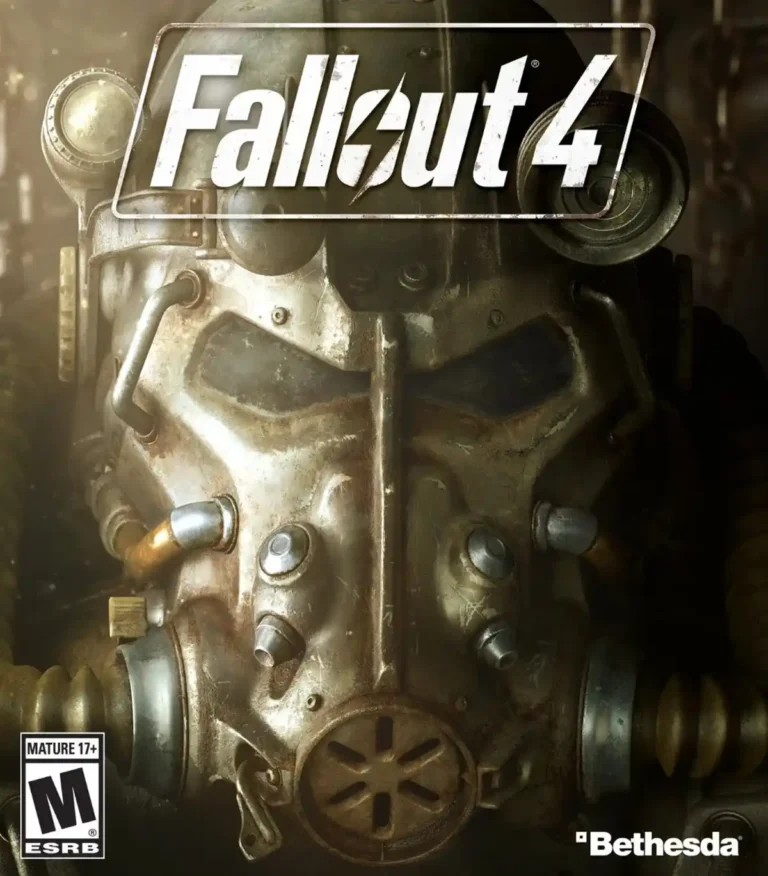
Fallout 4
 87
★ /10
87
★ /10
 PC,
PC,  PS4,
PS4,  PS5,
PS5,  Xbox One,
  Xbox Series X/S
 1C-SoftClub,
  Bethesda Softworks
Where to buy




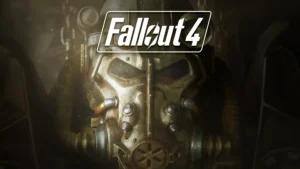
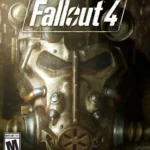
Fallout 4 is a 2015 action role-playing game developed by Bethesda Game Studios and published by Bethesda Softworks. Released for PC, PlayStation 4, and Xbox One on November 10, 2015, it is the fourth mainline entry developed by Bethesda and the first to use the Creation Engine — the same proprietary technology underlying The Elder Scrolls V: Skyrim (2011). A free current-generation upgrade for PS5 and Xbox Series X/S was released on April 25, 2024.
The game received Metacritic scores of 88 on PC and Xbox One and 87 on PS4. The People Also Ask result Google currently associates with it is an article titled “Fallout 4: A Controversial Game” — an accurate summary of how the game sits within the franchise’s community.
Technical Specifications
| Attribute | Details |
|---|---|
| Developer | Bethesda Game Studios |
| Publisher | Bethesda Softworks |
| Director | Todd Howard |
| Lead Writer | Emil Pagliarulo |
| Composer | Inon Zur |
| Engine | Creation Engine |
| Platform(s) | PC · PS4 · Xbox One (launch) · PS5 · Xbox Series X/S (April 25, 2024, free upgrade) |
| Release Date | November 10, 2015 (NA) |
| Genre | Action RPG, Open world |
| Mode(s) | Single-player (with Survival and DLC modes) |
The Commonwealth
Fallout 4 is set in the Commonwealth — the post-war remnants of greater Boston, Massachusetts — in 2287, ten years after the events of Fallout 3. Boston Common is a crater. Fenway Park is a fortified city called Diamond City. The wreckage of Paul Revere’s lantern hangs in a ruined Old North Church. The familiar Massachusetts geography becomes the game’s visual vocabulary, accessible to players who know the real landscape and entirely coherent to those who don’t.
The Commonwealth’s defining political conflict centres on Synths — synthetic humans produced by a secretive organisation called the Institute that operates from an underground facility of extraordinary technological advancement. Synths are indistinguishable from humans, can replace specific individuals without detection, and have flooded the wasteland’s political imagination with paranoia about identity and authenticity. The question of whether synths are people — whether they deserve protection, freedom, or destruction — is the Commonwealth’s moral axis.
The Sole Survivor and Shaun
The player character is the Sole Survivor, a pre-war resident of suburban Sanctuary Hills who was cryogenically frozen in Vault 111 on the day of the nuclear war. They wake up two hundred and ten years later, having watched their spouse murdered and their infant son Shaun kidnapped by men in vault suits, with no context for what happened or why.
Finding Shaun is the main quest. The answer the game provides — that Shaun grew up inside the Institute, became its director as an elderly man, and orchestrated the player character’s awakening for reasons that are not entirely benevolent — is the narrative choice most criticised in retrospective assessment. The revelation that the player’s child is now an old man who has lived a full life without them, and that the player has been operating in the world as an unwitting instrument of his plans, is either the game’s most emotionally effective moment or its most frustrating, depending on expectations going in.
What Changed: The Controversial Decisions
Fallout 4 made several design decisions that distinguish it from its predecessors and define the controversy the PAA result references:
The voiced protagonist was the most significant departure from all previous modern Fallout games. For the first time, the player character speaks — both a male voice (Brian T. Delaney) and female voice (Courtenay Taylor) are provided, with recorded dialogue for all conversation options. The decision was designed to create cinematic engagement with the story; the criticism was that it fundamentally changed what it meant to “play” a character in a Fallout game. When the player speaks, they speak as the Sole Survivor, not as a blank slate the player is projecting onto. For players who valued the series’ role-playing core, this made the protagonist feel more like a character in a story than a character they were building.
The dialogue wheel replaced full text dialogue options with a four-choice radial interface: an affirmative response, a negative response, an enthusiastic variant, and a sarcastic variant. In practice, many conversations presented functionally two or three distinct outcomes rather than the diverse branching the visual layout implied. The reduction in dialogue complexity from Fallout: New Vegas — where skill checks, faction reputation, and multiple specific response options could produce substantively different outcomes — to this system was the most-cited mechanical step backward in RPG terms.
The skill system was removed entirely. Fallout 3 and New Vegas both featured discrete skills (Lockpicking, Science, Speech, Small Guns) that governed what actions characters could perform. Fallout 4 replaces this with a purely perk-based system tied to SPECIAL attributes — each SPECIAL stat (Strength, Perception, Endurance, Charisma, Agility, Intelligence, Luck) has a column of perks unlocked at certain attribute levels. The system is more immediately legible and less demanding to engage with; it is also less mechanically distinctive between characters.
What Stayed: Combat and Power Armour
The aspects of Fallout 4 that drew the least controversy are its combat and its treatment of Power Armour.
Gunplay is the most responsive in any Bethesda open-world game to that point, with weapon handling, recoil, and aiming feeling meaningfully distinct from Fallout 3‘s floatier implementation. The weapons modification system — attaching barrels, grips, sights, stocks, and receivers crafted from salvaged components — provides a depth of personalisation that extends the interest of the game’s firearms well past their default configurations.
Power Armour was redesigned from its Fallout 3 treatment, where it functioned essentially as wearable clothing with better stats, to a system where the Sole Survivor physically enters a chassis — a mechanical suit that requires fusion cores to operate, limits sprinting and certain movements, and represents a resource investment rather than a simple equipment slot. The redesign made Power Armour feel like the extraordinary technology it is supposed to be, and the early game’s provision of a full set within the first hour became one of Fallout 4‘s most memorable opening sequences. Finding the Fusion Core-powered suit on Sanctuary Hills rooftop is the game’s first “yes, this is Fallout” moment.
Settlement Building
The construction of player-managed settlements across the Commonwealth was the game’s most divisive major addition. Players can demolish existing buildings, scrap materials, and construct structures, defences, power systems, and resource generators at thirty-plus settlement locations across the map. Attracting and equipping settlers — using radio beacons to draw wastelanders to the player’s built communities — and maintaining their happiness and supply lines provides a persistent management layer.
Players who engaged with settlement building reported dozens of additional hours of engagement and built some extraordinary constructions using the game’s component system. Players who came for the RPG experience found the system an intrusion that the game frequently interrupted the main story to push on them. The Minutemen faction questline, which functions as the game’s most direct engagement with settlements, became the faction associated with this polarisation — praised by players who loved the building, noted as repetitive by those who did not.
The Four Factions
Fallout 4‘s main faction choices are less ideologically differentiated than New Vegas‘s but more clearly defined than Fallout 3‘s:
The Institute is the most technologically advanced organisation in the post-war east, capable of creating Synths, teleportation technology, and biological engineering far beyond anything else in the wasteland. Its internal politics and its relationship to the surface world are the core of the main quest.
The Brotherhood of Steel returns from Fallout 3 under Elder Maxson — younger and more militaristic than the DC chapter, arriving in the Commonwealth aboard the Prydwen airship to acquire technology and eliminate what they consider abominations. They are the largest military force in the game.
The Railroad is a covert organisation dedicated to helping Synths escape the Institute and achieve freedom. Its ideology positions Synths as sentient beings deserving the same rights as humans.
The Minutemen are a local settler militia in collapse at the game’s opening, revived by the player as a Commonwealth defence force. They represent reconstruction without a specific ideological agenda beyond protection of settlements.
The main quest resolution requires either working with or destroying at least one faction, with no option available to reach the ending without conflict. The lack of a “everybody wins” path was noted as a weakness in comparison to New Vegas‘s more open-ended faction resolution.
The DLCs
The most significant paid content additions were:
Far Harbor (June 2016) is the expansion most consistently praised as the franchise’s best DLC. Set on a fog-shrouded island off the Maine coast, it follows the investigation of a synth colony’s conflict with the island’s human inhabitants and a Children of Atom religious group. The writing engages seriously with the question of synth identity, adds Nick Valentine’s backstory, and creates an atmosphere distinctly different from the Commonwealth’s. It is the primary reason to purchase the Season Pass.
Nuka-World (August 2016) provides the game’s largest expansion area — a Nuka-Cola branded theme park the size of Far Harbor, now controlled by raiders — with a storyline that for once allows and incentivises the player to make the wasteland worse rather than better. It is the game’s most permissive content in terms of anti-heroic options and the second-most praised DLC behind Far Harbor.
The four smaller DLCs (Automatron, Wasteland Workshop, Contraptions Workshop, Vault-Tec Workshop) add settlement components, a robot crafting system, and the ability to construct and populate a personal Vault. They are primarily aimed at players deeply invested in the settlement system.
The Fallout TV Show and the 2024 Surge
In April 2024, coinciding with the release of the Amazon Prime Video Fallout television series, Fallout 4 recorded a 7.5x increase in concurrent Steam players — reaching its highest player count since the original 2015 launch in the first week of the show’s availability. The series is set in Los Angeles, takes place in the same canonical timeline as the Bethesda games, and directly references the Institute and events connected to the Commonwealth’s political situation. The show was produced in collaboration with Bethesda and is treated as canon in the game universe.
The free PS5 and Xbox Series X/S upgrade, released the same week as the show’s premiere (April 25, 2024), improved resolution and performance on current-generation hardware. The combination of the show’s cultural reach and the hardware upgrade produced what was functionally a second launch for the game nine years after its original release.
Reception and the Controversy
Fallout 4‘s Metacritic scores of 87–88 were high by conventional standards and disappointing by franchise standards — the game had been anticipated to surpass Fallout 3‘s 91 and 93. Critics praised the combat, the Commonwealth setting, the Power Armour redesign, and Far Harbor. Critics noted the dialogue system reduction, the voiced protagonist’s constraints on role-playing, and the main story’s resolution.
The “controversial game” designation in the PAA is accurate in a specific sense: Fallout 4 is not controversial because it is bad. It is controversial because it is a very good open-world game that is a somewhat reduced RPG compared to its immediate predecessor — and because the Fallout community, activated by New Vegas‘s success, had specific expectations about what a Fallout game should be in terms of role-playing depth. The game delivered on the open world and atmosphere; it delivered less completely on faction complexity, dialogue breadth, and RPG mechanical depth.
r/fo4 draws over 14,000 monthly organic visitors from search — a figure that suggests an extremely active community, and one that by 2026 consists substantially of players who came to the game through the television show rather than franchise history.
Fallout news
More news
Xbox CEO Says 'We Will Not Survive' Without New IPs

Xbox CEO Asha Sharma Says the Brand Is "Not for Sale"
Starfield Dev: The Game Needed Far More People to Match Its Vision

Steam Gross Revenue Tops $15 Billion in First Eight Months of 2026