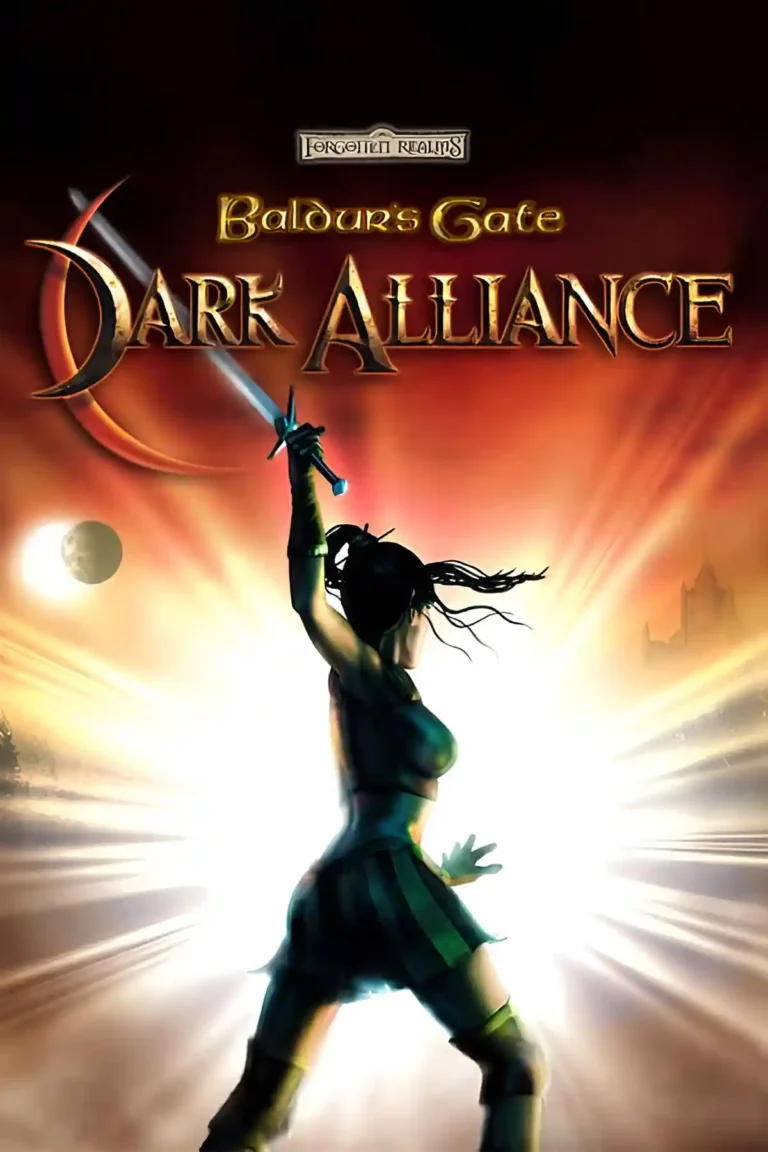
Baldur’s Gate: Dark Alliance
 87
★ /10
87
★ /10
 iOS (iPhone/iPad),
  Ninitendo GameCube,
  Nintendo Switch,
  PC,
PC,  Xbox,
Xbox,  Xbox One
 Interplay Entertainment
Where to buy





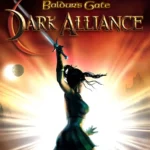
Baldur’s Gate: Dark Alliance is a 2001 action role-playing game developed by Snowblind Studios and published by Black Isle Studios / Interplay Entertainment. Originally released for PlayStation 2 on December 4, 2001, with Xbox and GameCube versions following in 2002, it was re-released for PC, PS4, Xbox One, Nintendo Switch, and iOS in May 2021.
It has nothing in common with the Infinity Engine Baldur’s Gate games beyond its D&D setting. It is a hack-and-slash dungeon crawler in the tradition of Diablo — isometric-ish camera, real-time combat, loot drops, short sessions — played from a fixed-angle third-person perspective with two-player local co-op. Its Metacritic score is 86 on PS2 and 88 on Xbox. The Reddit thread “What is Dark Alliance 1 and 2?” is the highest-traffic community discussion about the game in current search, reflecting genuine confusion about where it fits in the franchise.
Technical Specifications
| Attribute | Details |
|---|---|
| Developer | Snowblind Studios |
| Publisher | Black Isle Studios / Interplay Entertainment |
| Engine | Proprietary (Snowblind Engine) |
| Original Platforms | PlayStation 2 · Xbox · GameCube |
| Current Platforms | PC · PS4 · Xbox One · Nintendo Switch · iOS |
| Original Release | PS2: Dec 11, 2001 (NA) · Xbox: Mar 13, 2002 · GCN: Dec 11, 2002 |
| Re-release | May 18, 2021 (PC, PS4, Xbox One, Switch, iOS) |
| Genre | Action RPG, Hack-and-slash |
| Mode(s) | Single-player · 2-player local co-op |
A Different Kind of Baldur’s Gate
The Baldur’s Gate of Dark Alliance is the city — not the isometric, pause-heavy, party-based CRPG that BioWare built on the Infinity Engine. The games share a D&D licence, a Forgotten Realms setting, and a name, but operate in completely different genres with completely different audiences in mind.
Dark Alliance was developed by Snowblind Studios, a company founded by former Blizzard North employees — the team that had made Diablo. Their intent was to make a console action RPG in that spirit: fast, tactile, immediately accessible, built around clearing rooms of enemies and collecting gear, with two-player local co-op at the centre. Black Isle Studios, which was distributing the Infinity Engine games and had the Baldur’s Gate licence, offered them the setting. The result was one of the best-reviewed console action RPGs of its generation and a game whose design DNA is closer to Champions of Norrath (which Snowblind also made) than to Shadows of Amn.
Story: Beneath Baldur’s Gate
Three travellers arrive in Baldur’s Gate and are robbed and beaten in the opening minutes, setting up a revenge thread that quickly expands into something larger. The Thieves’ Guild is smuggling powerful artefacts connected to an ancient darkness. Following this thread leads the player characters from the city’s docks and sewers through the mines beneath Baldur’s Gate, into the crypts, and eventually to the Onyx Tower — where a necromancer and an undead dragon named Rezhriel stand between the player and the source of the corruption.
The story is functional rather than ambitious. It uses the Forgotten Realms setting competently — familiar monster types, D&D 3rd Edition rules powering the underlying mechanics, locations that match the genre conventions of the setting — but it does not attempt the narrative depth of the CRPG games. What it provides is enough context to give the dungeon-crawling structure stakes and momentum.
The Three Characters
Players choose from three characters, each suited to a different playstyle:
Vahn (human archer) specialises in ranged combat and rapid movement. His bow attacks and stealth options make him the most flexible of the three in terms of engagement range, and his levelled skills allow significant build variety.
Kromlech (dwarven fighter) is the melee powerhouse — heavily armoured, high damage output in close quarters, with a skill tree focused on combat endurance and area-of-effect strikes. The most straightforward of the three for new players to the genre.
Adrianna (elven sorceress) handles magic, with a suite of elemental spells, area-denial abilities, and a glass-cannon risk profile: powerful in the right conditions, fragile when caught without resource management. Her build depth rewards players willing to engage with spell and gear choices.
All three characters level up and gain new abilities through a progression system built on D&D 3rd Edition mechanics, abstracted into console-friendly skill trees and stat upgrades.
Two-Player Local Co-op
The game’s defining feature in 2001 — and one of the primary reasons it is remembered fondly — is its two-player split-screen co-op. Both players choose characters, share the same screen, and proceed through the entire campaign together. Loot is individually rolled, reducing friction over drops. The difficulty scales modestly for two players.
Local co-op on console was not unusual in 2001, but polished action RPGs that made it a central design priority were rare. Dark Alliance arrived at a moment when the genre was almost entirely PC-based (Diablo II was a year old; console action RPGs were thin on the ground), and its co-op implementation was cited in most contemporary reviews as the experience that elevated it from a competent genre exercise to something more memorable.
Dark Alliance II
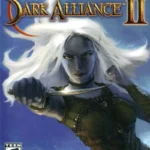
Baldur’s Gate: Dark Alliance II, released January 20, 2004 for PS2 and Xbox, was developed not by Snowblind but by an internal team at Black Isle Studios — Snowblind had moved to other projects. It features five new playable characters (a fighter, a rogue, a necromancer, a cleric, and a monk), a continuation of the original game’s story, and expanded gear systems. It holds an 87 on Metacritic for PS2. It was not released on PC at the time and never received a GCN port.
Both Dark Alliance and Dark Alliance II were re-released simultaneously in 2021 for modern platforms and are available on Steam, GOG, PS4, Xbox One, and Nintendo Switch. They are covered separately on this site; DA2‘s card addresses its specific differences and the context of its development at Black Isle’s final period before Interplay’s collapse.
The 2021 Confusion: D&D: Dark Alliance
The People Also Ask results for this game include an article headlined “Dungeons & Dragons: Dark Alliance fails death saves, gets delisted in 2025.” This refers to an entirely separate title: Dungeons & Dragons: Dark Alliance (2021), developed by Tuque Games and published by Wizards of the Coast. It is a different game from a different developer under a different publisher, with different gameplay, different characters, and different reception. It was released to poor reviews (Metacritic: 55–65 across platforms), placed on Xbox Game Pass at launch in a decision Tuque’s co-CEO described as commercially damaging, and was delisted from all storefronts in 2025 after WotC shut down Tuque Games in 2023.
The naming proximity between the two games — Baldur’s Gate: Dark Alliance (2001) and Dungeons & Dragons: Dark Alliance (2021) — is the source of the confusion that makes “What is Dark Alliance 1 and 2?” the highest-traffic question about this game in current search. The 2001 game and the 2021 game are unrelated in all but brand.
Reception
Baldur’s Gate: Dark Alliance reviewed as one of the strongest console action RPGs of the PlayStation 2 generation. Critics praised the co-op implementation, the visual quality (it was among the earlier PS2 titles to demonstrate what the hardware could sustain in an action RPG format), and the gameplay loop’s coherent pacing. The GBA version, developed separately by Magic Pockets with a substantially different engine and design, received more mixed reviews and is generally not considered part of the same conversation.
The 2021 re-releases were well received as faithful ports, with minor modern adjustments and no content changes. Players returning to the game reported that the co-op experience held up well and that the relatively short campaign length — eight to ten hours for a single playthrough — suited the pick-up-and-play structure the re-release format enables.