 78
78  Android,
  iOS (iPhone/iPad),
  Nintendo Switch,
  PC,
PC,  PS4,
PS4,  Xbox One
 Atari
AtariWhere to buy





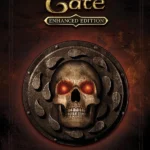
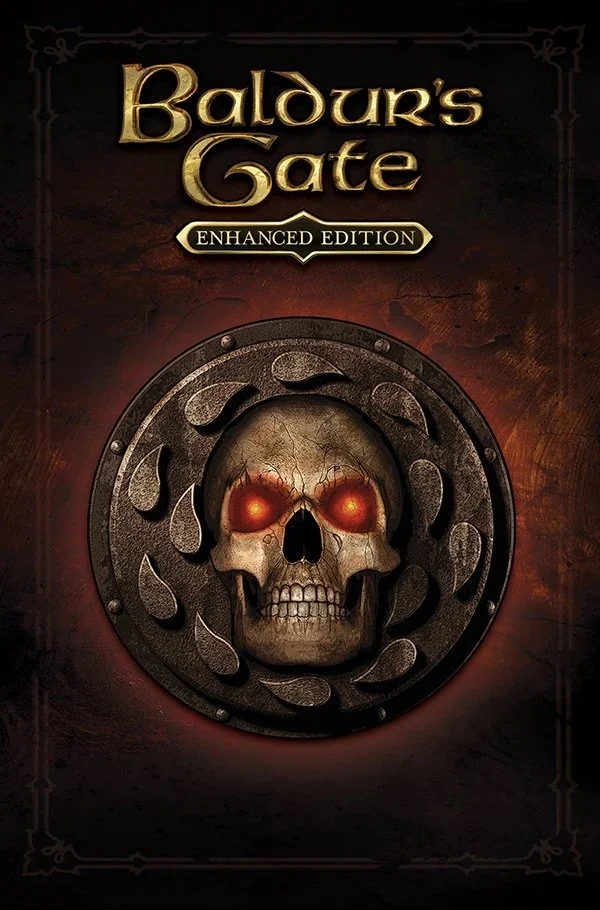
Baldur’s Gate: Enhanced Edition is a 2012 remaster of Baldur’s Gate (1998) and its expansion Tales of the Sword Coast (1999), developed by Overhaul Games — a division of Beamdog — and initially published by Atari. It released for PC, iPad, and macOS on November 28, 2012, with Android following in 2013, and arrived on PlayStation 4, Xbox One, and Nintendo Switch in October 2019, bundled with Baldur’s Gate II: Enhanced Edition.
It is the version of Baldur’s Gate sold on all major storefronts and the default starting point for players approaching the series in 2026. Its primary audience has shifted since launch: the most-trafficked community discussion about the Enhanced Edition currently lives in r/BaldursGate3, where players who completed Baldur’s Gate 3 ask whether going back to the original Enhanced Editions is worth the time. The answer the thread consistently produces is yes.
Technical Specifications
| Attribute | Details |
|---|---|
| Developer | Overhaul Games / Beamdog |
| Publisher | Atari (2012) · Beamdog (later releases) |
| Based On | Baldur’s Gate (1998) · Tales of the Sword Coast (1999) |
| Engine | Infinity Engine (Beamdog modifications) |
| Platform(s) | Windows · macOS · Linux · iOS · Android · PS4 · Xbox One · Nintendo Switch |
| Initial Release | November 28, 2012 (PC, iPad, macOS) |
| Console Release | October 15, 2019 (PS4, Xbox One, Switch) |
| Genre | CRPG, isometric RPG |
| Mode(s) | Single-player · Multiplayer (cross-platform) |
What’s Included
Baldur’s Gate: Enhanced Edition packages the complete original 1998 Baldur’s Gate campaign alongside Tales of the Sword Coast — meaning the full Sword Coast, Durlag’s Tower, and all expansion content is available from launch without a separate purchase. To this foundation, Beamdog added three new companions, the standalone Black Pits arena mode, a new Story Mode difficulty, new voice sets for the protagonist, and over 400 documented improvements to the original game’s code and content.
The story, quests, existing companions, and structure of the 1998 release are unchanged. What the Enhanced Edition adds sits alongside the original material rather than replacing or altering it.
Technical Improvements
The core accessibility problem with the 1998 original on modern hardware was resolution: the game was built for 640×480, and making it run correctly at anything higher required third-party mods and manual configuration. Baldur’s Gate: Enhanced Edition adds native widescreen support, higher resolution options, and a zoom function — changes that, taken together, move the game from “requires technical intervention to play comfortably” to “installs and runs.” The interface was updated and the HUD cleaned up. Save data is cross-platform, allowing the same playthrough to continue across PC and mobile. Cross-platform multiplayer enables parties across Windows, macOS, Linux, iOS, and Android simultaneously.
Beamdog catalogued over 400 individual improvements to the original code — a combination of bug fixes, balance adjustments, and quality-of-life additions accumulated from community-identified issues in the fourteen years between the original release and the Enhanced Edition. A new Story Mode difficulty was added below Easy, designed for players who want to experience the narrative without the punishing difficulty of low-level AD&D 2nd Edition combat, and who represent a significant portion of the BG3-to-BG1 pipeline that the SERP data reflects.
The Three New Companions
Neera is a half-elf wild mage — a specialist in an unpredictable school of magic where spells occasionally produce random surges with uncontrolled effects. Her school of magic is mechanically distinctive: wild surges can be spectacular or catastrophic at random, and playing with Neera in the party introduces a chaotic element absent from the original companion roster. Her personal quest involves a community of wild mages being hunted by the Red Wizards of Thay. She can be romanced by male protagonists. Her dialogue style is the most divisive element of her characterisation — players who find her engaging find her the most reactive of the EE companions; players who don’t connect with the tone find her grating.
Dorn Il-Khan is a half-orc who has made a pact with a demon in exchange for power, operating as a Blackguard — an anti-paladin class specialisation absent from the original BG1 roster. He is mechanically powerful and thematically the darkest of the three EE companions, with a personal quest focused on revenge against those who wronged him. He is widely considered the best-written of the three, functional in evil party compositions and consistent within his own logic. He can be romanced by protagonists of either gender.
Rasaad yn Bashir is a Calishite monk of the Sun Soul order, a class type that was unavailable as a companion in the original game. His personal quest deals with the loss of his brother to a corrupt faction within his order. He is mechanically the most inconsistent of the three — the monk class in AD&D 2nd Edition is powerful at very high levels but difficult to utilise in BG1‘s level range — and his dialogue receives mixed reviews from the community, described variously as earnest or preachy. He can be romanced by female protagonists.
All three companions continue into Baldur’s Gate II: Enhanced Edition, where they receive additional personal questlines that conclude their character arcs.
The Black Pits
The Black Pits is a standalone arena challenge mode included with the Enhanced Edition, separate from the main campaign. Players assemble a party and fight through increasingly difficult waves of opponents in a gladiatorial setting narrated by Baeloth Barrityl, a drow showman whose theatrical sensibility distinguishes him from the more earnest tone of the main game. Baeloth is recruitable as a companion in the main campaign following certain in-game events — he is the only named character introduced in the EE side content who integrates directly into the Sword Coast’s main world.
The Black Pits is brief and replayable rather than narratively substantial. Players looking for story content will find it thin; players who enjoy combat challenges within the AD&D 2nd Edition ruleset have more use for it.
Beamdog and the Licensing
The Enhanced Edition’s development history is notable for its complexity. Beamdog — a Canadian studio founded by Trent Oster, a former BioWare employee — spent approximately fourteen months negotiating three separate agreements before development could begin: a contract with Atari (which held the Baldur’s Gate licence), a licence with Wizards of the Coast (which held the Dungeons & Dragons IP), and a separate licence with BioWare to use the Infinity Engine. The simultaneous management of three rights holders added a layer of legal uncertainty to a project that was also technically demanding.
The initial release on November 28, 2012 was troubled. The game launched in a buggy state — some early players reported significant stability issues — and critics who expected a more substantial overhaul found the additions minimal for a $20 price point. Metacritic scored the PC version at 79, considerably below the original’s 91. Beamdog responded with patches, and the game stabilised over subsequent months. The community’s view has since settled around the position that the Enhanced Edition is the correct version to play while noting that the launch was not its finest hour.
Siege of Dragonspear
Baldur’s Gate: Siege of Dragonspear, released March 31, 2016, is a paid expansion to the Enhanced Edition that bridges the events of BG1 and BG2: an original BioWare interquel that fills the narrative gap between Gorion’s Ward defeating Sarevok and the opening of Shadows of Amn. It is sold separately from the base Enhanced Edition and will be covered in its own entry.
The BG3 → BG1EE Pipeline
The r/BaldursGate3 thread “Are Baldur’s Gate 1 and 2 Enhanced Editions worth it?” at nearly 1,800 monthly organic visits is currently the most-trafficked community discussion about this game in search results — and it is not in a Baldur’s Gate subreddit but in the Baldur’s Gate 3 community. The thread reflects a consistent pattern: players who finished BG3 discover that Jaheira and Minsc have histories that go back to 1998, that the Bhaalspawn mythology has roots in the original game, and that the series they just played the conclusion of began here.
The community answer to the thread’s question is calibrated: yes, worth it, with the expectation that the companion writing is thinner than BG3’s, that the interface requires acclimation, and that Durlag’s Tower is the highlight. Players who approach the Enhanced Edition with that context in place — expecting a historically important, atmospheric CRPG rather than a BG3 equivalent — consistently report satisfaction.