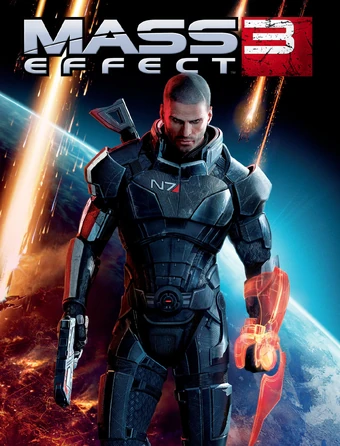
Mass Effect 3
 89
★ /10
89
★ /10
 PC
PC PS 3
PS 3 Wii U
Wii U Xbox 360
 1C-SoftClub
 Electronic Arts

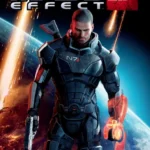
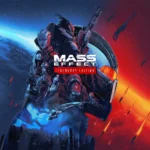
Mass Effect 3 is a 2012 action role-playing game developed by BioWare and published by Electronic Arts, serving as the conclusion to Commander Shepard’s story across the original Mass Effect trilogy. Released on March 6, 2012, for Xbox 360, PlayStation 3, and PC (with a Wii U port following later that year), it opens with the Reaper invasion of Earth and tasks Shepard with assembling the largest military coalition in galactic history before it’s too late.
The game launched to near-universal critical acclaim, earning Metacritic scores of 93 across all platforms — and then immediately became the subject of one of the most high-profile fan controversies in gaming history.
Technical Specifications
| Attribute | Details |
|---|---|
| Developer | BioWare |
| Publisher | Electronic Arts |
| Director | Casey Hudson |
| Lead Writer | Mac Walters |
| Composer | Clint Mansell (with additional music by Sam Hulick, Cris Velasco, Sascha Dikiciyan, Christopher Lennertz) |
| Engine | Unreal Engine 3 |
| Platform(s) | Xbox 360, PlayStation 3, Microsoft Windows, Wii U |
| Release Date | March 6, 2012 |
| Genre | Action role-playing, Third-person shooter |
| Mode(s) | Single-player, Multiplayer co-op (Galaxy at War) |
The Reapers Are Here: Story and Stakes
Mass Effect 3 begins with the premise the first two games spent five years building toward: the Reapers have arrived, and Earth is falling. Within the opening minutes, London is in flames, Shepard is forced to evacuate the planet, and the player is left with the understanding that this game is not about uncovering a threat — it’s about surviving one.
The campaign is structured around Shepard crisscrossing the galaxy to forge alliances between civilizations that have spent centuries in conflict: convincing the krogan to fight alongside the turians who genetically sterilized them, negotiating peace between the geth and the quarians, rallying the asari matriarchs, and calling in every favor accumulated across two previous games. Every major story mission ties back to this coalition-building, and decisions made — or left unmade — in Mass Effect and Mass Effect 2 surface throughout: characters who died, alliances that were left fractured, or choices that seemed minor now carry real weight in how many allies Shepard can bring to the final battle.
The composer for the trilogy’s final chapter was Clint Mansell, replacing Jack Wall, who had scored the first two games. The tonal shift is noticeable — Mansell’s score is more overtly cinematic and elegiac, leaning into the tragedy of the premise rather than the atmospheric synth textures of the earlier entries.
War Assets and Galactic Readiness: The Trilogy as One System
The central mechanic differentiating Mass Effect 3 from its predecessors is the War Assets system. Every major action in the game — completing missions, resolving side quests, scanning systems for resources, talking to characters on the Citadel — contributes a numerical value to a running military strength total. Alliances forged, squadmates kept alive across the trilogy, and even small background decisions all feed into this number, which ultimately determines what ending options are available when Shepard reaches the final confrontation.
The system was designed to make the entire trilogy feel like a single accumulating story rather than three separate games. In practice, it worked as intended for players carrying saves forward from Mass Effect and Mass Effect 2 — but it created friction for those starting fresh, as missing context from prior games could leave gaps in the war asset total that were difficult to fill through ME3 content alone. The Legendary Edition addressed this partly by rebalancing the minimum thresholds needed to reach each ending, making the single-player path more forgiving.
Galaxy at War: The Series’ First Multiplayer
Mass Effect 3 was the first entry in the franchise to include a multiplayer mode. Galaxy at War offered four-player online co-op missions — waves-based combat scenarios set across different locations in the Reaper war, played as custom characters from six races and six classes separate from Shepard’s campaign. Success in multiplayer fed directly back into the single-player’s Galactic Readiness rating, boosting the effective strength of the war asset total.
In the original 2012 release, this linkage caused controversy: without regularly playing multiplayer (or companion mobile apps that have since been shut down), the Galactic Readiness rating defaulted to 50%, effectively cutting the war asset total in half and locking out the highest-tier ending options without extensive single-player grinding. BioWare’s position was that multiplayer was optional and sufficient readiness was achievable through single-player alone — which was technically true but required near-complete side quest completion. The Legendary Edition resolved this outright by removing the multiplayer mode entirely and setting Galactic Readiness permanently at 100%.
Key DLC: From Ashes, Leviathan, Omega, Citadel
Mass Effect 3 shipped with a substantial post-launch DLC schedule, four entries of which are generally considered essential:
From Ashes (launch day) adds the prothean squad member Javik — one of the few surviving members of the civilization whose extinction fifty thousand years ago the Reaper cycle is built around. His presence reshapes how much of the existing lore is understood.
Leviathan follows Shepard’s investigation of a rumored entity powerful enough to destroy a Reaper, and expands the backstory of the Reapers themselves in ways that many players found more satisfying than answers provided by the main campaign’s ending.
Omega reunites Shepard with Aria T’Loak in a prolonged battle to retake the Terminus station from Cerberus, functioning almost as a standalone mini-campaign and the largest single piece of DLC in the trilogy by content volume.
Citadel is the outlier — tonally unlike anything else in the trilogy. Released in March 2013, several months after the ending controversy had settled, it brings back virtually the entire cast of characters from all three games for a story that is deliberately comedic and celebratory, building to a party aboard the Normandy that functions as the trilogy’s emotional farewell. It is widely regarded as the warmest, most fan-service piece of content BioWare ever produced for the franchise, and many players choose to complete it last, treating it as the real send-off for Shepard’s crew regardless of what the main ending does.
All four are included in the Legendary Edition.
The Ending Controversy
Mass Effect 3 launched on March 6, 2012, to strong reviews. By the end of that same week, it had become the center of one of the largest fan backlash events in the history of the medium.
The original ending presented players with three choices — Destroy (eliminate all synthetic life, including the geth and EDI), Control (Shepard sacrifices themselves to take command of the Reapers), and Synthesis (merge organic and synthetic life at a genetic level) — delivered in a single conversation with an entity called the Catalyst, a child-shaped AI representing the Reaper intelligence. The complaint, articulated across thousands of forum threads and fan campaigns, was that the outcome of those three options appeared nearly identical regardless of which was chosen, and that none of the decisions made across three games appeared to affect what happened in those final minutes. Players who had imported saves and spent hundreds of hours shaping a specific version of the galaxy felt the ending collapsed all of that into a single binary moment.
The backlash went further than typical fan disappointment: developers received harassment and threats, organized campaigns sent colored cupcakes to BioWare’s offices, and a formal complaint was filed with the Federal Trade Commission over allegedly misleading advertising about player choice. On June 26, 2012 — three months after launch — BioWare released the Extended Cut, a free DLC update that added new cutscenes, expanded the three endings with more context and a slideshow epilogue showing the fate of the galaxy, and added a fourth “Refusal” option. It did not change the fundamental structure of the endings, but softened many of the specific criticisms around abruptness and lack of closure.
The controversy’s significance extends beyond the game itself. Mass Effect 3 was the first major instance of a developer responding to fan pressure by altering a shipped game’s narrative content — a precedent that, for better or worse, influenced how the relationship between players and studios has operated ever since.
Reception
Mass Effect 3 scored 93 on Metacritic across all platforms, making it one of the highest-rated games of 2012 at launch. Critics praised the emotional weight of its campaign, the payoff for longtime fans as the trilogy’s threads converged, and the refinement of its combat relative to Mass Effect 2. The co-op multiplayer received warm reviews as a competent and well-designed addition to the package.
The ending controversy complicated how the game is retrospectively assessed — it remains genuinely divisive in a way neither of its predecessors are. The consensus as of 2026 is roughly that Mass Effect 3 is an excellent game whose final twenty minutes are still debated, and that the Extended Cut and Citadel DLC together constitute a substantially more satisfying version of the experience than the March 2012 launch offered. Both are included and set as the default in the Legendary Edition.