Mass Effect 2
 96
★ /10
96
★ /10
 PC
PC PS 3
PS 3 Xbox 360
 1C-SoftClub
 Electronic Arts

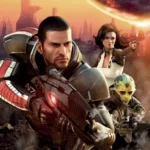
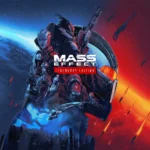
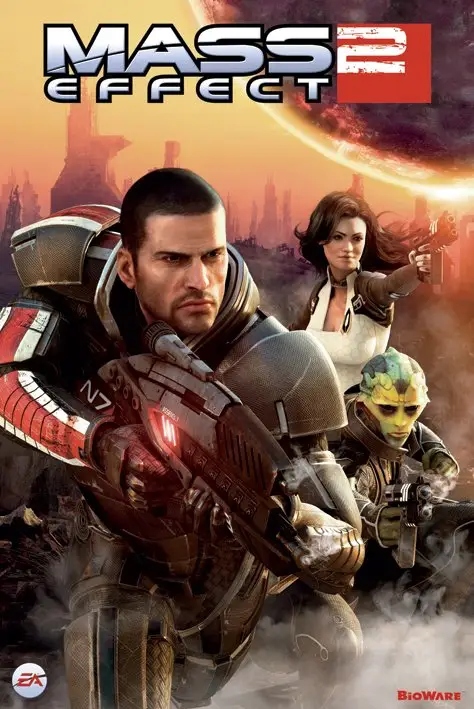
Mass Effect 2 is a 2010 action role-playing game developed by BioWare and published by Electronic Arts, serving as the direct sequel to the 2007 original. Released for Xbox 360 and PC on January 26, 2010, and for PlayStation 3 in January 2011, it picks up the story of Commander Shepard from where the first game left off — and immediately kills them.
The game launched to an extraordinary critical reception: within its first week on sale it had earned over 40 perfect scores and sold two million copies worldwide. By the end of 2010, EA and BioWare described it as the highest-rated game in the fifteen-year history of the studio and the twenty-eight-year history of EA. It remains one of the most decorated games ever made.
Technical Specifications
| Attribute | Details |
|---|---|
| Developer | BioWare |
| Publisher | Electronic Arts |
| Director | Casey Hudson |
| Writers | Mac Walters, Drew Karpyshyn |
| Composers | Jack Wall, Sam Hulick, David Kates, Jimmy Hinson |
| Engine | Unreal Engine 3 |
| Platform(s) | Xbox 360, Microsoft Windows, PlayStation 3 |
| Release Date(s) | Xbox 360 / PC: Jan 26, 2010 • PS3: Jan 18, 2011 |
| Genre | Action role-playing, Third-person shooter |
| Mode | Single-player |
Death, Cerberus, and the Collectors
Mass Effect 2 opens with Commander Shepard dying — the SSV Normandy is destroyed by an unknown vessel, and Shepard is killed in the vacuum of space. Two years later, Shepard is rebuilt and revived by Cerberus, a human-supremacist paramilitary organization previously treated as an antagonist faction in the first game, and now — uneasily — Shepard’s only patron.
The reason: colonies across the Terminus Systems are vanishing without a trace, and all evidence points to the Collectors, an enigmatic insectoid species acting as intermediaries for the Reapers. The Systems Alliance and the Citadel Council are unwilling to act, leaving Shepard and Cerberus’s morally ambiguous leader, the Illusive Man (voiced by Martin Sheen), to mount an unsanctioned mission through the Omega-4 Relay — a point in space from which no ship has ever returned — to strike at the Collector base directly.
This structure frames most of the campaign less as a traditional linear story and more as a pressure-cooker countdown: Shepard knows what lies at the end, knows the odds, and spends the game building a crew capable of surviving it.
From RPG to Shooter: The Formula Overhaul
Mass Effect 2 made sweeping changes to the gameplay formula inherited from the first game, and not all of them were universally welcomed. On the RPG side, the sprawling inventory system — which in the original could fill with hundreds of identical weapons and armor pieces — was drastically simplified or removed entirely. Class-based weapon restrictions were tightened: where the Legendary Edition of ME1 let every class pick up any gun freely, ME2 returned hard limits on what each class could carry. The deep talent trees were compressed into a smaller, more focused set of upgradable powers.
What expanded was the shooter side. Combat became more responsive, with better cover mechanics, improved enemy AI, and a heavier emphasis on positioning and squad ability combinations. The shift was deliberate — BioWare wanted the gunplay itself to feel satisfying independent of character build, rather than treating shooting as an RPG skill that improved with investment. The result was a game that felt considerably more like a polished third-person action title and less like a shooter-RPG hybrid with noticeable seams.
The Crew: Twelve Squadmates, Twelve Loyalty Missions
The backbone of Mass Effect 2 is its squad. Over the course of the campaign, Shepard recruits twelve companions, each representing a different species, discipline, or moral alignment, and each with their own backstory, personality, and fully voiced loyalty mission unlocked once they join the crew.
These loyalty missions are miniature standalone stories — a mercenary settling a personal score, a scientist confronting a war crime, a vigilante forced to choose between justice and vengeance — and they serve a structural purpose beyond characterization. A squadmate whose loyalty mission is completed becomes loyal to Shepard. A squadmate whose loyalty mission is failed or skipped does not. That distinction matters enormously in the game’s final act.
The twelve companions are: Mordin Solus, Garrus Vakarian, Tali’Zorah, Liara T’Soni (briefly), Miranda Lawson, Jack, Jacob Taylor, Grunt, Samara, Thane Krios, Legion, and Kasumi Goto (DLC). Several returning faces from the first game — Garrus and Tali most prominently — receive substantially more depth and screen time here than they did originally.
The Suicide Mission: Where Every Decision Catches Up
The final act of Mass Effect 2, collectively referred to as the Suicide Mission, is the reason the game is still talked about fifteen years later. It is not a single mission but a series of decisions that unfold over several hours, and its outcomes are determined entirely by choices made — or not made — throughout the preceding forty hours of play.
Before crossing the Omega-4 Relay, Shepard must have done three things to give the crew a real chance: completed critical upgrades to the Normandy’s armor, shielding, and main cannon (information provided by squadmates during casual conversations that can easily be missed), earned the loyalty of as many companions as possible, and moved on the Collector Base immediately after recovering the Reaper IFF — waiting to complete additional missions after that point starts a timer that kills the Normandy’s non-combat crew one by one.
Inside the Collector Base, Shepard must assign squadmates to specific roles — a tech specialist to breach a ventilation shaft, a biotic to hold an energy field, fire team leaders for diversionary runs. Each role demands specific skills. Each role, if filled by the wrong person or an unloyal squadmate, results in that person’s death. There is no hidden fail-safe, no automatic reload point. A squadmate who dies in the Suicide Mission is dead for Mass Effect 3, and Shepard themselves can die if too few companions make it out alive. The game trusts players to have paid attention, and rewards or punishes them accordingly.
Soundtrack: Jack Wall and the Suicide Mission Theme
The score for Mass Effect 2 was composed by Jack Wall alongside Sam Hulick, David Kates, and Jimmy Hinson — the same core team responsible for the first game’s atmospheric synth-heavy soundtrack. The sequel leaned more heavily into orchestral arrangements while keeping the synthetic, unsettling textures that defined the trilogy’s sound.
The game’s most celebrated piece, simply titled “Suicide Mission”, plays across the final act’s closing sequence. Wall has described composing it as “the biggest mind-fucking thing I’ve ever done in my life” — a track that had to compress the emotional arc of two games into a single piece of music and synchronize with a branching sequence the team was still finishing when he turned it in. The track has been performed by the London Philharmonic Orchestra, appeared on the Greatest Video Game Music compilation album, and received a BAFTA nomination. Wall did not return for Mass Effect 3; the sequel’s score was handled by Clint Mansell.
Awards and Reception
Mass Effect 2 swept the 2010–2011 awards cycle in a way few games before or since have managed. It was named BAFTA Game of the Year at the 2011 British Academy Games Awards — the highest-profile game award in the UK — and won the Interactive Achievement Award for Game of the Year at the 13th AIAS Ceremony. It also took Spike VGA Game of the Year, was named the highest-rated game of 2010 on Metacritic (scoring 96 on Xbox 360 and PC), and collected over 70 perfect scores from outlets across the globe by the time the PS3 release was announced.
The longer-term consensus has been equally strong. For most of the decade following its release, Mass Effect 2 held the distinction of being the highest-rated RPG ever recorded on Metacritic — a position it eventually conceded when Elden Ring surpassed it in 2022. It is widely cited as one of the best examples of how player choice, consequence, and character writing can function together as a coherent game system, and the Suicide Mission in particular is frequently invoked as a template for how to design a finale that actually feels earned.