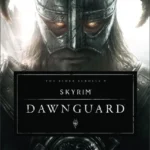
The Elder Scrolls V: Skyrim – Dawnguard
Expansion of The Elder Scrolls V: Skyrim 73
★ /10
73
★ /10
 Nintendo Switch,
  Nintendo Switch 2,
  PC,
PC,  PS 3,
PS 3,  PS4,
PS4,  PS5,
PS5,  Xbox 360,
  Xbox One,
  Xbox Series X/S
 1C-SoftClub,
  Bethesda Softworks
Where to buy





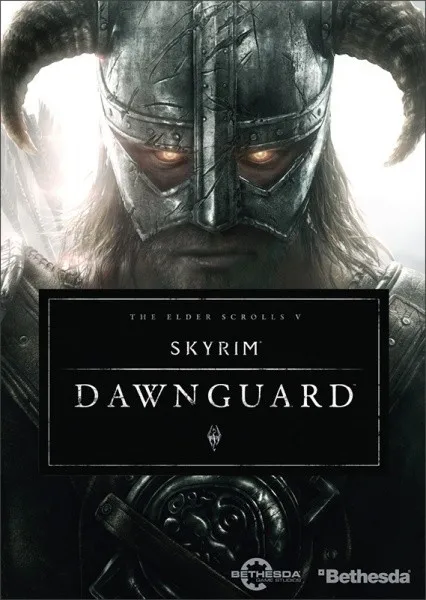
The Elder Scrolls V: Dawnguard is the first major expansion for The Elder Scrolls V: Skyrim, developed and published by Bethesda Game Studios. Released for Xbox 360 on June 26, 2012, as a 30-day timed exclusive, it came to PC on August 2, 2012 and arrived on PlayStation 3 in February 2013 after delays caused by performance issues.
It received Metacritic scores in the high 70s across platforms — a competent but unremarkable response to what many expected would be the landmark first major expansion for one of the highest-rated games ever made. Its reputation since has been defined less by its vampire-hunter premise than by a single character: Serana.
Technical Specifications
| Attribute | Details |
|---|---|
| Developer | Bethesda Game Studios |
| Publisher | Bethesda Softworks |
| Engine | Creation Engine |
| Platform(s) | Xbox 360 (Jun 26, 2012) · PC (Aug 2, 2012) · PS3 (Feb 26, 2013) |
| Price at Launch | 1,600 Microsoft Points (~$19.99) |
| Genre | Action role-playing |
| Mode | Single-player |
The Tyranny of the Sun
The expansion’s premise is straightforward and large in scale: Lord Harkon, a powerful ancient vampire and patriarch of the Volkihar Clan, has returned to power and intends to use an Elder Scroll to fulfil a prophecy called the Tyranny of the Sun — a ritual involving the mythic bow Auriel’s Bow and arrows tainted with a pure-blooded vampire’s blood, which when shot at the sun itself would permanently blot it out, granting all vampires freedom to walk during the day without consequence.
The Dawnguard is an ancient order of vampire hunters being reformed by Isran, a gruff and prejudiced veteran, to counter Harkon’s plan. The questline begins when the Dragonborn encounters their recruitment efforts and is drawn into the conflict.
There are two elder scrolls in play, and both sides need them. There is also Harkon’s daughter, who holds one and is not on her father’s side.
Dawnguard vs Volkihar: The Choice That Isn’t Quite One
Dawnguard offers the player a faction choice after the initial setup: join the Dawnguard vampire hunters, or join the Volkihar Clan and become a Vampire Lord, aiding Harkon in completing the prophecy. The expansion was marketed around this binary, and on paper it suggests meaningfully different experiences.
In practice, the divergence is narrower than it appears. The main questline visits the same locations regardless of faction: Castle Volkihar, the Soul Cairn, the Forgotten Vale. The objectives flip in framing but not substantially in activity. Serana — the critical character — accompanies the Dragonborn on either path. The most significant mechanical difference is in the final sequence: a Dawnguard character uses Auriel’s Bow with Sunhallowed arrows to create explosions of sunlight that harm vampires; a Volkihar character uses it with Bloodcursed arrows to actually blot out the sun, completing Harkon’s plan.
The Reddit thread currently at #2 in the expansion’s search results — “Does anyone actually join the Dawnguard? Are they worthwhile?” — reflects a widespread player preference for the Volkihar path. The reasons are consistent: becoming a Vampire Lord is more mechanically interesting than crossbows, Castle Volkihar is a more compelling base than Fort Dawnguard, and the Volkihar NPCs are better developed than Isran and his sparse guard roster. The faction choice exists; the experience is not radically different either way.
Serana
Serana is an ancient pure-blooded vampire who has been sealed in a stone sarcophagus for centuries. She carries an Elder Scroll. She is the first major NPC the Dragonborn encounters in the expansion. She is also the best-realised companion character in Skyrim.
Where most of Skyrim’s followers are defined by a combat style and a line of approval dialogue, Serana has a backstory, a family dynamic she is actively processing, opinions on what the Dragonborn is doing and why, and an arc that moves. Her father, Lord Harkon, turned her mother Valerica and herself into vampires against both their wishes — Valerica to obtain the Elder Scroll she carries, Serana as part of a ritual. Serana’s mother has been hiding in the Soul Cairn to keep Harkon from accessing the scroll through her. Serana is opposed to her father’s plan regardless of which faction the player has chosen, and her personal quest — culminating in a choice about whether she should seek a cure for her vampirism — sits alongside the main plot as its most affecting element.
Serana was voiced by Laura Bailey, whose performance across the expansion sustains a character who conveys exhaustion, dark humour, and genuine emotion in incidental comments as much as in scripted scenes. Multiple critics and players cited her as the expansion’s primary reason to play it. She remains one of the most discussed companion characters in the franchise.
Soul Cairn and the Forgotten Vale
Dawnguard introduces two new complete worldspaces.
The Soul Cairn is a realm of Oblivion where captured souls — those sealed inside soul gems — exist in a grey, spectral half-life. The environment is haunting in concept: vast, dark plains populated by wandering soul husks, enormous crystalline columns, and undead variants specific to the realm. To enter it, the player must either become a half-vampire (temporarily) or accept having part of their own soul trapped there, causing a permanent maximum health reduction that can only be reversed by finding a specific soul gem inside the realm. The Soul Cairn houses Valerica, Serana’s mother, who has been hiding there to keep Harkon away from the Elder Scroll she carries.
Critical and player assessment of the Soul Cairn was mixed: visually novel, mechanically tedious. The questline sends the player from one edge of the Cairn to the other and back repeatedly, and the space feels underpopulated with authored content despite its size. It is generally considered the weaker of the two new areas.
The Forgotten Vale is the reverse. A secluded, snow-filled valley accessible only through a series of caves in Skyrim’s northwest mountains, it contains ancient Falmer ruins, a frozen lake with two ice dragon encounters, and the ruins of an Auriel temple complex. Its visual design — ice and pale stone, serene and dangerous — is among the most distinctive of any location added to Skyrim across all its expansions, and the journey through it is extended enough to feel like genuine exploration rather than a dungeon corridor.
Knight Paladin Gelebor and the Snow Elves
Inside the Forgotten Vale waits Knight Paladin Gelebor — the last surviving Snow Elf who was not transformed into a Falmer by the Dwemer. He has been standing vigil at Auriel’s shrine for thousands of years, tending the wayshrines scattered through the Vale in preparation for a pilgrimage that is never coming.
His backstory is one of Dawnguard‘s most quietly affecting additions. The Snow Elves — the predecessors of the Falmer — were an ancient elven people whom the Dwemer enslaved, blinded, and over generations transformed into the feral creatures found throughout Skyrim’s caves. Gelebor alone retained his original form and consciousness because he was a devoted priest rather than a slave, and because his faith kept him apart from the corrupting process. He does not know how long he has been waiting. He does not know most of his civilisation’s history ended.
His companion Arch-Curate Vyrthur — another Snow Elf preserved in the Vale — has been corrupted and serves as the final dungeon boss before Auriel’s Bow is recovered.
New Mechanics: Vampire Lord, Werewolf, and Crossbows
Dawnguard introduced three substantial mechanical additions to Skyrim:
Vampire Lord is a full transformation available to characters who become vampires during the expansion. In Lord form, the character hovers above the ground, loses all conventional combat options, and fights using a suite of vampire-specific powers: a draining claw attack, the ability to raise undead as thralls, gargoyle summons, and a Life Drain projectile that slowly restores health. An eleven-perk skill tree allows the form to be developed in different directions, levelling through kills. The form is powerful and distinct from standard gameplay; it was widely praised as the expansion’s best mechanical addition.
Werewolf skill tree was added retroactively to the existing base-game werewolf transformation. Eight perks, unlocked by consuming corpses while transformed, expand the form’s duration, damage, and utility. This addressed a longstanding complaint that lycanthropy had no development system.
Crossbows are a new ranged weapon type, exclusive to this expansion, with their own ammunition and a distinct reload mechanic. They deal more damage per shot than bows but take longer to reload, rewarding deliberate play at range. Dawnguard members use them as their signature weapon.
Mounted combat — introduced quietly alongside Dawnguard as a free base game update — allowed fighting from horseback for the first time, though this was technically not expansion-exclusive content.
Reception
Dawnguard received Metacritic scores in the high 70s — lower than its $20 price point might have suggested and considerably below the base game’s 96. Critical consensus described it as competent, occasionally interesting, and insufficient: “predictable, bug-ridden fare” in one review; “decent DLC, but I was expecting a little more” in another; “Serana is my favorite character in the entire game” in almost every one.
The patient gamers discussion forum thread asking “Why is The Elder Scrolls V: Skyrim Dawnguard so bad?” in the expansion’s current search results captures the gap between expectation and delivery. The answer in that thread, and in most retrospective assessments, is not that the expansion is bad — it is that it is the first expansion for one of the highest-rated games ever made, released when Bethesda’s DLC ambitions were at their most anticipated, and it plays like a competent quest pack when something closer to Shivering Isles seemed achievable.
What survived the disappointment was Serana, who remains a more frequently discussed character than the expansion’s actual premise. She is included in every subsequent version of Skyrim through the Legendary, Special, and Anniversary Editions, which is where most players encounter her.