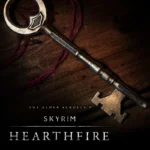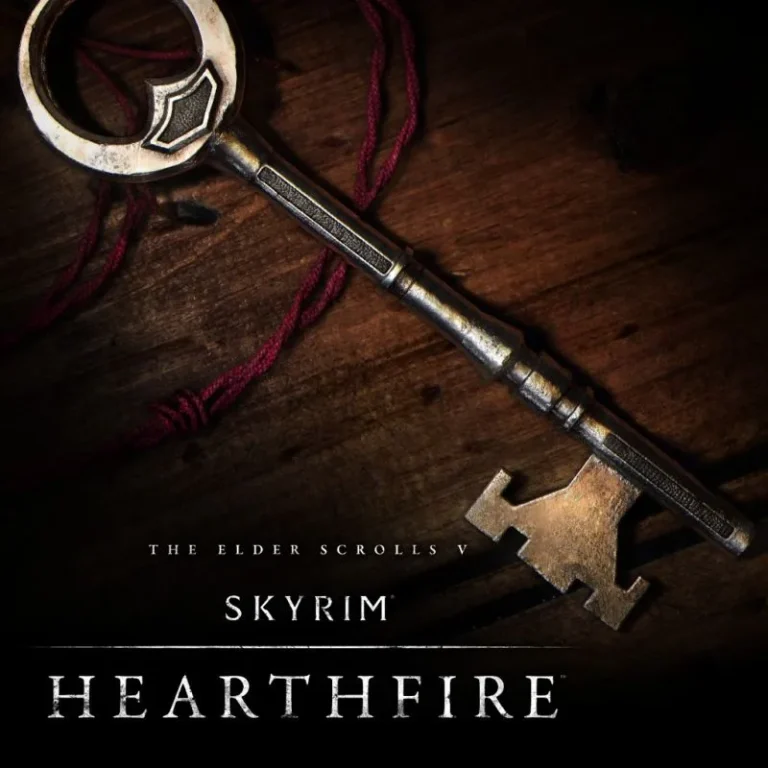
The Elder Scrolls V: Skyrim – Hearthfire
DLC for The Elder Scrolls V: Skyrim 54
★ /10
54
★ /10
 Nintendo Switch,
  Nintendo Switch 2,
  PC,
PC,  PS 3,
PS 3,  PS4,
PS4,  PS5,
PS5,  Xbox 360,
  Xbox One,
  Xbox Series X/S
 1C-SoftClub,
  Bethesda Softworks
Where to buy





The Elder Scrolls V: Hearthfire is the second official add-on for The Elder Scrolls V: Skyrim, developed and published by Bethesda Game Studios. Released for Xbox 360 on September 4, 2012, for PC on October 5, 2012, and for PS3 in February 2013, it is the smallest and cheapest of the three Skyrim expansions — priced at 400 Microsoft Points, approximately $4.99 — and the only one with no combat quests, no new story, and no villain.
It lets you build a house and adopt children. Metacritic scored it 54 on Xbox 360. Many players consider it the best thing Bethesda added to Skyrim.
Technical Specifications
| Attribute | Details |
|---|---|
| Developer | Bethesda Game Studios |
| Publisher | Bethesda Softworks |
| Engine | Creation Engine |
| Platform(s) | Xbox 360 (Sep 4, 2012) · PC (Oct 5, 2012) · PS3 (Feb 19, 2013) |
| Price at Launch | 400 Microsoft Points (~$4.99) |
| Genre | Action role-playing |
| Mode | Single-player |
What Hearthfire Is — and Isn’t
Hearthfire does not add a questline, a dungeon, a faction, a new enemy type, or a new region. It adds three plots of purchasable land in different holds, a system for constructing a home on each plot from raw materials, and the ability to adopt children. There is a short courier-triggered chain of letters that introduces the mechanic, and there are periodic random attacks on your property that require a visit to deal with. That is the complete content description.
Critics who expected the next Dawnguard were disappointed. Players who wanted a place to live in Skyrim were not. The gap between those two experiences is the entire story of Hearthfire‘s reception.
The Three Properties
Purchasing land in three different holds gives the player the option to build in meaningfully different environments:
Lakeview Manor (Falkreath Hold) sits near Pinewatch, looking out over a lake and into the dense pine forest that characterises the hold. It is the most scenic of the three and the most commonly built first.
Windstad Manor (Hjaalmarch, near Morthal) is on the edge of the swamp and coastal marsh, surrounded by fog and the occasional mudcrab. Less visually welcoming, with a distinct atmosphere suited to characters with a more austere aesthetic in mind.
Heljarchen Hall (the Pale, near Dawnstar) occupies open tundra in the north, cold and exposed, overlooking the mountains toward Whiterun. The most defensible of the three but the least sheltered.
Each plot costs 5,000 gold and is purchased from the hold’s Jarl. They are independent of each other and can be developed in any order.
The Building System
Construction on each property begins with a Drafting Table — which allows the player to plan the layout of the home — and a Carpenter’s Workbench — where those plans are physically built using gathered materials. The base structure is a small cottage. From there, three wings can be added in the North, East, and West positions, each with a choice of function:
North wing options include a bedroom or storage room. East and West wings can become a greenhouse, alchemy tower, enchanter’s tower, armory, library, or trophy room. The wing choices determine what the house can do: an alchemy tower provides a complete alchemy setup; a greenhouse allows growing ingredients year-round; a library fills with purchased books that can be read in place.
Additional exterior structures are also buildable: a stable, a mill, a smelter, an apiary (which produces honey and beeswax), a fish hatchery, and a garden. These are cosmetic and resource-generating rather than gameplay-transforming, but they give the property the feeling of a working estate rather than just a storage room with windows.
The raw materials required — clay and quarried stone (mined at outcroppings near each property), iron fittings and nails (crafted or purchased), sawn logs (bought or chopped) — must be gathered or purchased individually. Collecting enough of each material to fully construct and furnish a wing can take significant time and is the most-criticised part of the experience: tedious in a way that felt less like inhabiting the game world and more like an inventory management task.
Adoption: Children of Skyrim
Hearthfire introduced the ability to adopt up to two children from Skyrim‘s population of orphans. Children available for adoption include street orphans — Lucia, who begs outside the Whiterun market; Sofie, who sells flowers in Windhelm in the snow — as well as children at Honorhall Orphanage in Riften.
To qualify to adopt, the player must have a house with a children’s bedroom (either newly built or added to a previously purchased city home). No other requirements are screened: the Dragonborn may be a murderer, a vampire, a Daedric Prince, a professional assassin, or all four simultaneously. The orphanage matron will not ask.
Once adopted, children move into the player’s home, address the Dragonborn as a parent, and engage in a small set of interactions: hide-and-seek, random gifts (typically objects they’ve found — a flower, a rock), requests for pets, and wandering. Stray dogs, foxes, mudcrabs, and rabbits can become household pets. Children sleep in the beds built for them. They do not follow the player outside the property.
The Grelod the Kind Problem
Honorhall Orphanage in Riften is run by Grelod the Kind, who is neither kind nor an adequate caretaker. She is abusive, the children are miserable, and the orphanage has a reputation as a place no child wants to be. The base game includes a quest — Innocence Lost — in which a child named Aventus Aretino has escaped the orphanage, is performing a Dark Brotherhood ritual in Windhelm to summon an assassin, and is asking for Grelod’s death.
The Dragonborn can kill Grelod. The game’s NPCs applaud it. Riften’s citizens thank you. The children cheer. It is one of the most unambiguously celebrated optional kills in the game.
After Grelod is dead, Honorhall becomes available as an adoption source. The juxtaposition — murdering the abusive orphanage headmistress, then returning later to legally adopt children from the same institution — is one of those moments where Skyrim‘s accumulated quest structure produces something darker and more satisfying than any individual piece was designed to be. Hearthfire did not create it; it completed the loop.
Household Staff
In addition to the building and adoption mechanics, Hearthfire allows the player to hire:
A Steward — any eligible follower can be appointed as property steward, remaining at the home to manage purchases and supplies. The steward can acquire furnishings and building materials on the player’s behalf.
A Carriage Driver — expands the fast-travel network from major cities to smaller settlements.
A Personal Bard — plays music in the home.
A Stable Master — tends animals kept on the property.
The combined effect of all of these systems is a household simulation that sits adjacent to Skyrim‘s core combat and quest loop — a domestic layer that players can engage with as deeply or as shallowly as they choose.
Reception: Cheap, Small, and Honest About It
Hearthfire received Metacritic scores of 54 on Xbox 360 and 69 on PS3. Critical reviews largely described it as cosmetic and limited — “no story to speak of,” “house building options are very limited,” “a cosmetic add-on that will have little impact on your adventure.” Eurogamer gave it 5/10 and noted it could have been “more creative and less restrictive.”
The $4.99 price was the consistent counterargument. Most critics who came away negative acknowledged that the price made it defensible; a reviewer at RPGFan noted that the adoption screening process was less rigorous than real-world standards (“I am the Dragonborn, give me children”) but that the experience was not entirely without charm.
For PC players, Hearthfire had always been in competition with an existing modding community that had produced custom player homes with considerably more design freedom. The expansion’s fixed three locations and limited wing configurations were more meaningful to console players for whom this was the only option for player-built housing.
The broader question — is it worth it — is answered simply by what you want. It is the closest thing to a cozy game that Skyrim has, built years before “cozy game” was a genre category. If you wanted a home in Skyrim and children in it, Hearthfire is where that lives. All subsequent versions of Skyrim (Legendary Edition, Special Edition, Anniversary Edition) include it at no additional cost.